
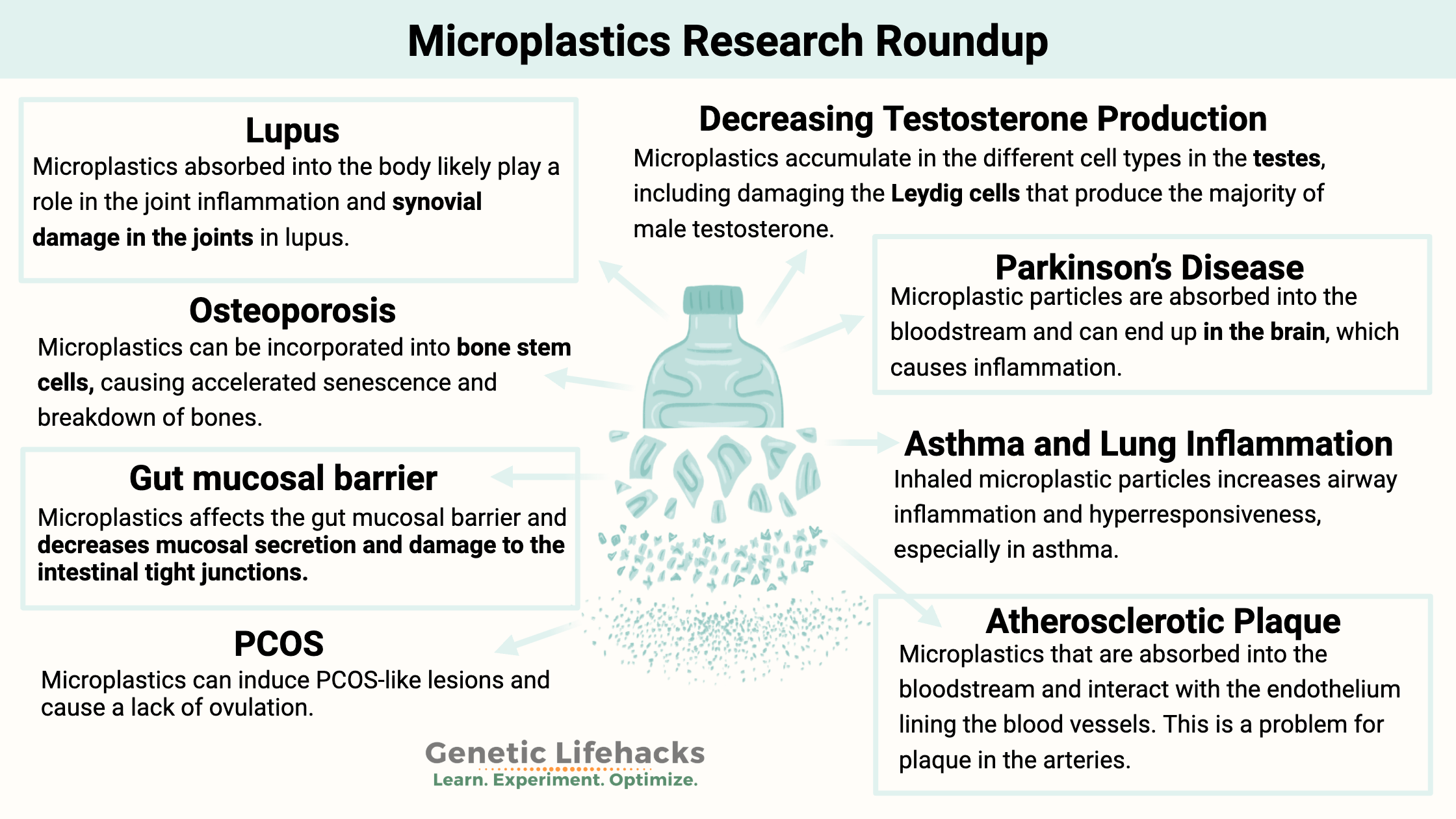
Key takeaways:
~ An avalanche of research now shows that microplastics and nanoplastics are likely a real problem for many chronic health issues.
~ Understanding your genetic susceptibility – along with your microplastic exposure – can help you prioritize diet or lifestyle changes for optimal health.
~ Simple, inexpensive changes can reduce your exposure.
What are microplastics, and how do they interact with genetics?
Genetic susceptibility to a condition is exacerbated by diet, lifestyle, and environmental factors. I say that over and over in Genetic Lifehacks articles.
The latest research shows that microplastics are being absorbed into the body. This is an “environmental factor” that can combine with genetic susceptibility in multiple ways. This is a significant problem that increases chronic disease and decreases quality of life.
Microplastics or nanoplastics are small bits of plastic, microscopic in size. The particles in the <5 μm range, often referred to as nanoplastics, can easily be absorbed into the intestines, circulate through the bloodstream, and be taken up into cells in different organs.
These foreign particles can both activate inflammation and also leech endocrine-disrupting chemicals.
Below you’ll find a roundup of the articles on Genetic Lifehacks with research tied to microplastics. My hope is that this will help you dial in where your genetic susceptibility to the negative effects of microplastics lies.
Access this content:
An active subscription is required to access this content.