
Key takeaways:
- Zinc is an essential micronutrient, acting as a cofactor in thousands of cellular reactions that impact immunity, skin health, wound healing, blood sugar regulation, and brain function.
- Long‑term low zinc intake is common worldwide and can show up subtly as more frequent infections, slower wound healing, skin and hair problems, type 2 diabetes risk, and mood changes such as depression.
- Your genes influence how well zinc is absorbed and transported into cells. Variants in zinc transporter and related genes (SLC30A8, SLC39A2, CA1, and PPCDC) can increase your need for dietary zinc or make you more responsive to supplementation.
- Clinical trials show that the right form and dose of zinc can improve immune resilience, support wound healing, and be beneficial for migraines, PMS, gestational diabetes, and mild cognitive impairment. However, excessive dosing can deplete copper and cause side effects.
Zinc, genetics, and your health:
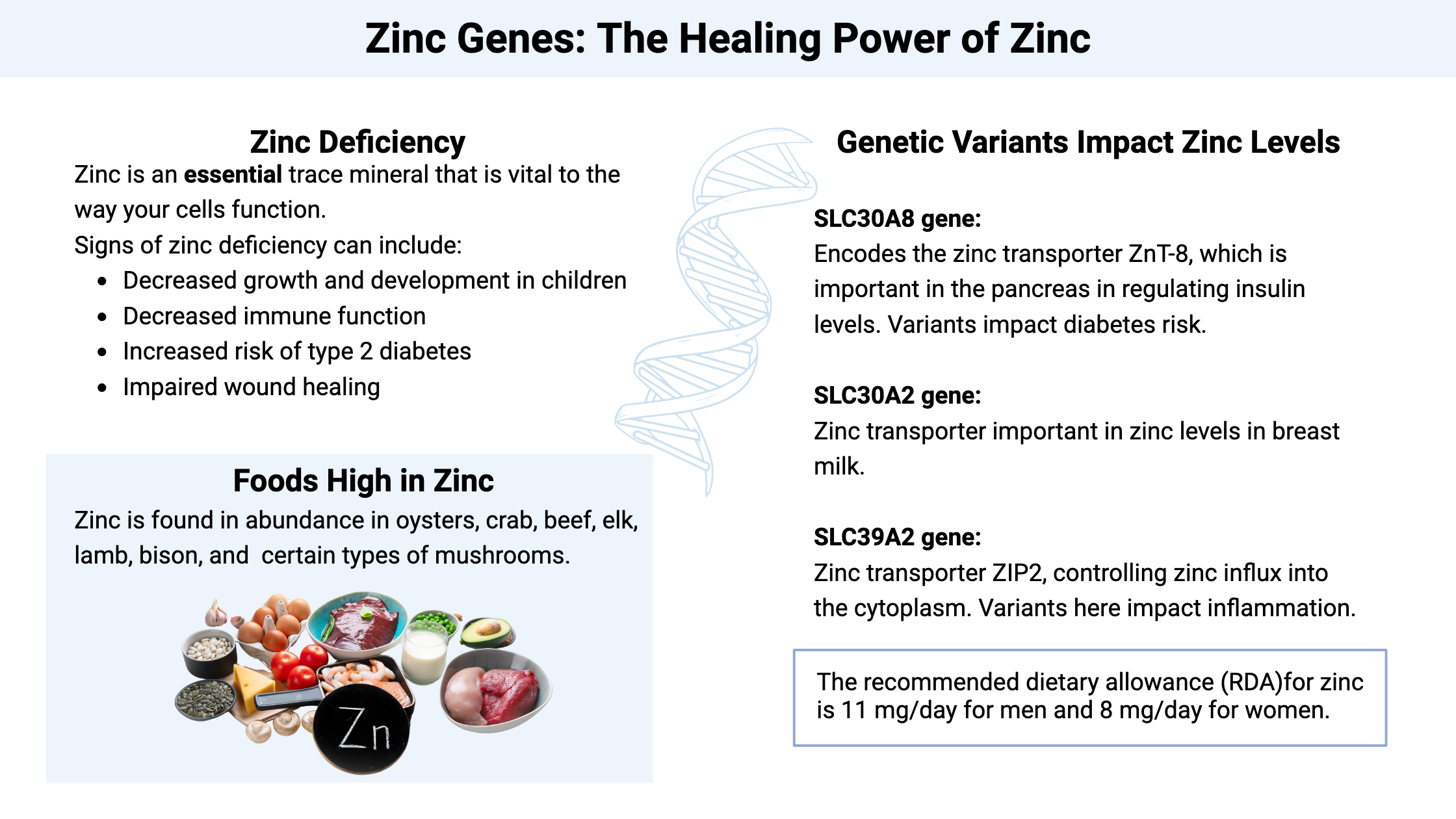
Zinc is an essential trace mineral that is integral to the way your cells function. Researchers estimate that over 3000 different cellular functions rely on zinc. This mineral is a component of many different types of biological molecules – impacting metabolism, immune function, skin barrier function, and more. Zinc is needed for the function of all cell types in all tissues and organs.[ref][ref]
Importantly, zinc needs to be balanced – neither too much nor too little.
Let’s dig into the research on how and why zinc is important, the genes that encode the transporters, and how your genetic variants can impact your need for zinc.
Dietary zinc insufficiency or deficiency:
We need to replenish our zinc stores daily (or nearly daily) from the foods that we eat. The body doesn’t have a long-term storage reservoir for zinc, and adults have about 2.6 g of zinc in the body on average.[ref][ref]
What happens when you don’t get enough zinc on a long-term basis? Signs of zinc deficiency can include:
- Decreased growth and development in children (a big problem in developing countries)
- Decreased immune function (getting more colds, respiratory or diarrheal illnesses than usual)
- Increased risk of type 2 diabetes (zinc is needed for beta-cell function in the pancreas)
- Impaired wound healing
In developing countries, two studies have shown that zinc supplementation cuts childhood mortality rates significantly — showing the importance of sufficient Zn intake, especially in the context of childhood nutritional deficiencies.[ref]
What causes dietary zinc deficiency? The answer can be summed up as simply a diet that is high in phytates and low in animal foods.[ref][ref] Phytates bind to and reduce the intestinal absorption of zinc. Phytic acid, or phytate, is found in plant seeds, so a diet high in beans, grains, and nuts can be high in phytate, depending on how the food is cooked or processed. Animal protein contains both higher levels of zinc and increases the absorption of zinc.
It is estimated that over 1 billion people worldwide suffer from frank zinc deficiency, with some estimates as high as a third of the world’s population being zinc deficient.[ref][ref]
While most people in developed nations don’t have a frank zinc deficiency, a high percentage still have insufficient zinc intake. This can be especially true for older people with a poor diet and reduced intestinal absorption. People with celiac disease, Crohn’s disease, or alcohol addiction are more likely to have reduced intestinal absorption.
Dietary sources of zinc:
Since the body doesn’t store zinc, regularly eating foods that contain zinc is important for optimal health. Zinc is found in abundance in oysters, crab, beef, elk, lamb, bison, certain types of mushrooms, and fortified cereals.[ref] Studies show that people on a vegetarian or vegan diet have a lower daily zinc intake and are at a greater risk for zinc deficiency.[ref] (See the Lifehacks section below for ways of tracking zinc intake and supplementing.)
Intestinal absorption and regulation of zinc:
The body tightly regulates the amount of zinc absorbed — you don’t want too much or too little. Zinc homeostasis comes down to two things:
- getting enough in your diet
- absorbing it in the right amount
Zinc is absorbed in the intestines via zinc transport proteins. These zinc transporters are part of a feedback loop: when zinc levels are low in intestinal cells, this triggers the formation of more zinc transporters. When zinc levels increase to the right level, the expression of the zinc transport proteins decreases.[ref]
A dietary zinc deficiency, especially longer-term, can lead to a decrease in mucin production in the intestines. Zinc is one of the micronutrients needed for mucin production. Mucin lines the intestines and keeps bacteria and viruses away from the intestinal epithelial cells. When mucin is decreased, the risk of intestinal diseases and pathogenic infections rises.[ref] It’s a two-way street here: An impaired intestinal barrier also decreases the absorption of zinc, leading to further deficiency. This is particularly a problem in conditions that affect the mucosal barrier, such as Crohn’s disease.[ref]
Related article: Mucin and gut barrier function
In addition, zinc is vital in cells that turn over rapidly – like intestinal cells and skin cells. Thus, a zinc deficiency can cause problems in intestinal barrier function relatively quickly.[ref]
Zinc genes: Transporters and regulation
The cellular level of zinc needs to be tightly regulated since too much available zinc could cause oxidative stress. Metallothionein (MT) is a protein that can bind to zinc if levels are too high in a cell.[ref]
Two families of zinc-specific transporters help to control intracellular zinc levels. The SLC30 family of genes and the SLC39 family of genes encode these zinc transporters. Some of these genes are important during the development of the fetus, where zinc is an essential micronutrient, and others are specific to zinc regulation in different tissues.[ref]
- SLC39A2 (ZIP2): The SLC39A2 zinc transporter, also known as ZIP2, moves zinc from outside of cells into the cytosol of cells. It is pH-dependent and voltage-dependent, and can also transport cadmium and cobalt, but only when zinc levels are low.[ref] ZIP2 is important in skin health, heart health, and immune response. It is also important in the lungs and may play a role in the severity of cystic fibrosis.[ref][ref][ref]
- SLC39A13 (ZIP13): The ZIP13 zinc transporter is involved in moving zinc in the Golgi apparatus and cytoplasm. Rare mutations in this gene are linked to a form of Ehlers-Danlos Syndrome.[ref]
- SLC30A8: The SLC30A8 gene codes for the zinc transporter ZnT-8. This zinc transporter is found in pancreatic beta-cells and transports zinc from the cytoplasm into insulin secretory vesicles, where it stabilizes it and prevents degradation.[ref]
Regulation of zinc:
- CA1 gene: The CA1 gene codes for a carbonic anhydrase enzyme that binds to and uses zinc and catalyzes the reversible hydration of carbon dioxide, important in cellular respiration. Essentially, it is the enzyme needed for balancing out carbon dioxide, bicarbonate, and H+ ions, which then maintains a neutral pH in the body. Genetic variants in the CA1 gene are associated with higher or lower serum zinc levels.
- Metalloproteins are a broad class of molecules that incorporate metal ions. Zinc is bound by metallothionein, which binds to zinc (or copper) to control the levels of free zinc in the body. [ref]
Copper – Zinc interactions:
Copper and zinc interact in unique ways. Essentially, if you push one up, the other drops.
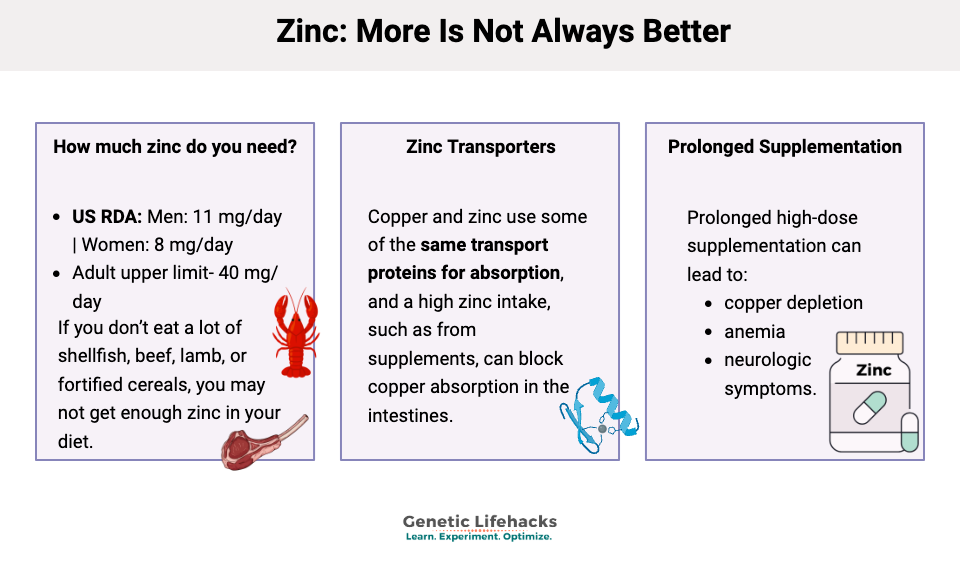
Copper and zinc use some of the same transport proteins for absorption. In addition, a high zinc intake, such as from supplements, can tie up copper absorption in the intestines. Both zinc and copper can be bound by metallothionein in the intestinal lining. When you increase zinc, it increases metallothionein. But metallothionein preferentially will bind more copper than zinc, so the result of high zinc supplementation is that copper gets bound up in the intestinal epithelial cells, which slough off every few days.
In some situations, such as when copper is too high from genetic mutations in Wilson’s disease, zinc is purposefully used to decrease copper levels. Clinical trials in children with autism who have high copper also show that zinc can lower copper and have some beneficial effects on symptoms.[ref]
Related article: Copper genes (ATP7B, Wilson’s disease)
The flip side is also true: High-dose zinc supplementation can cause severe copper deficiency when taken for longer periods of time. For example, a case study showed that zinc supplementation leading to copper deficiency resulted in severe anemia and multiorgan failure.[ref]
Zinc deficiency and health outcomes:
Zinc is vital to the immune system, and a lack of zinc can have detrimental effects, including increased susceptibility to infectious diseases, skin issues, impaired wound healing, and decreased antioxidant defense.
| Health Concern | How Zinc Deficiency Impacts It |
|---|---|
| Immune Function | Increased susceptibility to infections, NLRP3 activation, candida |
| Skin & Hair | Dermatitis, alopecia, eczema, white marks on nails |
| Wound Healing | Impaired recovery |
| Blood Sugar Regulation | Increased type 2 diabetes risk |
| Childhood Development | Stunted growth, higher mortality rates |
Zinc is important in the immune response
Promotes T cell function: T-cells are an important part of our adaptive immune system’s defense against viruses and bacteria. T-cells are a type of white blood cell that is produced in the bone marrow and then travels to the thymus to mature into pathogen-fighting cells. The thymus is a small lymphatic system organ that is located in the upper chest, behind the breastbone. As we age, the thymus decreases in both size and function due to a process called thymus involution. The thymus is at its maximum size in adolescence. Due to its significant role in the immune system, zinc deficiency is linked to decreased T-cell function, especially in aging. In animal studies, supplemental zinc increases the thickness of the thymic gland and increases T-cell function.[ref]
Related article: T-cell exhaustion
Modulates inflammasome: In addition, zinc helps to keep the NLRP3 inflammasome activation under control.[ref] Excess NLRP3 inflammasome activation can cause inflammatory damage and chronic inflammation.
Related article: NLRP3 inflammasome genes
Essential for antibody production: Both primary and secondary antibody responses are decreased in zinc deficiency.[ref]
Candida response: Multiple studies and clinical trials show that zinc helps the body keep Candida fungal infections under control.[ref][ref][ref] Again, balance is key with zinc – excess zinc is not needed, but a zinc deficiency can exacerbate Candida infections.
Related article: Candida and genetic susceptibility
Which viral illnesses are worsened by zinc deficiency?
- For respiratory viruses, like the common cold, zinc can inhibit viral polymerase, reducing rhinovirus infections. A Cochrane review showed that zinc may reduce the duration of the common cold by about 2 days, on average, but zinc supplements didn’t reduce the risk of catching a cold in the first place.[ref] It has also been shown to help with Covid in hospitalized patients and may increase the efficacy of vaccines for respiratory viruses.[ref]
- Zinc reduces the hepatitis C virus by inhibiting viral RNA polymerase and replication in
- For the flu, zinc helps to reduce influenza viral replication through a couple of zinc-dependent anti-viral proteins. [ref]
- Clinical trials show that zinc supplementation (in populations with dietary insufficiency) decreased diarrheal illnesses by 18% and pneumonia by 41%.[ref]
- Oral rehydration, along with zinc, helps to combat diarrheal illnesses in kids. This has significantly reduced the number of childhood deaths from diarrheal illness.[ref]
- Patients with more severe COVID-19 symptoms have lower zinc levels, on average, with more than half reaching the point of clinical zinc deficiency.[ref][ref]
Zinc is needed for your skin and hair:
The epithelial cells that make up your skin require zinc, and since these cells turn over quickly, the skin is one of the first places where people notice zinc deficiency. Zinc deficiency can also be a cause of hair loss.
Low zinc is linked to:[ref][ref]
- dermatitis
- alopecia
- acne
- eczema
- dry, scaly skin
- white marks on fingernails
Zinc deficiency and the brain:
Depression: Studies show that low levels of zinc are associated with an increased relative risk of mental health problems, such as depression. A meta-analysis showed that people with depression are more likely to have lower zinc levels, and intervention studies show that increasing zinc consumption alleviates depression in people.[ref] Another analysis showed that a higher zinc intake cuts the risk of depression by 30%.[ref] Zinc supplementation also significantly reduces the risk of postpartum depression.[ref] Keep in mind that while a meta-analysis of zinc supplements with antidepressants showed a positive result, the improvement in depressive symptoms was modest.[ref]
ADHD or Autism: Children with ADHD or autism spectrum disorder often have lower-than-normal zinc levels and higher copper. Similarly, children with autism are more likely to have low zinc and an altered zinc to copper ratio. In fact, to create a mouse model of autism, researchers restrict zinc during prenatal development.[ref][ref][ref] This doesn’t mean that zinc supplements will cure autism and ADHD, but it does mean that it may be worth testing and correcting any deficiencies.
Zinc deficiency and chronic inflammation:
Zinc deficiency can play a role in chronic inflammation because zinc is a cofactor required in SOD1 (superoxide dismutase 1). SOD1 is a copper and zinc-dependent antioxidant that protects against lipid peroxidation and hydrogen peroxide. Essentially, zinc deficiency reduces antioxidant defence.[ref][ref]
Related article: SOD1 Gene: Your Antioxidant Defense System
Epigenetics: Zinc and gene expression
Recent research shows that zinc is an important cofactor in several genes that are involved in the epigenetic regulation of gene expression. Essentially, this means zinc is important in certain genes that turn on or off a bunch of other genes.
For example, a zinc transporter (ZIP10) is important in the epigenetic regulation of genes important in skin homeostasis. Other research shows zinc is required for several epigenetic enzymes, including DNA methyltransferases (DNMTs).[ref]
Zinc Genotype Report:
Access this content:
An active subscription is required to access this content.
Log in below or Join as a member.
Lifehacks for low zinc:
How much zinc do you need?
At a glance:
- US RDA: Men: 11 mg/day | Women: 8 mg/day
- Upper Limit: 40 mg/day (adults)[ref]
Safety and toxicity:
The upper daily limit (UL) for zinc is set at 40mg/day. Longer-term supplementation at levels higher than this could result in adverse effects. The most common short-term effect is gastrointestinal discomfort. Intake of over 50 mg/day for 10 weeks can cause copper deficiency or low magnesium due to competition for the transporter. Symptoms include neurological problems such as loss of coordination, numbness, and weakness in the arms, legs, and feet.[ref][ref][ref]
Conditions that increase the need for zinc:
Illness, heavy physical activity, and pregnancy all increase the amount of zinc needed each day.[ref]
Different forms of zinc in supplements:
Zinc is available as supplements in various forms. Supplemental forms of zinc include:[ref][ref][ref][ref][ref]
- Zinc gluconate: A commonly available form used in many cold medications and nasal sprays. Easily absorbed.
- Zinc aspartate: Better absorbed than zinc gluconate, but not as commonly found in supplements.
- Zinc picolinate: It is more readily absorbed than other forms, easily releasing zinc.
- Zinc citrate: Only slightly soluble in water; this form tastes better and is used in syrups. It is well absorbed.
- Zinc acetate: This is also commonly used in cold and flu medications. Better absorption than zinc oxide.
- Zinc oxide: Little or no absorption from this source of zinc. It is used as a sunscreen alternative.
- Zinc sulfate: Poor absorption, similar to the zinc oxide form.
Chelated forms: As mentioned above, phytic acid can bind to zinc and make it less bioavailable in the intestines. Phytic acid is found in plant-based foods such as whole grains, legumes, and seeds. A 2026 study showed that the chelated forms of zinc (e.g. zinc picolinate, zinc glycinate, and zinc gluconate) are less affected by phytic acid than the inorganic forms.[ref]
Side Effects from Zinc Supplements:
The most commonly reported side effect of supplemental zinc is stomach upset. If you find that a zinc supplement causes stomach pain, try decreasing the amount, taking it with food, or splitting it into very small doses at a couple of meals. Either look for a low-dose zinc or simply divide up the one that you already have.
Diet and Zinc:
If you don’t eat a lot of shellfish, beef, lamb, or fortified cereals, you may not get enough zinc in your diet. One way to know is to track what you eat for a week or so. Cronometer.com is a web app that breaks down the macro and micronutrients in your food for the day. And – it is free! If you see a pattern of not regularly getting enough zinc, then consider adding in supplemental zinc or increasing foods that are high in zinc.
Foods high in zinc include:[ref]
| Food | Milligrams (mg) per serving |
Percent DV* |
|---|---|---|
| Oysters, cooked, breaded, and fried, 3 ounces | 74.0 | 673% |
| Beef chuck roast, braised, 3 ounces | 7.0 | 64% |
| Crab, Alaska king, cooked, 3 ounces | 6.5 | 59% |
| Beef patty, broiled, 3 ounces | 5.3 | 48% |
| Lobster, cooked, 3 ounces | 3.4 | 31% |
| Porkchop, loin, cooked, 3 ounces | 2.9 | 26% |
| Baked beans, canned, plain or vegetarian, ½ cup | 2.9 | 26% |
| Breakfast cereal, fortified with 25% of the DV for zinc, 1 serving | 2.8 | 25% |
| Chicken, dark meat, cooked, 3 ounces | 2.4 | 22% |
| Pumpkin seeds, dried, 1 ounce | 2.2 | 20% |
| Yogurt, fruit, low fat, 8 ounces | 1.7 | 15% |
| Cashews, dry-roasted, 1 ounce | 1.6 | 15% |
| Chickpeas, cooked, ½ cup | 1.3 | 12% |
Zinc Interactions and Absorption:
Dietary zinc and supplements may need to be taken separately from other minerals.
Zinc interactions with other minerals:
- Iron supplements taken at the same time as zinc can prevent zinc from being absorbed. Zinc and iron use the same transporter (DMT1) in the intestines.[ref]
- Copper and zinc also interact when consumed at the same time. The metallothioneins (MT) bind more tightly to copper than zinc, thus displacing the zinc.[ref] A balance is needed between copper and zinc, which the body tries to do with the MT proteins.
In children under 3, supplementing with too much zinc can lead to imbalances of copper and low iron levels.[ref] Please talk with your doctor about any supplements for young children!
Can zinc be absorbed through the skin?
Anyone with kids knows the magic of zinc oxide creams for diaper rash, and zinc is often included in eczema creams, too. It is also found in denture cream. When considering your daily intake, keep in mind that zinc can be absorbed topically.[ref]
For example, zinc pyrithione is a common ingredient in skin care products and dandruff shampoo. Research shows that topical application increases zinc in skin cells by 250-fold after 24 hours.[ref] The formulation of zinc matters a bit in absorption. For example, zinc 2-pyrrolidone 5-carboxylate is absorbed more readily than zinc oxide or zinc sulfate.[ref]
Zinc for diabetes prevention: SLC30A8 variant carriers benefit most
Zinc is important in the pancreas and blood glucose regulation. A study showed that increasing zinc levels by 10 ug/dl decreased the odds of type-2 diabetes for everyone by a little bit, but those with the SLC30A8 rs13266634 T/T genotype had a greater decrease than those with the C allele (risk genotype). However, other studies just show that carriers of the rs13266634 C allele are at an increased risk of diabetes. The differences in these studies may be due to the normal dietary intake of zinc in the populations that are being studied.[ref][ref][ref]
Related article: Genetics and Type 2 Diabetes
Clinical trials using zinc supplements:
Looking at clinical trials can show both the dosage and the length of time to see the effect of a supplement.
Zinc for dysmenorrhea:
A study in women with dysmenorrhea showed that 40 mg of zinc sulfate daily reduced painful periods by the second monthly cycle.[ref]
Migraines:
Individuals with migraines were either given zinc sulfate (50 mg) or a placebo for two months. The group taking zinc had a reduced migraine frequency (2 fewer migraines, on average, than the placebo).[ref]
Related article: Migraine Solutions Tailored to Your Genes
PMS:
A study in young adult women showed that zinc supplementation reduced PMS symptoms significantly after six months. The conclusion was that “symptoms such as anger, anxiety, depressed mood, overeating, breast tenderness, headaches, muscle pain, bloating, and weight gain significantly decreased in the zinc group compared to placebo group.”[ref]
Related article: PMS, PMDD, Genetics, and Solutions
Covid:
A randomized placebo-controlled trial showed that twice-daily oral zinc reduced mortality by 30%, ICU admission (60%), and length of hospital stay (3.5 days less) in hospitalized Covid patients.[ref] Another randomized placebo-controlled trial in 2025 found that zinc supplementation (90mg/day) “accelerated recovery” in hospitalized Covid-19 patients. [ref]
Gestational diabetes:
A clinical trial showed that 30mg zinc supplementation per day for 6 weeks had beneficial effects on blood glucose and insulin levels in women with gestational diabetes.[ref]
Cognitive Impairment:
A 2025 placebo-controlled clinical trial found that 135mg/day of elemental zinc supplementation improved cognition in patients with mild cognitive impairment.[ref] Note that this is a very high dose of zinc, and the clinical trial was done with a doctor’s supervision.
Wound Healing:
A 2025 clinical trial found that zinc supplementation enhanced wound healing in patients with stem cell transplants. [ref]
Safety and side effects:
Nasal zinc:
Intranasal zinc gluconate has been found to cause some people to lose their sense of smell.[ref][ref] This may not matter if you already have a cold, but it is something to think about if using it on a regular basis.
Stomach aches:
As mentioned above, one side effect of zinc supplements can be stomach pain, especially at higher doses. More is not always better, and your body can only absorb a certain amount of zinc at one time. Research shows that 50-300mg/day can cause stomach upset[ref], but some people experience nausea or stomach pain from supplemental doses lower than 50mg/day.
Supplement stack to increase absorption:
Quercetin and EGCG, both natural supplements readily available at health food stores, act as zinc ionophores. This means that it helps to move zinc into the cells.[ref] If you have stomach problems with zinc, you may want to try smaller doses and combine it with quercetin or EGCG.
Related article: Quercetin: Scientific Studies + Genetic Connections
Recap of your genes:
| Gene | RS ID | Your Genotype | Notes for Your Genotype | Effect allele | Effect allele frequency |
|---|---|---|---|---|---|
| IL-6 | rs1800795 | — | may benefit more from zinc supplementation in aging (most common genotype in many population groups)may benefit more from zinc supplementation in agingadditional zinc may not be helpful in aging | C | 0.34 |
| SLC30A8 | rs13266634 | — | (most common variant in most populations) increased risk of type 2 diabetes; zinc supplementation may help lower blood glucose levels if highsomewhat increased risk of type-2 diabetes; zinc supplementation may help lower blood glucose levelsless common genotype, lower risk for type-2 diabetes | T | 0.28 |
| SLC30A8 | rs11558471 | — | typicalzinc may help to lower blood glucose levels (if zinc is insufficient)zinc may help to lower blood glucose levels (if zinc is insufficient) | A | 0.7 |
| SLC30A2 | rs587776926 | — | typicalcarrier of a zinc transporter deficiency mutation (a problem if breastfeeding a baby)carrier of a zinc transporter deficiency mutation (a problem if breastfeeding a baby) | C | 0 |
| SLC30A2 | rs117153535 | — | typicallower zinc levels expressed in breast milklower zinc levels expressed in breast milk | A | 0.0002 |
| SLC39A2 | rs2234632 | — | typicalhigher inflammatory cytokines without zinc supplements; zinc supplementation works to reduce inflammation; likely impaired zinc transport into the cellhigher inflammatory cytokines without zinc supplements; zinc supplementation works here to reduce inflammation; likely impaired zinc transport into the cell | T | 0.3 |
| SLC39A2 | rs2234636 | — | typicalincreased relative risk of bladder cancer with arsenic exposure, possibly due to impaired zinc transport into cellsincreased relative risk of bladder cancer with arsenic exposure, possibly due to impaired zinc transport into cells | C | 0.35 |
| SLC39A13 | rs121434363 | — | typicalcarrier of a rare mutation linked to Spondylocheirodysplastic Ehlers-Danlosrare mutation linked to Spondylocheirodysplastic Ehlers-Danlos | A | 0 |
| CA1 | rs1532423 | — | typical serum zinchigher serum zinc levelshigher serum zinc levels | A | 0.4 |
| PPCDC | rs2120019 | — | typicaldecreased serum zinc levelsdecreased serum zinc levels | C | 0.31 |
| SLC30A2 | rs185398527 | — | typicaldecreased zinc levels in breast milk, carrier of a rare mutation that may cause Neonatal Zinc Deficiencyextremely rare (check data accuracy); pathogenic for transient neonatal zinc deficiency in breastfed infants | T | 0.000008 |
Related Articles and Topics:
Molybdenum: Genetic Connections, Sulfur Metabolism, and Cofactor Deficiency
References: