
Key takeaways:
- The TRPV1 receptor is activated by certain foods, like spicy chili peppers, and by heat and acidic substances.
- It sends a signal in your peripheral nerves for pain or ‘hot’, and it is also part of how body temperature is regulated.
- In the brain, the TRPV1 channel is involved in glutamate transmission and neuroinflammation. In the immune system, it is found on T cells and is part of the inflammatory response.
- Genetic variants in TRPV1 are well known for how people react to hot, spicy foods. They are also involved in pain tolerance and migraines.
Members will see their genotype report below, plus additional solutions in the Lifehacks section. Join today.
What is the TRPV1 receptor?
Every perception we feel – heat, cold, salty, pain, acid, etc – is caused by a receptor sending a message. Your body has a number of different receptors that govern how you perceive the world. TRPV1 is the main receptor that makes chili peppers (capsaicin) feel hot, but it also helps regulate body temperature and pain signaling, and your TRPV1 variants can change how spicy foods feel.
TRPV1 receptor function:
TRPV1 stands for transient receptor potential vanilloid 1. The TRPV1 receptor is an ion channel found on nerves in the central and peripheral nervous system. When activated, it sends a signal for pain or heat. The main function of this receptor is not to make you cry when eating spicy foods — instead, it is involved in body temperature regulation, basal neurotransmitter release in the brainstem, and more.
As one study explained, TRP channels are ancient sensors found in life forms ranging from unicellular organisms to mammals.[ref] TRPV1 is just one of several TRP channels in humans. (Related articles: LDN & TRPM3 | ME/CFS)
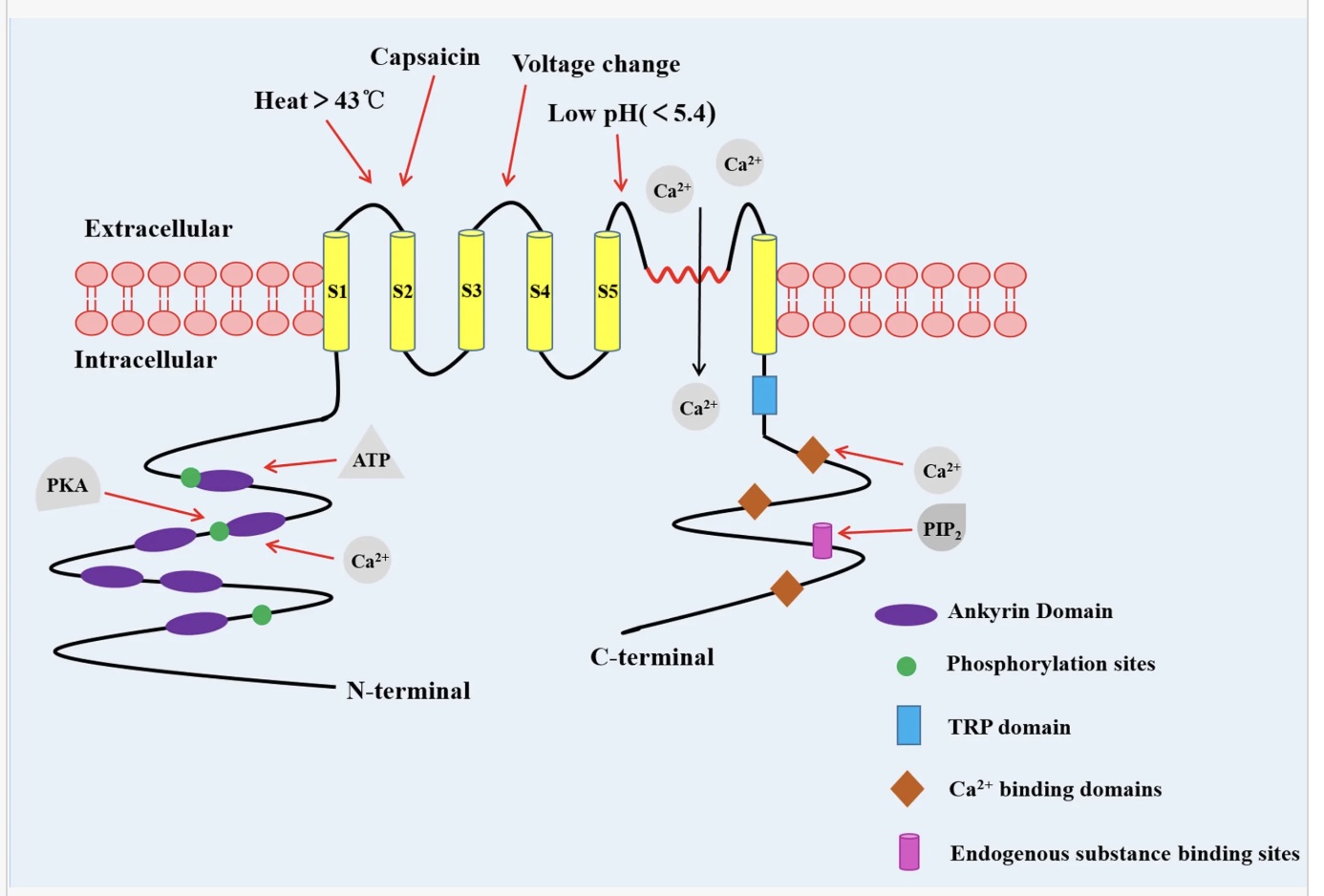
Calcium channel: When activated by a specific chemical, acidic pH, or heat, the TRPV1 channel opens and allows calcium ions (Ca2+) to flow into the cell. When calcium moves into a nerve cell, this can change the polarization and send a signal. Depending on the type of neuron, it may signal through the release of glutamate, CGRP, or substance P. In other cells, such as immune system cells, the opening of the TRPV1 channel and calcium influx causes cytokine production and ROS generation.[ref]
Desensitization: When TRPV1 has been activated at high levels, repeatedly, or for a long time, a system kicks in to desensitize it. Cells can’t handle calcium ions flowing in constantly, since that can kill the cell. So the TRPV1 channel can be phosphorylated through a feedback mechanism that prevents further flow of ions into the cell.[ref] Interestingly, a weak activation of TRPV1 causes prolonged firing for peripheral neurons.[ref]
What activates TRPV1?
While the role of TRPV1 in sensing spicy foods, like chili peppers, is well known, this multipurpose ion channel is actually activated by many different substances – both substances found in the body (endogenous) and external stimuli.
Chemistry terms: In general, the substances that activate TRPV1 are classified as ‘vanilloids’, which are compounds that contain a vanillyl group. (Vanilla, the flavoring, does contain vanillin, but it isn’t a strong activator of TRPV1. Instead, it acts on a different TRP channel.) The vanilloids produced in the body, such as anandamide, are called endovanilloids, and they do activate TRPV1.
TRPV1 is activated by: [ref][ref][ref][ref][ref][ref]
| Trigger/compound | Typical source/condition | What you feel / effect |
|---|---|---|
| Heat > 43 °C (109°F) | Hot surfaces, very hot liquids | Burning pain, heat sensation |
| Capsaicin | Chili peppers | Spicy burn in mouth/skin |
| Isothiocyanates | Wasabi, mustard | Sharp, nose/eye burn |
| Piperine | Black pepper | Mild to moderate burn, pungency |
| Gingerol | Ginger | Warming, mild burn |
| Acidity (pH<5.9) | Acidic foods, inflamed tissue, hydrogen sulfide | Heightened burn from capsaicin |
| Venoms | Spider/centipede/scorpion/tarantula venom | Intense pain |
| Endocannabinoids/ CBD | CBD oil, endogenous cannabinoids such as anandamide, N-Arachidonoyl dopamine (NADA), N-acyl GABA | Modulation of pain and temperature perception |
| Biogenic amines | spermine, spermidine, putrescine, histamine | Receptor activation |
| PUFA derivatives | α-linolenic acid, arachidonic acid metabolites, | Receptor activation, sensitization |
| Oxytocin | neurotransmitter, peptide hormone | Receptor activation, modulates pain |
Multiple dietary compounds and internal signals converge on TRPV1, which explains why spicy foods, acidic conditions, and even CBD can all change how hot or painful something feels.
What does the TRPV1 receptor do?
Again, when TRPV1 is activated, it allows the flow of ions into the cell. Calcium ions are tightly regulated in the body because they can trigger different actions in a cell, depending on the cell type. For example, in a neuron, calcium ions are involved in the release of neurotransmitters, sending the signal to the next neuron.
Pain sensing in the peripheral nerves:
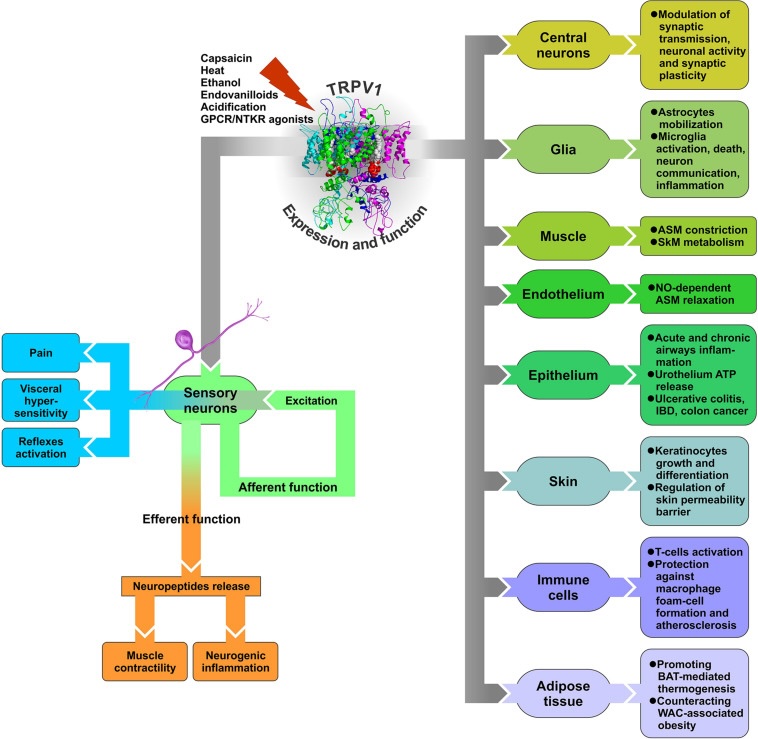
The TRPV1 receptors are found in the peripheral nervous system in the nociceptive (pain-sensing) neurons.[ref]
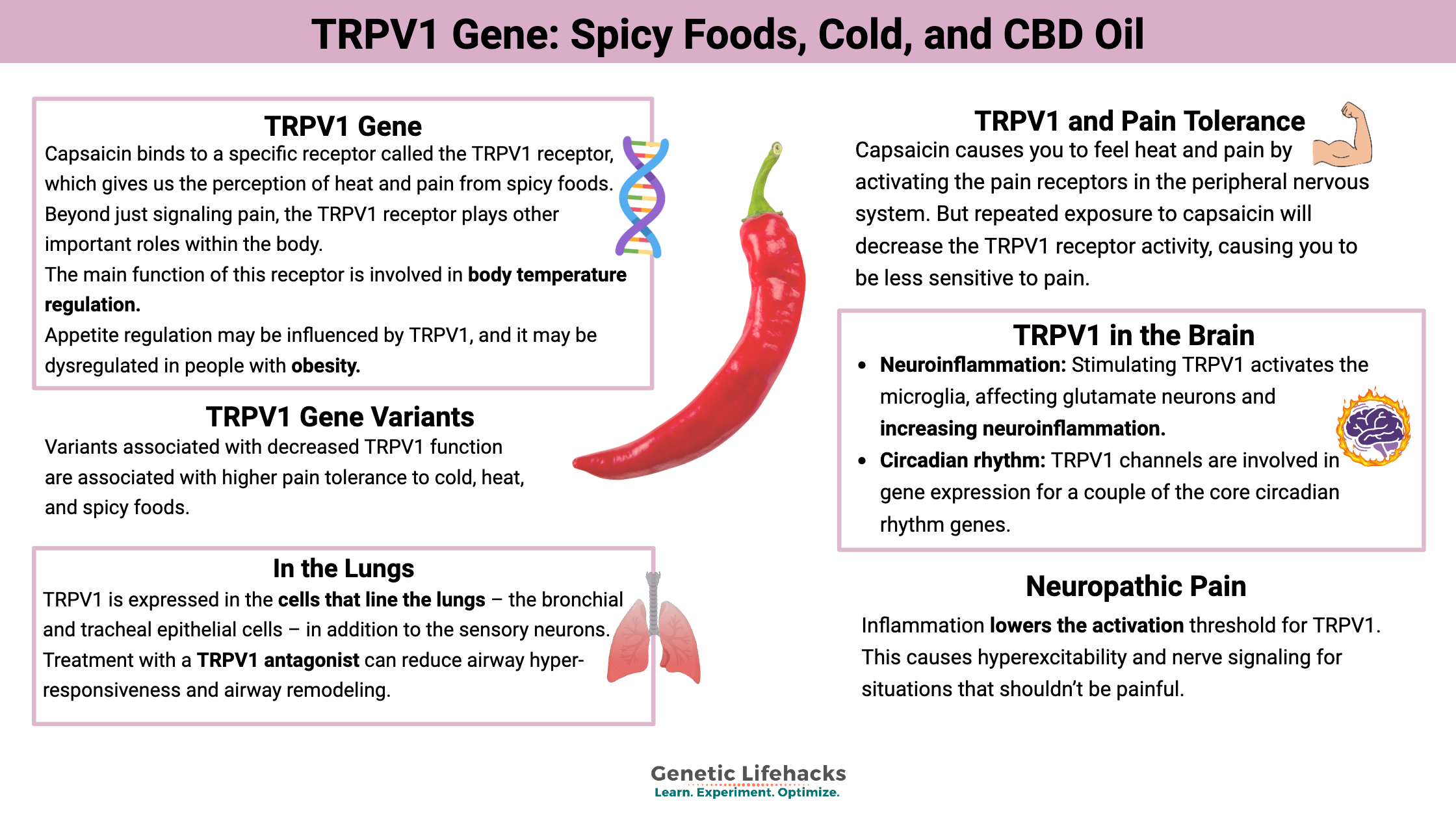
Capsaicin causes you to feel heat and pain by activating the pain receptors in the peripheral nervous system. But repeated exposure to capsaicin will decrease the TRPV1 receptor activity, causing you to be less sensitive to pain.
Repeated exposure to spicy foods decreases the receptor activity, making the food taste less spicy. Another way that repeated exposure can be used is through the use of capsaicin cream for arthritis pain. Repeated exposure decreases the TRPV1 receptors, which decreases the perception of pain in arthritis.[ref]
Endocannabinoids, CBD (cannabidiol) oil, and terpenes in cannabinoids can bind to the TRPV1 receptor and then decrease sensitivity. This is how they modulate pain.[ref]
Related article: CBD Oil and Genetics
Neuropathic pain and TRPV1:
Neuropathic pain is often caused by damage to the peripheral nerves, which causes burning, shooting pain, or tingling and numbness. TRPV1 activation can be involved in neuropathic pain and chronic sensitization. Inflammation, such as from chronically elevated inflammatory cytokines in diabetes, lowers the activation threshold for TRPV1. This causes hyperexcitability and nerve signaling for situations that shouldn’t be painful. A 2025 study showed that overactivation of TRPV1 causes mitochondrial dysfunction and neuronal cell death.[ref]
Beyond just signaling pain, TRPV1 is involved in cardiovascular function, insulin sensitivity, appetite, and obesity risk.
TRPV1 in the heart and blood vessels:
TRPV1 is important in the cardiovascular system. It is also found in the endothelium – the lining of blood vessels – and helps with relaxing the blood vessels.[ref][ref]
Specifically, TRPV1 channels are expressed in the neurons of the myocardium and ventricles of the heart, but not in cardiomyocytes. Activating the TRPV1 channels in the heart nerves causes the release of CGRP and substance P, which causes vasodilation — relaxing of the blood vessels in the heart. However, it isn’t as straightforward as activation of TRPV1 is good for the heart – there are a lot of variables around timing and whether it is chronic or not.[ref] TRPV1 is also involved in cardiac hypertrophy.[ref]
TRPV1 in metabolic health:
TRPV1 activation increases insulin sensitivity and is therefore involved in energy expenditure and diabetes.[ref][ref]
Appetite regulation may be influenced by TRPV1, and it may be dysregulated in people with obesity.[ref]
In the lungs: TRPV1 in sensory neurons and epithelial cells
Receptors in the lungs can sense noxious substances, which can cause you to cough or cause bronchoconstriction to keep the substance out of your lungs. TRPV1 channels are found on these sensory neurons in the lungs. A good example is the reaction to breathing in bear spray or pepper spray — aerosolized capsaicin immediately causes you to cough and have a hard time breathing.
The interesting thing here is that chronic cough, which affects millions worldwide, may be due to TRPV1 activation (at least in part). A clinical trial using a capsaicin throat spray 4 times a day for 2 weeks showed that it desensitized the receptors and decreased coughing for more than half of the participants.[ref][ref]
TRPV1 is expressed in the cells that line the lungs – the bronchial and tracheal epithelial cells – in addition to the sensory neurons. Treatment with a TRPV1 antagonist can reduce airway hyper-responsiveness and airway remodeling. [ref]
Bladder nerves and TRPV1:
The ability to sense pain in the bladder and the need to urinate is controlled by nerves that also express TRPV1. CBD oil, as a TRPV1 modulator, helps to relieve bladder pain and improve function (animal study).[ref] Chronic prostate inflammation also increases bladder sensitivity through the TRPV1 channels. [ref]
Immune system function of TRPV1:
TRPV1 ion channels are also found on immune cells, including macrophages, dendritic cells, and T cells. Activation causes a feedforward effect to amplify inflammation.
Again, activation of the TRPV1 channel allows calcium influx into the cell. In immune cells, this can have a number of effects, including increasing inflammatory cytokine production and even exacerbating an autoimmune condition. Lipopolysaccharide (LPS) is found on the surface of gram-negative bacteria and is a strong trigger for a robust immune response. LPS sensitized TRPV1.[ref]
T cell response: TRPV1 is expressed on T cells, which are a type of white blood cell that is important to the adaptive immune response. Increased calcium ions (Ca2+ ) are required for T cell activation and proliferation, and TRPV1 helps to move calcium into the cells. In addition, body temperature changes, such as from a fever, increase TRPV1 activation and enhance T cell activity. Interestingly, a fever of 103 F (39.5 C) or greater causes Th17 cell differentiation and pro-inflammatory expression. (There’s more than just TRPV1 activation that happens with a fever, but it is fascinating that the temperature-dependent TRP channel is part of what goes on.)[ref]
Related article: T cell exhaustion
Autoimmune diseases: In autoimmune diseases, such as RA, inflammatory bowel disease, lupus, MS, and psoriasis, overactive TRPV1 channels may be playing a role in the excess and inappropriate inflammatory response. One study explains that TRPV1 activation drives autoimmune pathology by: “calcium signaling amplifies immune responses by triggering excessive release of pro-inflammatory cytokines; cytoskeletal remodeling promotes immune synapse formation to facilitate stronger T cell-antigen presenting cell interactions; and neuro-immune crosstalk disrupts immune tolerance via neuropeptide-mediated exacerbation of inflammatory responses.”[ref]
Periodontal disease: A recent study showed that sleep deficiency increases inflammation in the gums by inducing TRPV1 activation on trigeminal nerves. This connects the immune response and circadian rhythm to something as common as gum inflammation.[ref]
Central nervous system: Role of TRPV1 in the brain
While best known for its role in pain and heat perception, the TRPV1 receptor is also found in the central nervous system (spine, brain, and brainstem).
In general, activation of TRPV1 increases calcium ion influx and promotes nerve firing and neurogenesis.[ref]
In 2010, it was discovered that TRPV1 plays a role in the basal glutamate release in the brainstem. Glutamate is an important excitatory neurotransmitter that is released in large amounts when glutamatergic neurons fire. But it turns out that those same neurons also release a low level of glutamate sporadically at rest; TRPV1 is the key there. Since TRPV1 is temperature sensitive (active between 30 and 42 degrees Celsius), the researchers narrowed down that TRPV1 allowed the leak of calcium ions at normal body temperature, triggering a low-level periodic release of glutamate. This was temperature-dependent, and at higher temperatures, there was an increase in glutamate release.[ref]
TRPV1 is also expressed in neurons in the hippocampus, and activation promotes excitatory neurons. In animals with TRPV1 blocked, the glutamatergic neuronal inputs in the hippocampus are significantly reduced.[ref]
Neuroinflammation: TRPV1 is also found on microglial cells, which are immune cells in the brain. Stimulating TRPV1 then activates the microglia, affecting glutamate neurons and also increasing neuroinflammation. In mouse models of seizures, researchers use TRPV1 stimulation to enhance seizure susceptibility. [ref][ref] In seizures due to high fevers, TRPV1 also plays a large role due to the increased activation from heat, as well as the effect on Th17 cell differentiation in neuroinflammation.[ref]
Circadian rhythm: Your body’s 24-hour built-in clock is controlled by core circadian genes in the brain. Light (blue wavelengths) is the primary signal that it is daytime, but temperature changes also help your circadian rhythm stay on track. This is where TRPV1 comes in, with detecting the changes in heat to entrain the circadian clock. TRPV1 channels are involved in gene expression for a couple of the core circadian rhythm genes, and in animal studies, researchers have been able to invert the normal circadian body temperature changes with capsaicin. This type of desensitization of TRPV1 also changes the expression of circadian genes in the liver and adrenals, and it alters cortisol rhythm. Similarly, knocking out the TRPV1 channel in mice changes the normal dip in blood pressure at night.[ref][ref][ref]
Additional central nervous system connections:
- Hot flashes: The TRPV1 receptor may be involved in hot flashes in menopause for some women.[ref]
- Hunger: Appetite regulation is influenced by TRPV1 in the brain.[ref] The beneficial effects of time-restricted feeding for optimizing glucose control and circadian rhythm are mediated by TRPV1.[ref]
- Mood disorders: Animal studies show that TRPV1 activation may play a role in depression, and blocking TRPV1 may have antidepressant effects.[ref]
- Epilepsy: In some forms of epilepsy, TRPV1 activation exacerbates the problem.[ref]
Let’s switch gears and look at how genetic variants in TRPV1 alter the receptor function.
TRPV1 Genotype Report:
In general, genetic variants that decrease the amount of TRPV1 should give a greater tolerance to spicy foods. These variants are also linked to less sensitivity to tasting salt and a decreased risk of diabetes, possibly through the changes to insulin release.
Variants that increase TRPV1 (gain of function) make the ion channel more responsive to capsaicin and also more responsive to particulates, like coal fly ash, that trigger asthma. [ref]
Access this content:
An active subscription is required to access this content.
Lifehacks for TRPV1 variants:
The effect of TRPV1 activation depends a lot on where in the body the activation occurs (e.g. pain from neuropathy vs. glutamate release in the brain).
Lifehacks for eating spicy foods:
If you have ever started dripping with sweat after eating something spicy, there is a name for this – gustatory sweating – and it is caused by the thermoregulation of TRPV1.[ref] This thermoregulation is thought to be why eating spicy foods in a hot climate ends up cooling you off (theoretically).[ref]
6 things you can do if you are a spicy food wimp:
- Casein, a protein in dairy, can help break the bond between capsaicin and the receptor. Yogurt decreases the hotness of chili peppers.[ref][source] Full-fat dairy may help more than low-fat dairy.[ref] (Yes, sour cream helps the burn from salsa that is too spicy.)
- Capsaicin is an alkaloid oil, so drinking water doesn’t do much for the burn.
- Acidic foods can sensitize TRPV1 receptors to capsaicin in the mouth.[ref] Some online sources say that acids will temporarily give a cooling sensation, only to have the burning from capsaicin return with a vengeance.
- Heat can also activate the TRPV1 channel, causing pain at 109 F. But capsaicin lowers the threshold for that activation. So drinking or eating something hot along with spicy chilis will potentially cause more pain.[ref]
- Sweets may decrease the pain intensity of eating foods with capsaicin.[ref] Combining this with dairy and cold makes ice cream a good bet for decreasing the burn from hot chilis.[ref]
- The tip of the tongue should have the most TRPV1 channels, so perhaps shoving the hot spices further back in your mouth will help.[ref]
Weight loss from capsaicin?
In mice, capsaicin reduces obesity from a high-fat diet. It also helps with insulin sensitivity.[ref][ref][ref] The human studies are not that impressive for weight loss, but there may be minor benefits for some people.[ref]
Targeting TRPV1 for pain:
Cold therapy: Just as heat increases the activation of TRPV1, cooling below normal body temperature shuts down TRPV1 activation by an agonist. This is one reason that an ice pack will help reduce pain.[ref] TRPV1 may also play a role in reducing inflammation with a cold plunge.
Access this content:
An active subscription is required to access this content.
Related Articles and Topics: