
Join Here   |   Log In

Low IgA and Selective IgA Deficiency

Key takeaways:
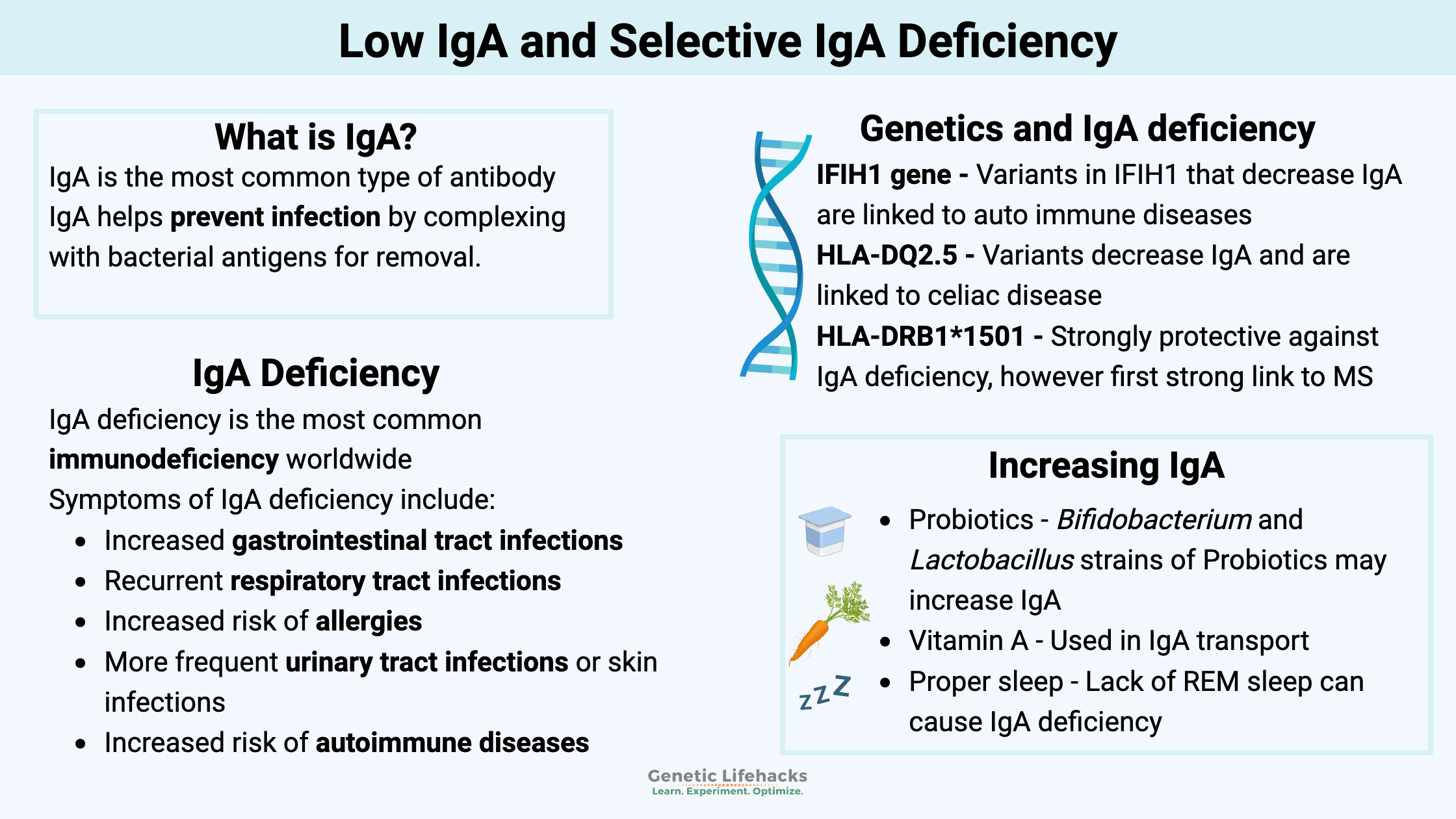
~ Selective IgA deficiency is found in approximately 1% of the population
~ The majority of people with IgA deficiency have no symptoms, but it can increase the risk of intestinal or respiratory infections, as well as allergies.
~ IgA deficiency can be (partly) genetic, or it can be due to other causes such as medications or autoimmunity.

Members will see their genotype report below, plus additional solutions in the Lifehacks section. Consider joining today

What is IgA deficiency?

Selective IgA deficiency (SIgAD) is the most common immunodeficiency worldwide, with an estimated prevalence of 1:400. However, the prevalence varies considerably by ethnicity, being more common in Caucasian populations (about 1%)).[ref]

IgA deficiency is a genetic immunodeficiency disorder characterized by the absence or very low levels of immunoglobulin A (IgA). An essential antibody, IgA plays a critical role in protecting mucosal surfaces in the body, such as the respiratory and gastrointestinal tracts, from infection.

IgA is the most common type of antibody in the body. On mucosal surfaces, it helps prevent the penetration of intestinal bacteria through the intestinal or lung mucosa. IgA helps prevent infection by complexing with bacterial antigens for removal.[ref][ref]

Additionally, IgA plays a role in how the body tolerates food antigens and other antigens, making it important in allergies.[ref]

Serum IgA levels are influenced by age. At birth, IgA is virtually nonexistent, but it gradually increases throughout childhood and adolescence to reach adult levels. Normal adult levels range from 61 to 365 mg/dl.[]

Partial IgA deficiency is usually defined as serum IgA levels >7 mg/dl, but below the lower limit of the normal range for the age (e.g. 7 – 60 mg/dl for adults). Total IgA deficiency is usually defined as serum IgA levels < 7 mg/dl.[]

Selective IgA deficiency is the term used for low IgA levels but normal IgG, IgM, and IgE levels.
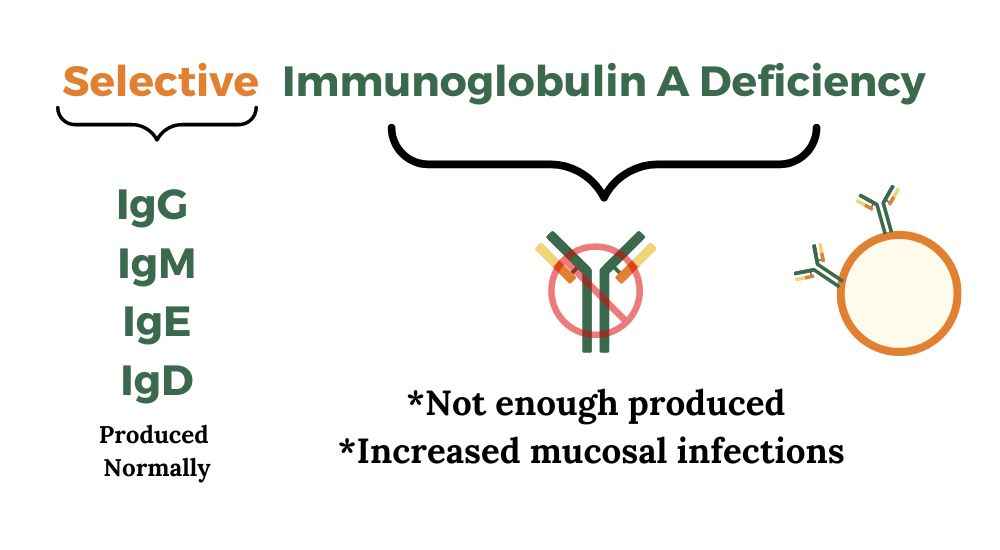
Symptoms of partial IgA deficiency:

Most people with IgA deficiency don’t have any noticable symptoms, but they may be prone to getting certain types of infections more often.

Symptoms of IgA deficiency include:[ref][ref][ref]

  • Increased gastrointestinal tract infections
  • Recurrent respiratory tract infections
  • Increased risk of allergies
  • More frequent urinary tract infections or skin infections
  • Increased risk of autoimmune diseases

IgA deficiency is often diagnosed when testing for autoimmune diseases.

Celiac disease is much more common in people with IgA deficiency. In one study, 6.7% of celiac disease patients had IgA deficiency compared to 0.2% of healthy controls. Type 1 diabetes is also much more common in people with IgA deficiency.[ref]

What causes IgA Deficiency?

B ceB cells are a type of immune cell that produces antibodies. The IgA antibody can be released or secreted by the B cells into the mucosa. T cells and B cells interact, and this interaction causes the B cells to “class-switch” to produce IgA. IgA deficiency can be caused by problems with the B cells, with the T cells, or with the signaling molecules produced by the T cells to cause the B cell class switching.[ref]

Researchers are still figuring out all the mechanisms that cause low IgA levels. One reason for low IgA is depletion of CD4+CD25+ Treg cells. Another is the inability of B cells to switch classes. Yet another mechanism is reduced proliferative activity of CD4+ T cells.[ref][ref]

Genetics and IgA deficiency:

IgA deficiency can be inherited, and there is a genetic component to it for most people. For example, if your mother or father has IgA deficiency you have a 50-fold increased risk of having it. [ref]

However, there are several ways that someone can inherit IgA deficiency, and environmental factors likely also play a role.

Certain HLA types are associated with an increased susceptibility to IgA deficiency, and mutations related to common variable immunodeficiency can also cause IgA deficiency. Variants in TNFSF13 and IFIH1 also increase the relative risk of IgA deficiency.[ref][ref]

In addition, rare genetic diseases linked to a single mutation may also cause IgA deficiency, such as in people with ataxia-telangiectasia, Wiskott-Aldrich syndrome, and trisomy 22.[ref]

Other causes of IgA deficiency:

Certain bacteria and viruses can secrete an enzyme that destroys IgA, resulting in an IgA deficiency during infection. A type of pneumonia bacteria and a type of influenza virus can decrease IgA. The bacteria that cause gonorrhea also decrease IgA.

IgA deficiency may also be autoimmune or caused by certain medications.

Circadian rhythm, gut bacteria, and IgA:

Circadian rhythm refers to your built-in 24-hour molecular clock. The expression of many genes, including immune system genes, varies throughout the course of a day. For example, you won’t produce many of the enzymes needed to break down food while you’re asleep.

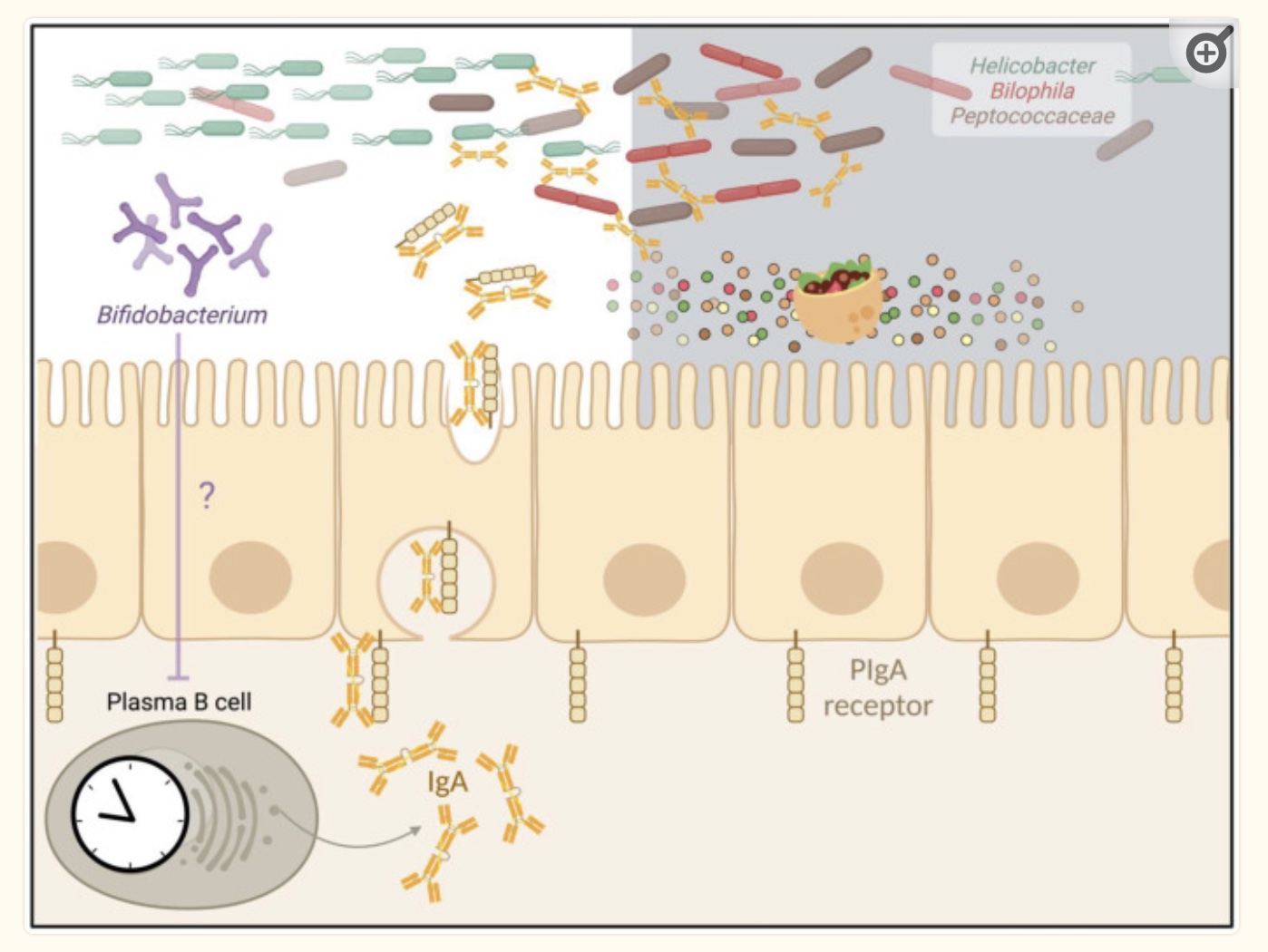
Interestingly, your gut microbiome also is impacted by your circadian rhythm, with fluctuating microbe levels over the course of a day. Changes in circadian rhythm can impact your gut microbiome. Jet lag, for example, throws off the oscillations of your gut bacteria.[ref]

Research on the gut microbiome, circadian rhythm, and the host (you!) immune system is fairly new. A recent study showed that secretory IgA levels are highest during the daytime – around mid-day – and lowest at night.[ref] This is something to keep in mind if you are getting your IgA levels tested, with tests at mid-day likely showing the highest levels compared to evening or early morning tests.

Research on the gut microbiome and IgA levels also shows that there is an interaction. Antibiotics decrease gut microbe levels, which is associated with lower IgA levels. Probiotics can also increase IgA levels.[ref]
PMC9855434

IgA Deficiency Genotype Report

Members: Log in to see your data below.
Not a member? Join here.


Access this content:

An active subscription is required to access this content.

Join as a member


Lifehacks for increasing IgA levels

Testing your IgA levels:

You may be wondering if your frequent respiratory infections mean that you have a partial IgA deficiency? The only way to know is to have an IgA blood test done. Talk with your doctor about ordering the test, or you can order it yourself in the U.S. through an online lab company.

Research Studies on Probiotics that Increase IgA:

The rest of this article is for Genetic Lifehacks members only. Consider joining today to see the rest of this article.

Access this content:

An active subscription is required to access this content.

Join as a member


Related Articles and Topics:

Genetics of Mannose-Binding Lectin (MBL) Deficiency

Celiac Genes: How to Check Your Raw Data


References:

Bagheri, Yasser, et al. “B Cells and T Cells Abnormalities in Patients with Selective IgA Deficiency.” Allergy, Asthma, and Clinical Immunology: Official Journal of the Canadian Society of Allergy and Clinical Immunology, vol. 19, no. 1, Mar. 2023, p. 23. PubMed, https://doi.org/10.1186/s13223-023-00775-6.
Bronson, Paola G., et al. “Common Variants at PVT1, ATG13–AMBRA1, AHI1 and CLEC16A Are Associated with Selective IgA deficiency.” Nature Genetics, vol. 48, no. 11, Nov. 2016, pp. 1425–29. PubMed Central, https://doi.org/10.1038/ng.3675.
Cen, Han, et al. “Association of IFIH1 Rs1990760 Polymorphism with Susceptibility to Autoimmune Diseases: A Meta-Analysis.” Autoimmunity, vol. 46, no. 7, Nov. 2013, pp. 455–62. PubMed, https://doi.org/10.3109/08916934.2013.796937.
Cinicola, Bianca Laura, et al. “Selective IgA Deficiency and Allergy: A Fresh Look to an Old Story.” Medicina, vol. 58, no. 1, Jan. 2022, p. 129. PubMed Central, https://doi.org/10.3390/medicina58010129.
Cong, Yingzi, et al. “A Dominant, Coordinated T Regulatory Cell-IgA Response to the Intestinal Microbiota.” Proceedings of the National Academy of Sciences of the United States of America, vol. 106, no. 46, Nov. 2009, pp. 19256–61. PubMed Central, https://doi.org/10.1073/pnas.0812681106.
Cunningham-Rundles, C. “Physiology of IgA and IgA Deficiency.” Journal of Clinical Immunology, vol. 21, no. 5, Sept. 2001, pp. 303–09. PubMed, https://doi.org/10.1023/a:1012241117984.
De Silvestri, A., et al. “The Involvement of HLA Class II Alleles in Multiple Sclerosis: A Systematic Review with Meta-Analysis.” Disease Markers, vol. 2019, 2019, p. 1409069. PubMed, https://doi.org/10.1155/2019/1409069.
Ferreira, Ricardo C., Qiang Pan-Hammarström, Robert R. Graham, Vesela Gateva, et al. “Association of IFIH1 and Other Autoimmunity Risk Alleles with Selective IgA Deficiency.” Nature Genetics, vol. 42, no. 9, Sept. 2010, pp. 777–80. PubMed, https://doi.org/10.1038/ng.644.
Ferreira, Ricardo C., Qiang Pan-Hammarström, Robert R. Graham, Gumersindo Fontán, et al. “High-Density SNP Mapping of the HLA Region Identifies Multiple Independent Susceptibility Loci Associated with Selective IgA Deficiency.” PLoS Genetics, vol. 8, no. 1, Jan. 2012, p. e1002476. PubMed Central, https://doi.org/10.1371/journal.pgen.1002476.
Harbige, L. S., et al. “Immune Response of Healthy Adults to the Ingested Probiotic Lactobacillus Casei Shirota.” Scandinavian Journal of Immunology, vol. 84, no. 6, Dec. 2016, pp. 353–64. PubMed, https://doi.org/10.1111/sji.12495.
Invernici, Marcos M., et al. “Bifidobacterium Animalis Subsp Lactis HN019 Presents Antimicrobial Potential against Periodontopathogens and Modulates the Immunological Response of Oral Mucosa in Periodontitis Patients.” PloS One, vol. 15, no. 9, 2020, p. e0238425. PubMed, https://doi.org/10.1371/journal.pone.0238425.
Jolliff, C. R., et al. “Reference Intervals for Serum IgG, IgA, IgM, C3, and C4 as Determined by Rate Nephelometry.” Clinical Chemistry, vol. 28, no. 1, Jan. 1982, pp. 126–28.
Justiz Vaillant, Angel A., and Kamleshun Ramphul. “Antibody Deficiency Disorder (Archived).” StatPearls, StatPearls Publishing, 2025. PubMed, http://www.ncbi.nlm.nih.gov/books/NBK507905/.
Lai, Hung-Hsiang, et al. “Probiotic Lactobacillus Casei: Effective for Managing Childhood Diarrhea by Altering Gut Microbiota and Attenuating Fecal Inflammatory Markers.” Nutrients, vol. 11, no. 5, May 2019, p. 1150. PubMed, https://doi.org/10.3390/nu11051150.
Ludvigsson, Jonas F., et al. “Association between IgA Deficiency & Other Autoimmune Conditions: A Population-Based Matched Cohort Study.” Journal of Clinical Immunology, vol. 34, no. 4, May 2014, pp. 444–51. PubMed, https://doi.org/10.1007/s10875-014-0009-4.
———. “Risk of Infections Among 2100 Individuals with IgA Deficiency: A Nationwide Cohort Study.” Journal of Clinical Immunology, vol. 36, no. 2, Feb. 2016, pp. 134–40. PubMed, https://doi.org/10.1007/s10875-015-0230-9.
Maldonado, M. D., et al. “Melatonin Administrated Immediately before an Intense Exercise Reverses Oxidative Stress, Improves Immunological Defenses and Lipid Metabolism in Football Players.” Physiology & Behavior, vol. 105, no. 5, Mar. 2012, pp. 1099–103. PubMed, https://doi.org/10.1016/j.physbeh.2011.12.015.
Nocerino, Rita, et al. “The Therapeutic Efficacy of Bifidobacterium Animalis Subsp. Lactis BB-12® in Infant Colic: A Randomised, Double Blind, Placebo-Controlled Trial.” Alimentary Pharmacology & Therapeutics, vol. 51, no. 1, Jan. 2020, pp. 110–20. PubMed, https://doi.org/10.1111/apt.15561.
Park, S. J., and H. Tokura. “Bright Light Exposure during the Daytime Affects Circadian Rhythms of Urinary Melatonin and Salivary Immunoglobulin A.” Chronobiology International, vol. 16, no. 3, May 1999, pp. 359–71. PubMed, https://doi.org/10.3109/07420529909116864.
Poddighe, Dimitri, and Cristina Capittini. “The Role of HLA in the Association between IgA Deficiency and Celiac Disease.” Disease Markers, vol. 2021, Dec. 2021, p. 8632861. PubMed Central, https://doi.org/10.1155/2021/8632861.
Ratiner, Karina, et al. “Small Intestinal Microbiota Oscillations, Host Effects and Regulation—A Zoom into Three Key Effector Molecules.” Biology, vol. 12, no. 1, Jan. 2023, p. 142. PubMed Central, https://doi.org/10.3390/biology12010142.
Ruiz, Francieli S., et al. “Immune Alterations after Selective Rapid Eye Movement or Total Sleep Deprivation in Healthy Male Volunteers.” Innate Immunity, vol. 18, no. 1, Feb. 2012, pp. 44–54. PubMed, https://doi.org/10.1177/1753425910385962.
Sawcer, Stephen, et al. “Genetic Risk and a Primary Role for Cell-Mediated Immune Mechanisms in Multiple Sclerosis.” Nature, vol. 476, no. 7359, Aug. 2011, pp. 214–19. PubMed Central, https://doi.org/10.1038/nature10251.
“Search For Lab Tests Here.” Ulta Lab Tests, https://www.ultalabtests.com/testing/search. Accessed 4 Mar. 2026.
Sirisinha, Stitaya. “The Pleiotropic Role of Vitamin A in Regulating Mucosal Immunity.” Asian Pacific Journal of Allergy and Immunology, vol. 33, no. 2, June 2015, pp. 71–89.
Thaiss, Christoph A., et al. “Transkingdom Control of Microbiota Diurnal Oscillations Promotes Metabolic Homeostasis.” Cell, vol. 159, no. 3, Oct. 2014, pp. 514–29. PubMed, https://doi.org/10.1016/j.cell.2014.09.048.
Tye-Din, J. A., et al. “Appropriate Clinical Use of Human Leukocyte Antigen Typing for Coeliac Disease: An Australasian Perspective.” Internal Medicine Journal, vol. 45, no. 4, Apr. 2015, pp. 441–50. PubMed Central, https://doi.org/10.1111/imj.12716.
Yang, Chen, et al. “Genome-Wide Association Study Identifies TNFSF13 as a Susceptibility Gene for IgA in a South Chinese Population in Smokers.” Immunogenetics, vol. 64, no. 10, Oct. 2012, pp. 747–53. PubMed, https://doi.org/10.1007/s00251-012-0636-y.
Yel, Leman. “Selective IgA Deficiency.” Journal of Clinical Immunology, vol. 30, no. 1, 2010, pp. 10–16. PubMed Central, https://doi.org/10.1007/s10875-009-9357-x.
Zhang, Jingyan, et al. “Innate Mechanisms in Selective IgA Deficiency.” Frontiers in Immunology, vol. 12, Apr. 2021, p. 649112. PubMed Central, https://doi.org/10.3389/fimmu.2021.649112.

About the Author:
Debbie Moon is a biologist, engineer, author, and the founder of Genetic Lifehacks where she has helped thousands of members understand how to apply genetics to their diet, lifestyle, and health decisions. With more than 10 years of experience translating complex genetic research into practical health strategies, Debbie holds a BS in engineering from Colorado School of Mines and an MSc in biological sciences from Clemson University. She combines an engineering mindset with a biological systems approach to explain how genetic differences impact your optimal health.