Nattokinase and Lumbrokinase: Natural Supplements for Clotting and Heart Health
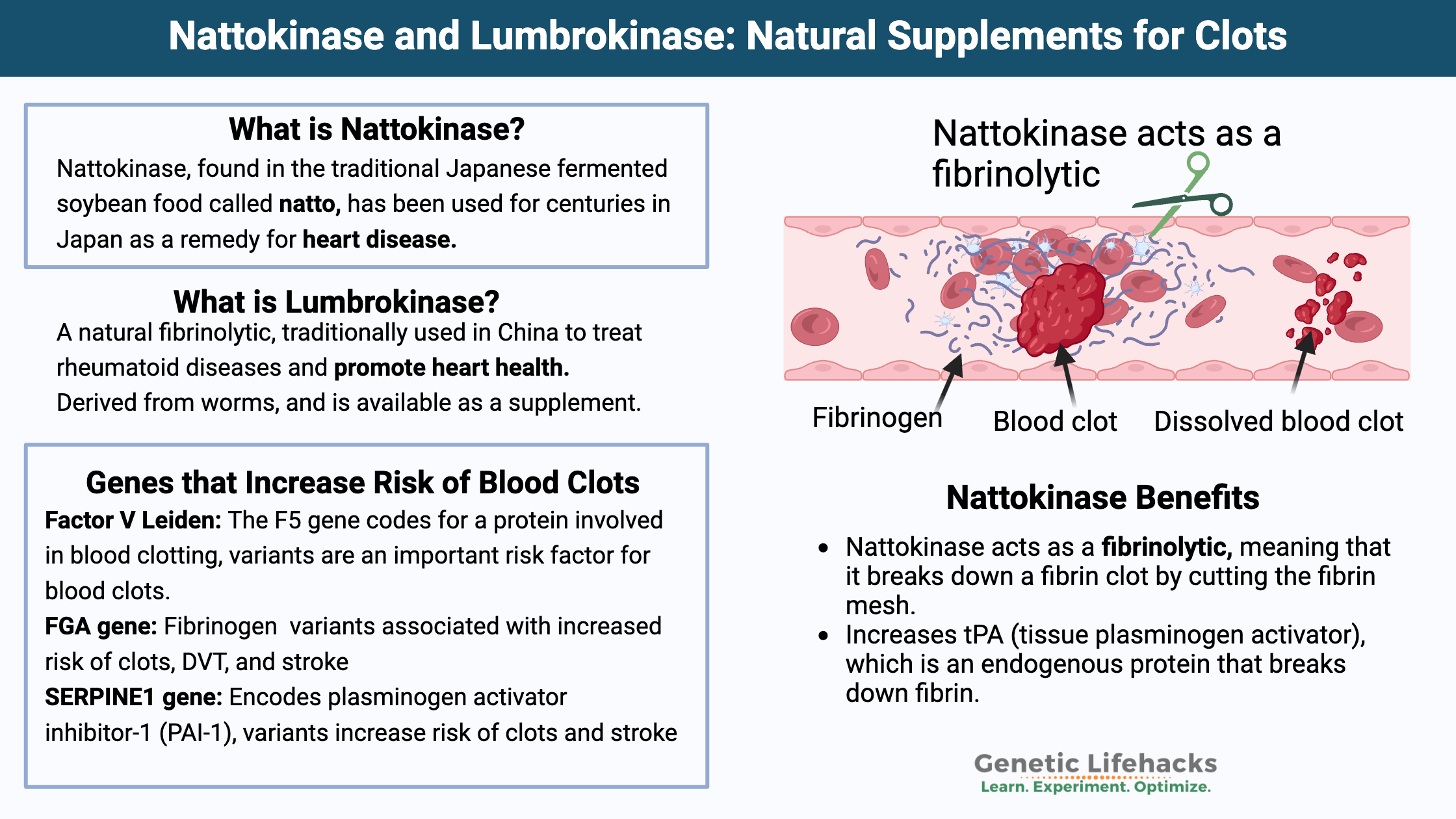
Two natural fibrinolytics to reduce clotting are nattokinase and lumbrokinase. Learn more about these options based upon the newest research and clinical trials.
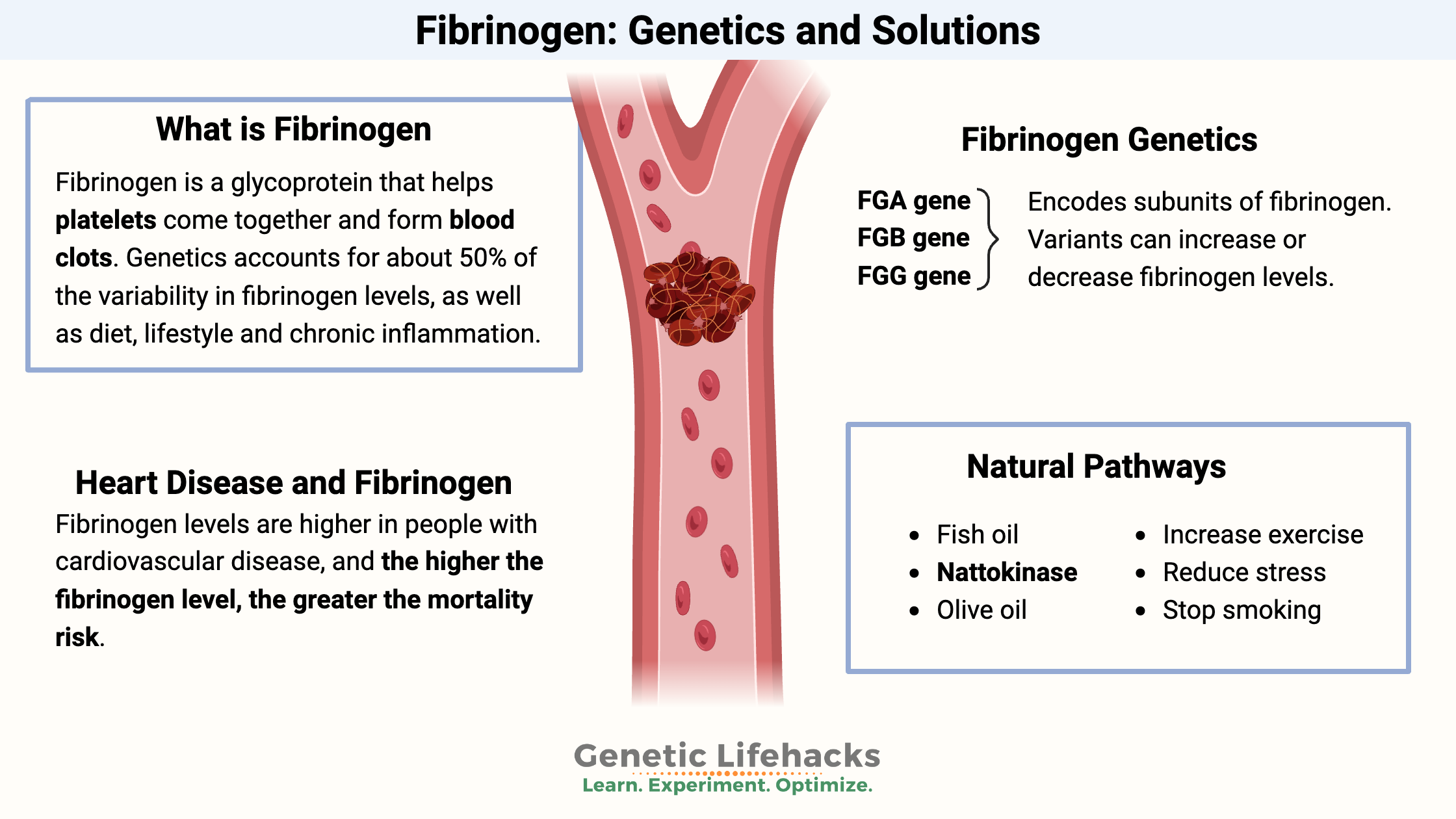
Fibrinogen is a protein that is essential for creating blood clots when you get a wound. But higher levels of fibrinogen are a major risk factor for heart disease and DVT. Learn how your genes impact your fibrinogen level.
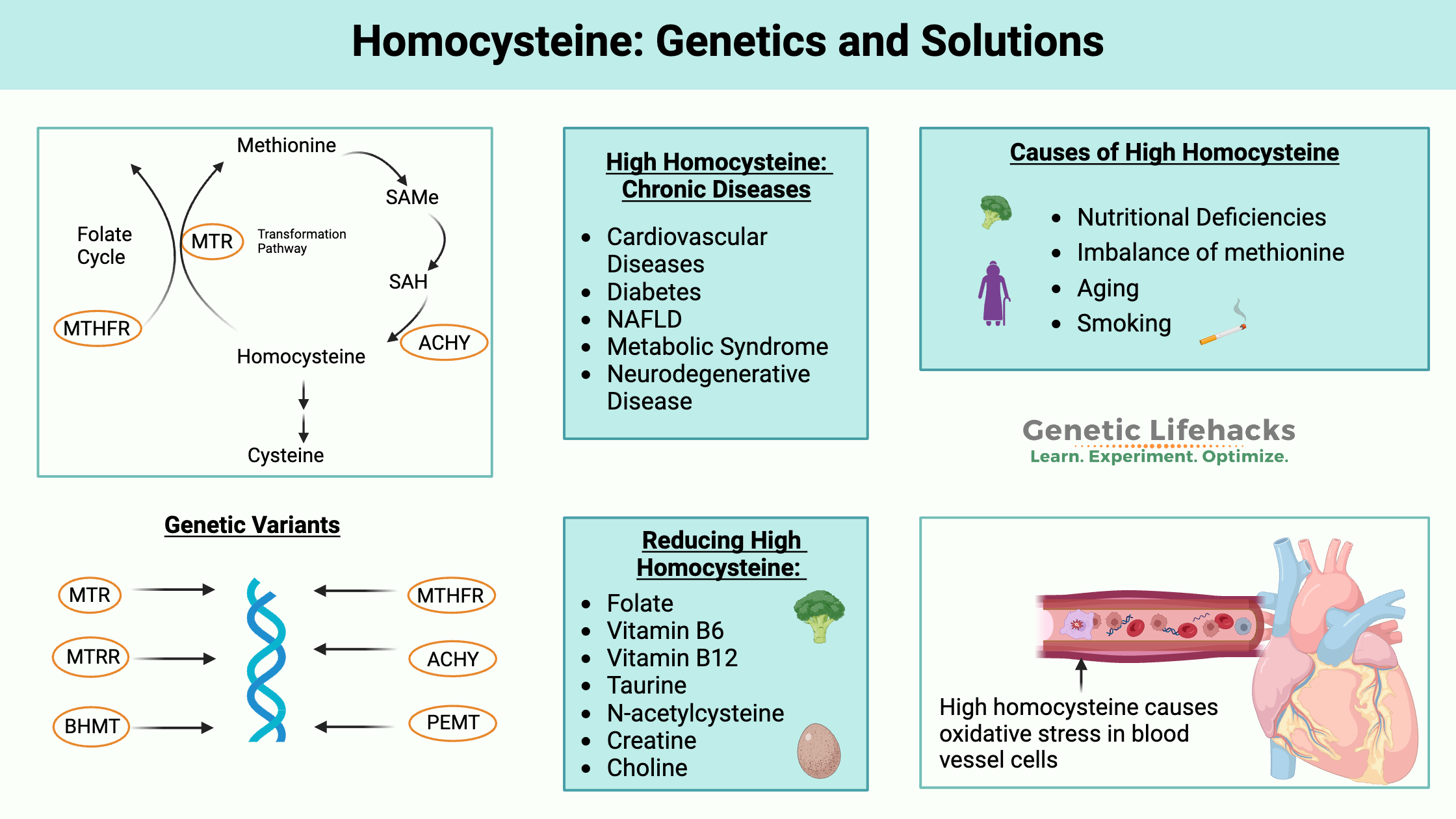
High homocysteine levels are strongly linked to an increased relative risk of cardiovascular diseases. Find out how your genes impact homocysteine levels.
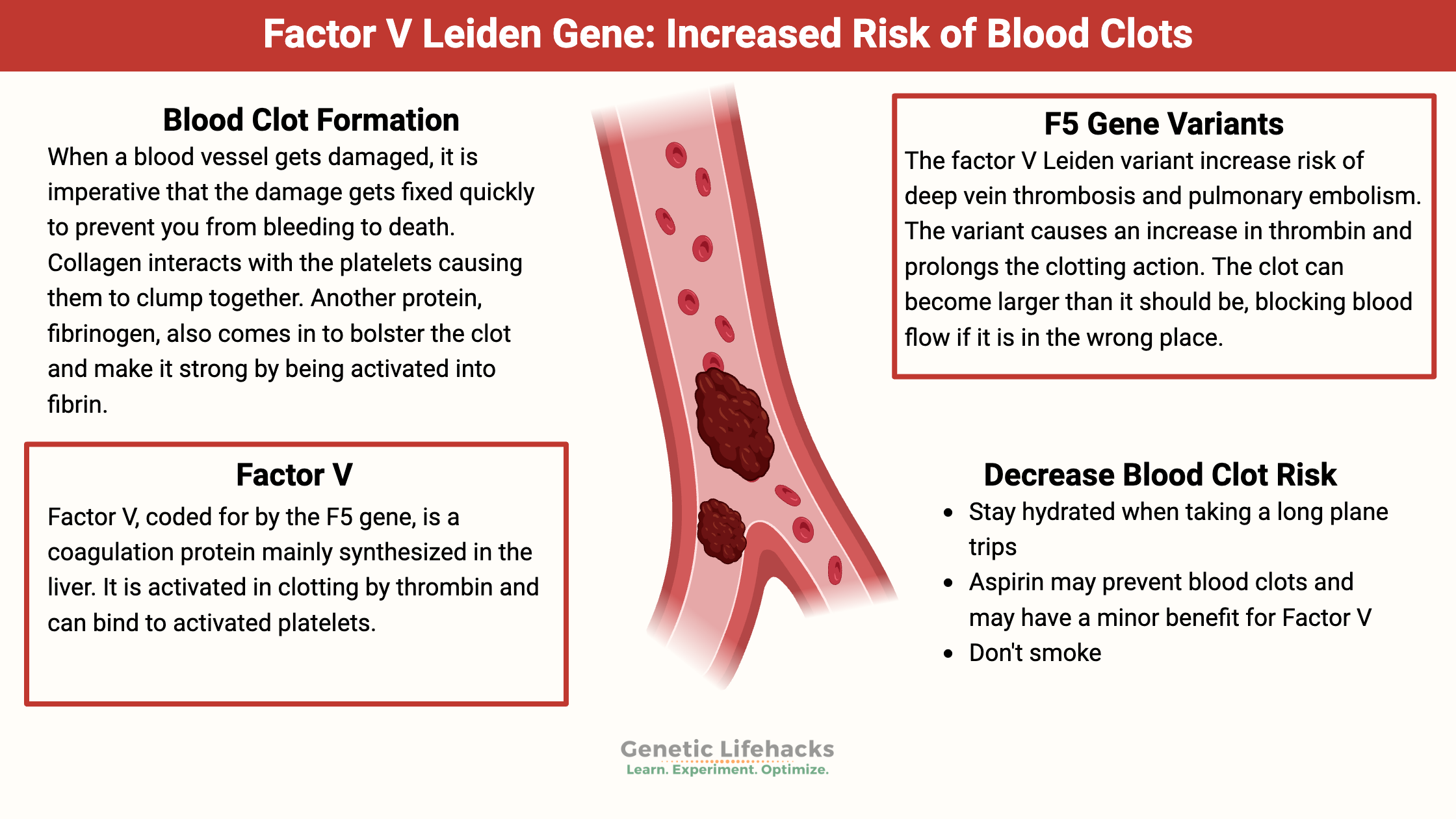
The factor V Leiden genetic mutation significantly increases the lifetime risk of blood clots. Check your genetic data to see if you carry this mutation – and then learn to recognize the symptoms of blood clots.
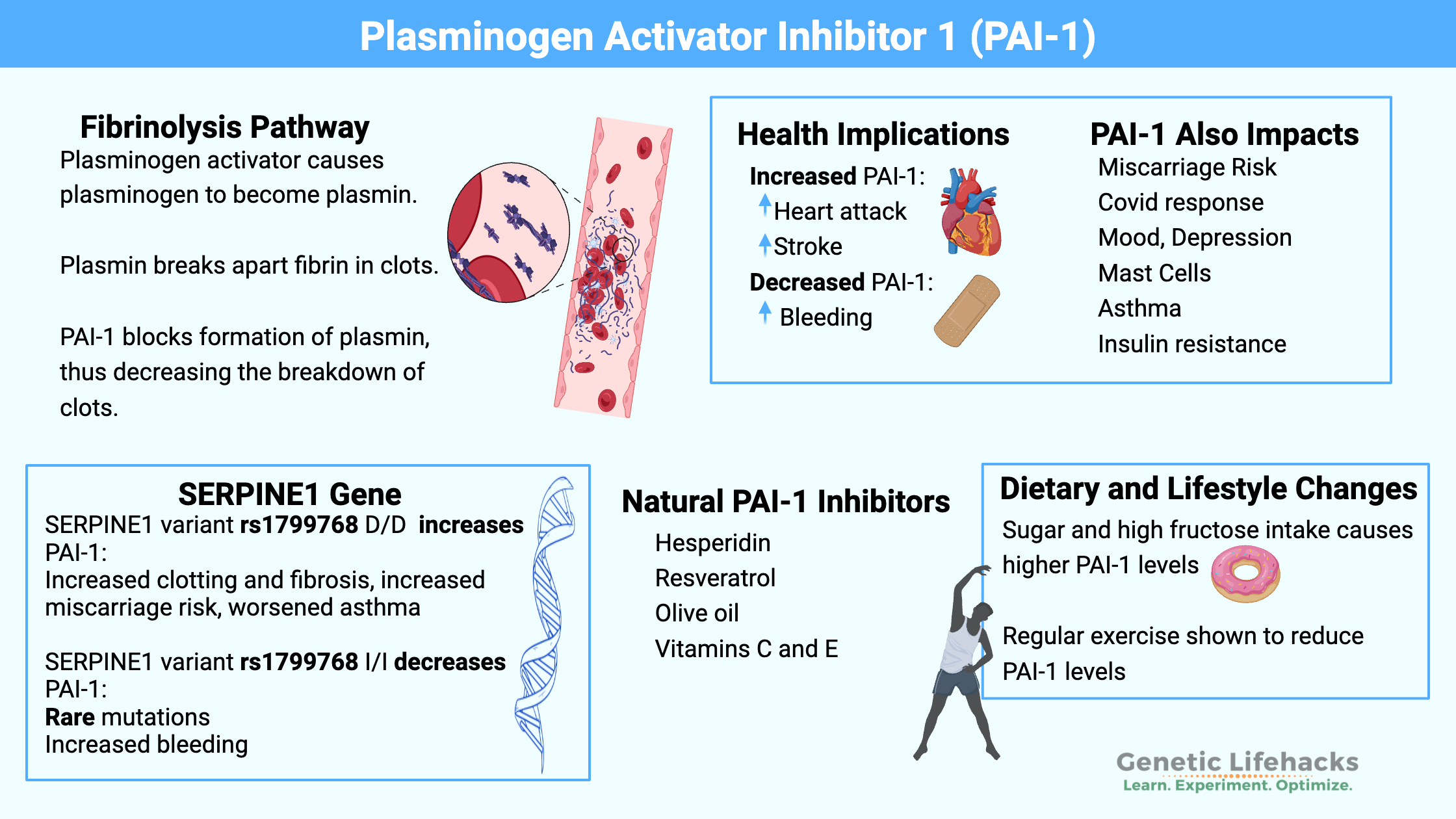
Plasminogen Activator Inhibitor (PAI-1) is an important enzyme in the regulation of the breakdown of blood clots and fibrosis. Genetic variants impact the amount of PAI-1.
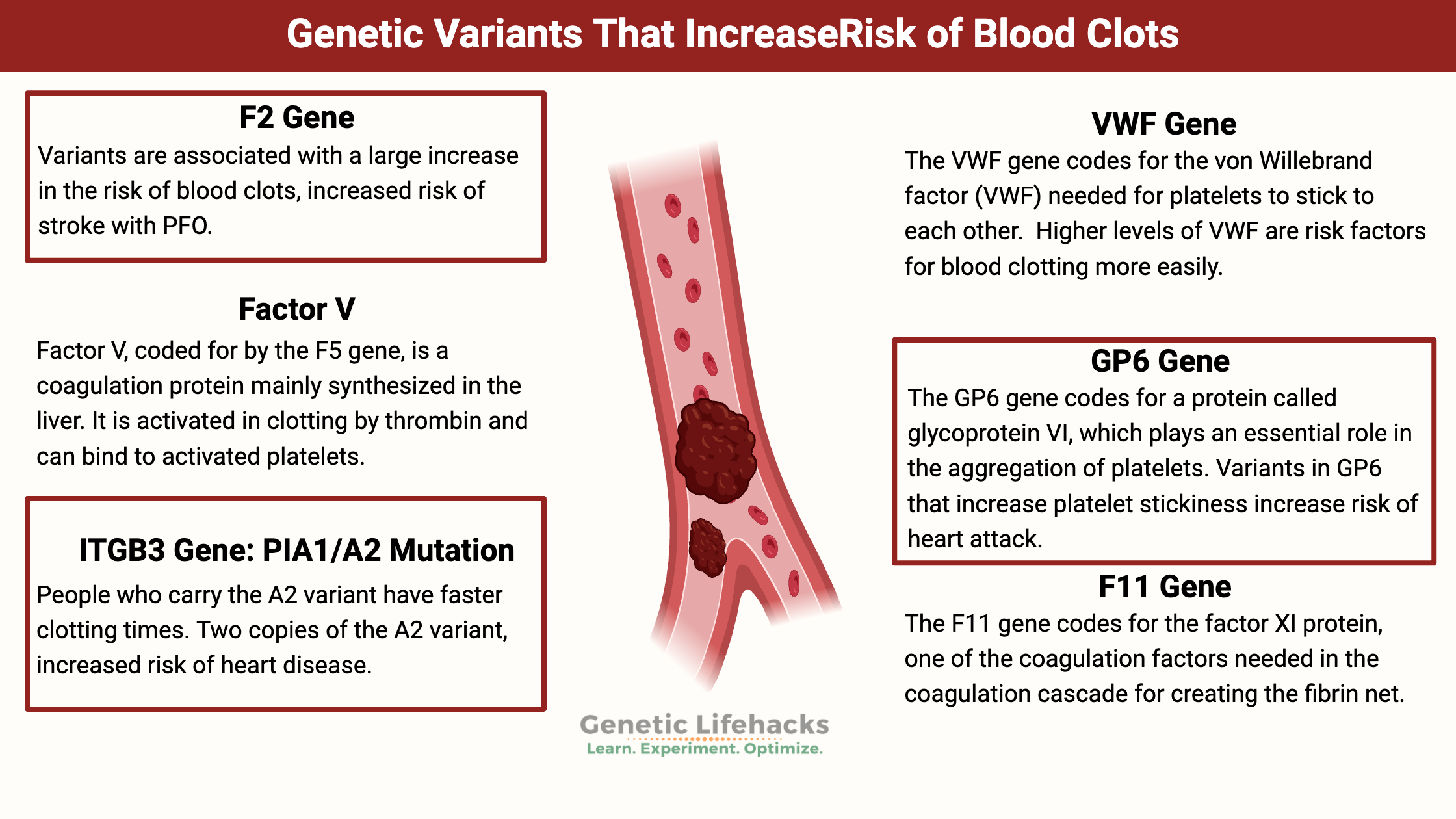
Some people are unique in their ability to form clots more easily. This article covers six different genes and the seven genetic variants that increase the risk of blood clots. It is a timely topic because blood clots seem to be a severe complication for people with COVID-19.
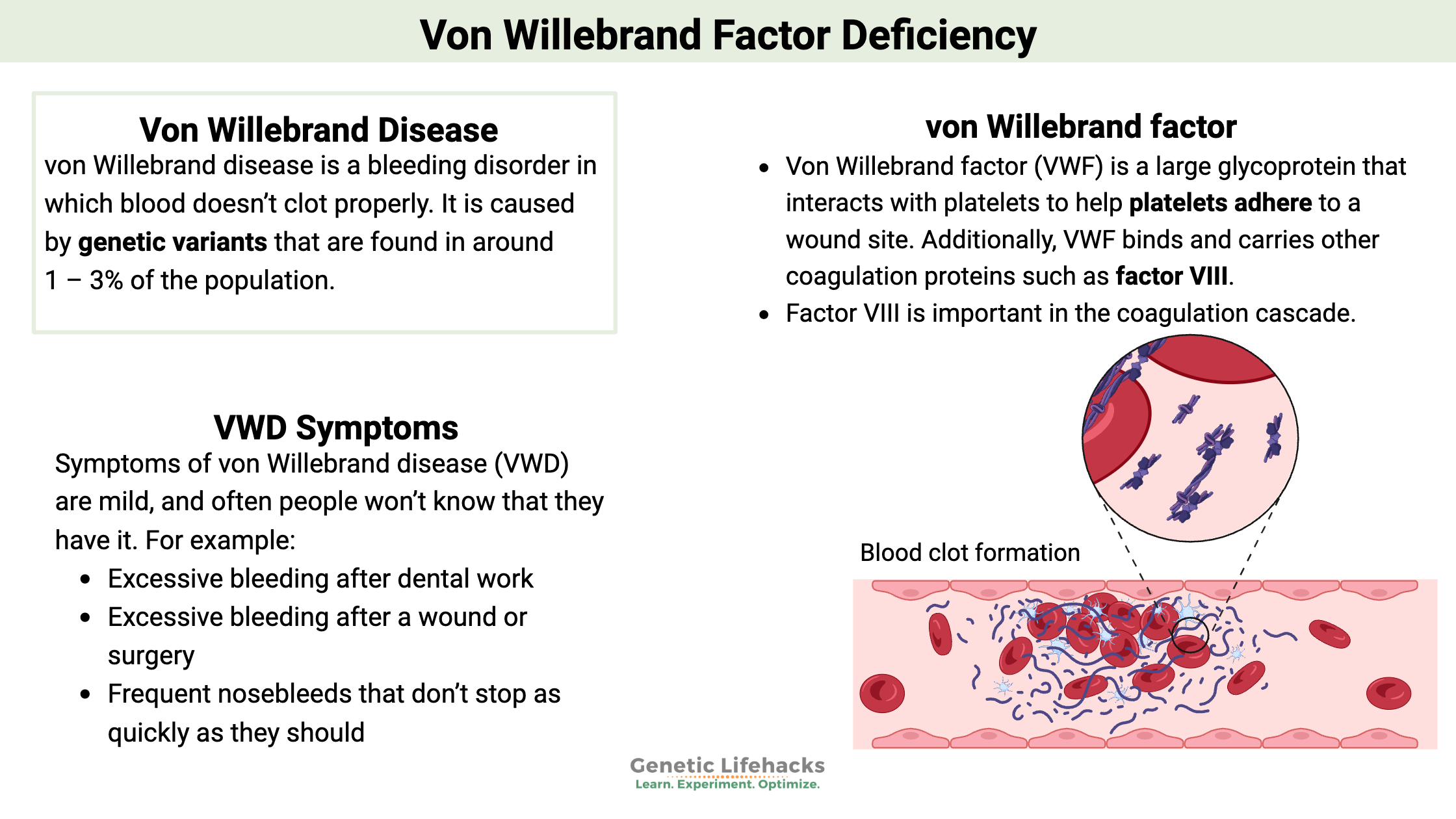
von Willebrand disease is a bleeding disorder in which blood doesn’t clot properly. Discover how genetic mutations cause the von Willebrand factor not to perform as it should.
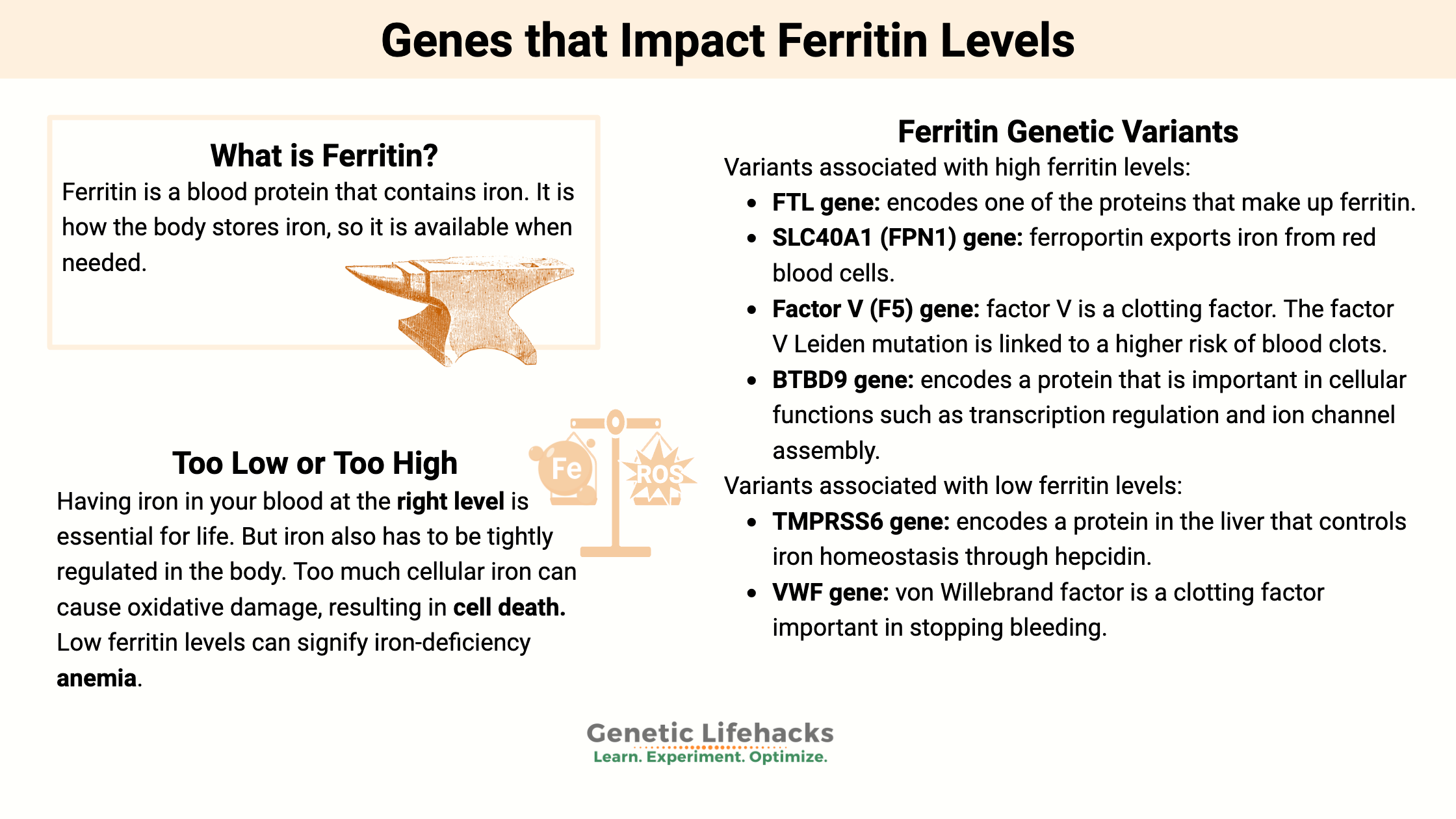
Ferritin is the storage protein for iron in the body. Storing too little or too much iron can be an indicator of an underlying problem. Discover the genetic variants that impact ferritin and how to increase ferritin with supplements or foods.
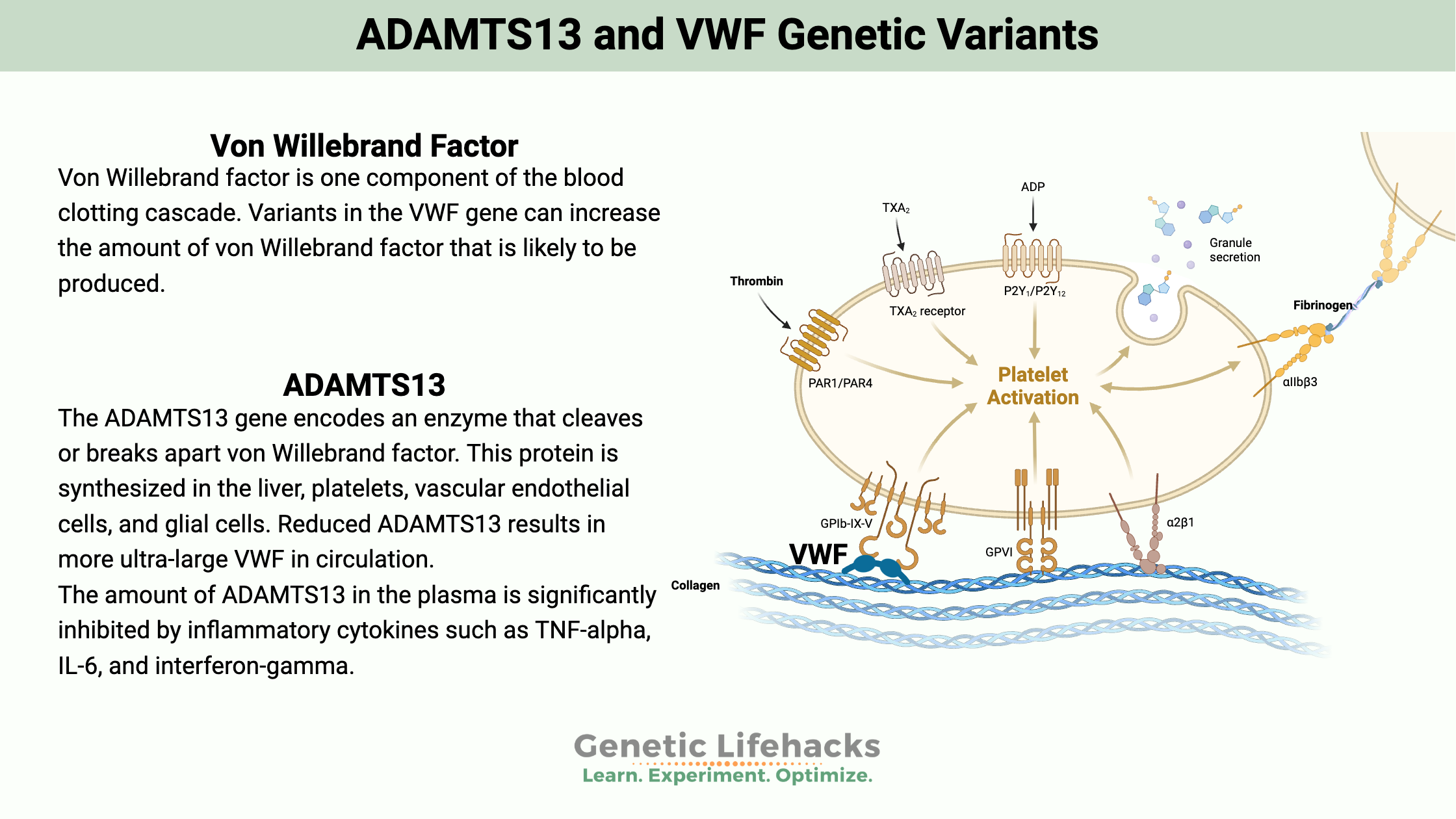
Genetic Variants involving the ADAMTS13 gene and VWF (von Willebrand Factor) can increase the risk of blood clots and thrombocytopenia.
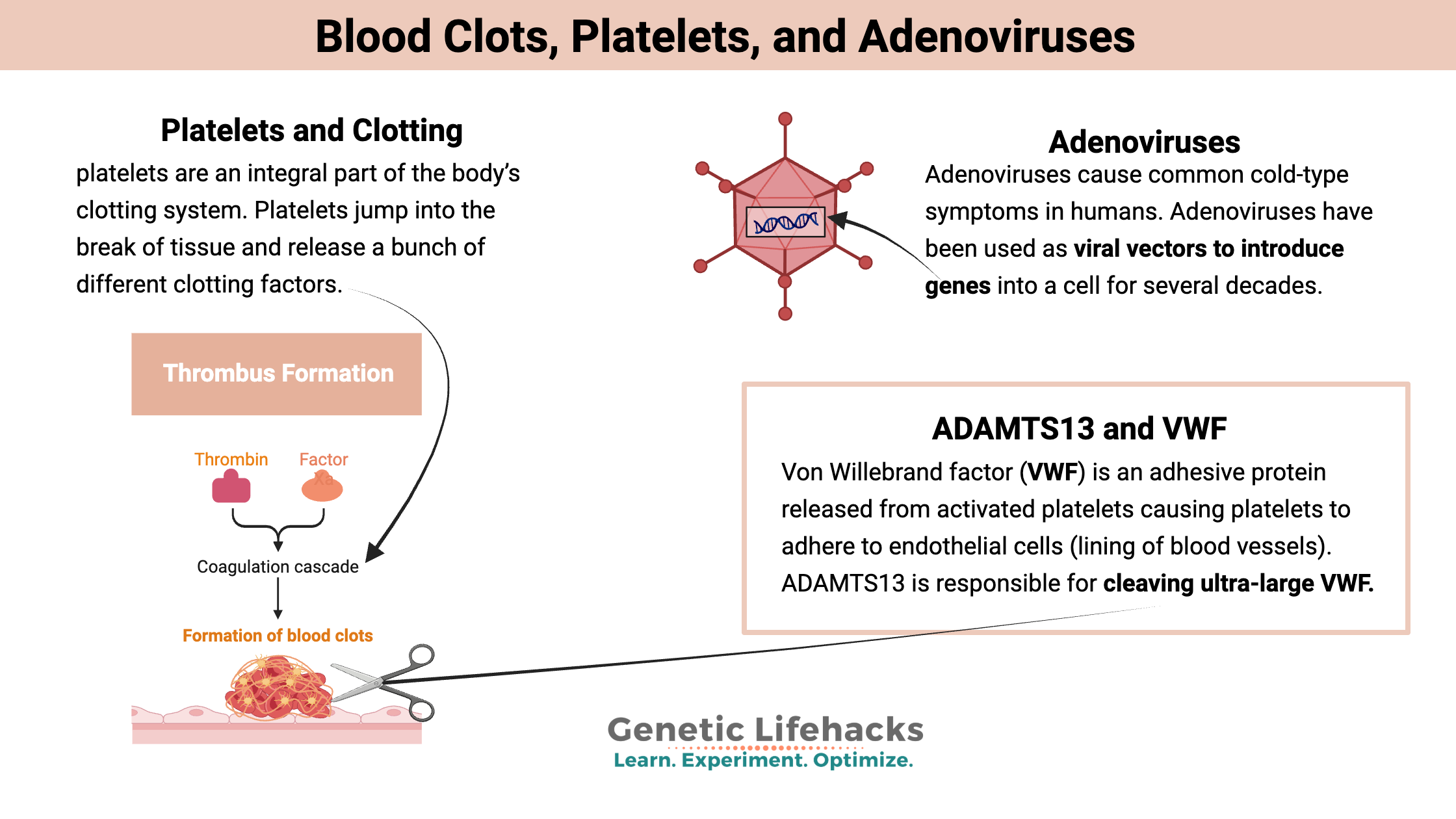
Take a look into the role of platelets, their connection to blood clots, and a discussion of the research on adenovirus-vector therapy, thrombocytopenia, and platelet reactions.
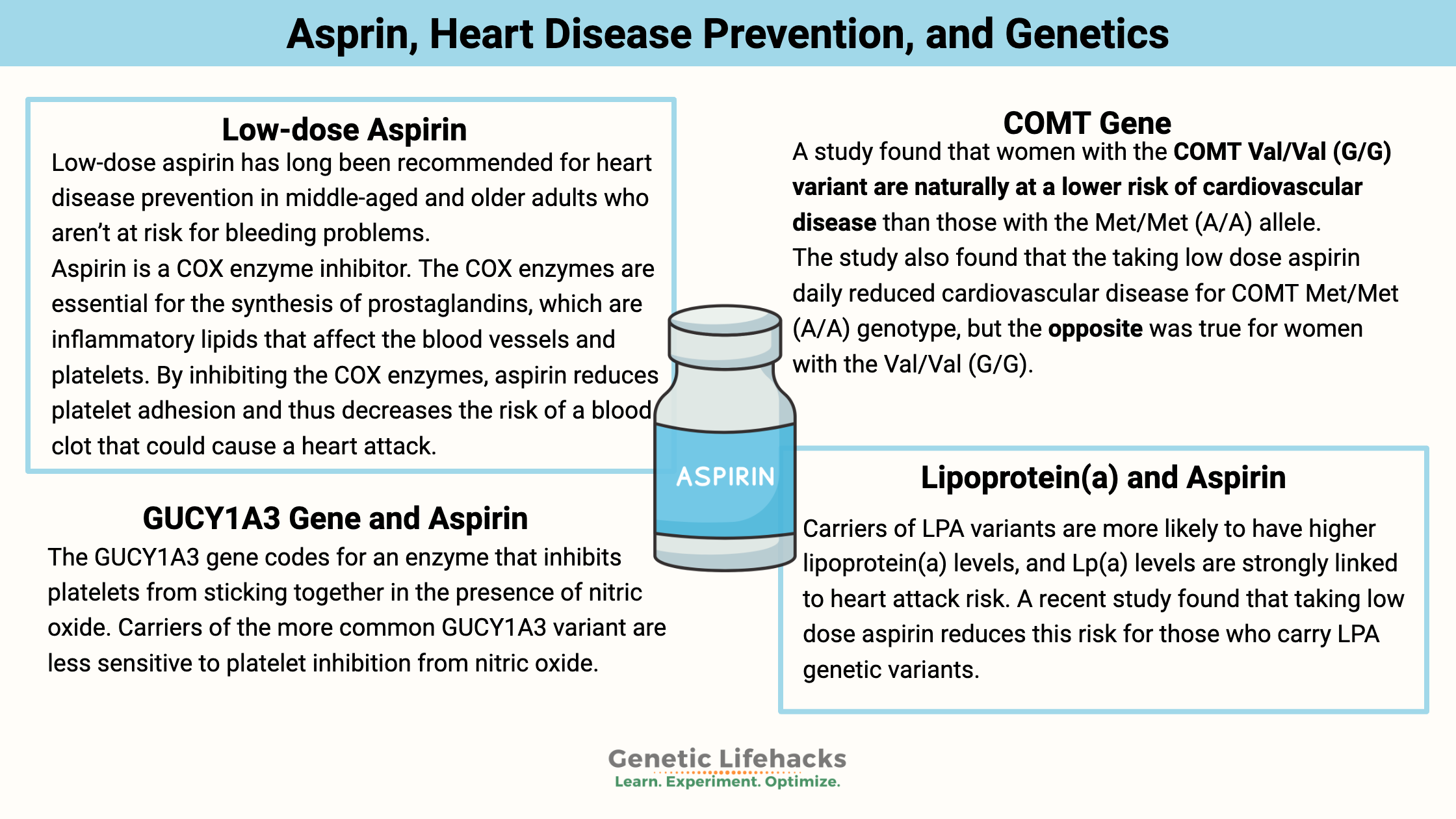
While large population studies show the benefits of aspirin, research shows that these heart-health benefits are dependent on your genes. Find out more and check your genetic raw data.
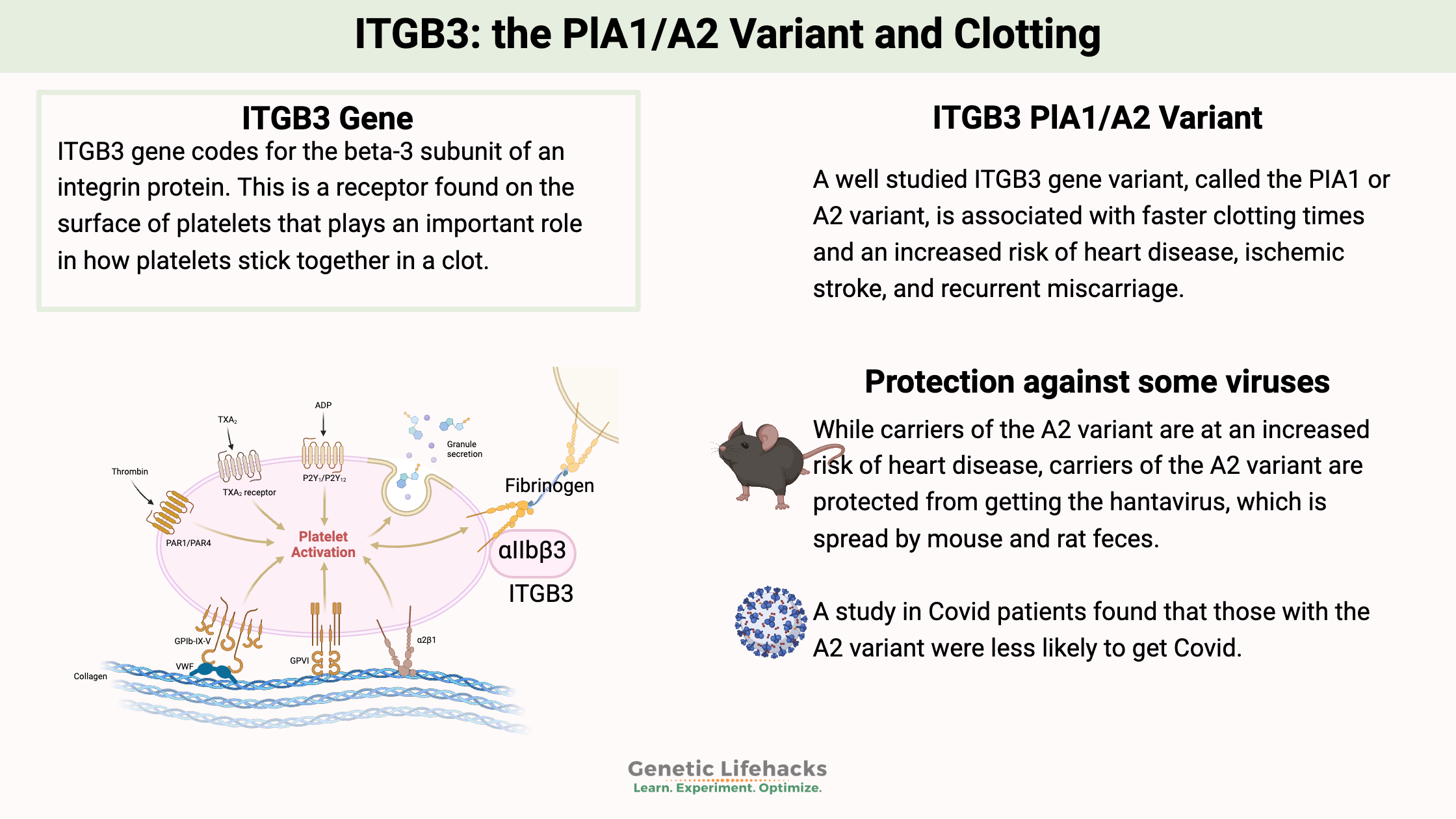
The PIA2 variant of the ITGB3 gene is linked to an increased risk of blood clots including stroke, heart attack, and DVT. But this variant also comes with a positive trade-off. Learn more with your genetic raw data.
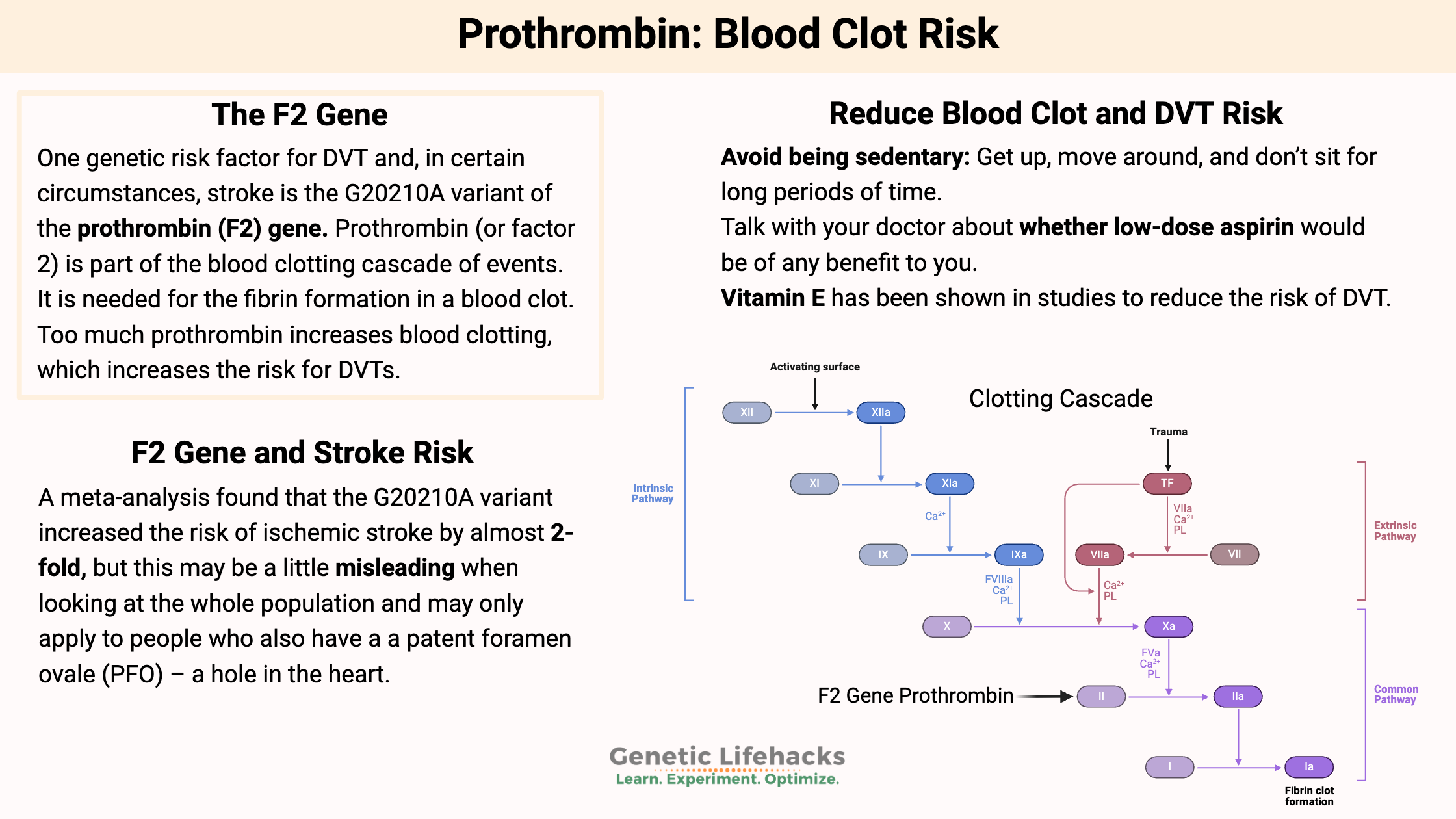
Genetic variants in the prothrombin gene increase the risk of blood clots (DVTs). Learn if you carry this risk factor for miscarriage, blood clots, and stroke.