
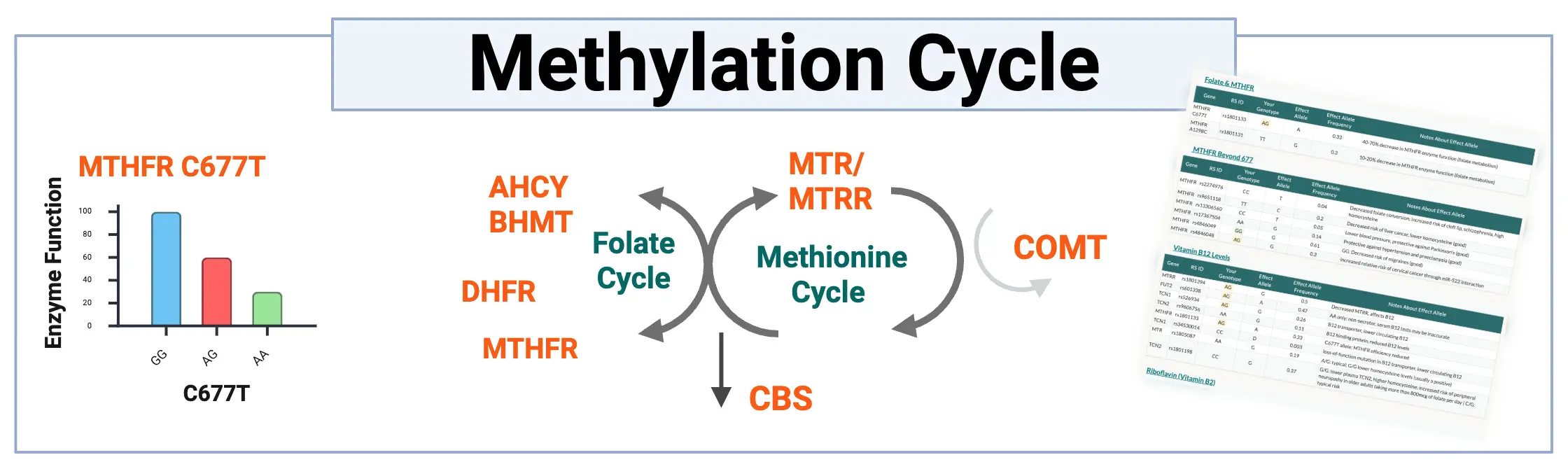
Key takeaways:
- The methylation cycle is a core biochemical process that affects DNA synthesis and repair, neurotransmitter production, detoxification, epigenetic gene expression, and energy metabolism.
- Common variants in genes like MTHFR, MTR, MTRR, BHMT, CBS, and COMT can change how efficiently you recycle folate, B12, and other methyl donors, influencing homocysteine and related health risks.
- Blood markers such as homocysteine can reflect methylation status and are often more informative than any single SNP in isolation.
- Vitamins and cofactors—including folate, B12, B2 (riboflavin), B6, choline, and creatine—play key roles in keeping the methylation cycle running smoothly.
The methylation cycle runs billions of times per day in nearly every cell, providing methyl groups (one carbon atom bonded to three hydrogens) to DNA, proteins, and small molecules. These methyl groups influence everything from how your genes are expressed to how your brain produces neurotransmitters, and from how your liver detoxifies things to how efficiently your cells repair damaged DNA.
At the center of the methylation cycle are a handful of key genes and nutrients. MTHFR is the most well-known – its variants (C677T and A1298C) affect how efficiently your body converts folate from food into the active form, methylfolate. Genes like MTR and MTRR govern how your body uses vitamin B12 to recycle homocysteine back into methionine. BHMT provides an alternative recycling route using choline. CBS controls how excess homocysteine exits the cycle. And COMT uses methyl groups to break down dopamine, norepinephrine, and estrogen — connecting methylation directly to mood, stress response, and hormone balance. Cofactors, including folate, B12, riboflavin (B2), B6, and choline, are essential here. Downstream effects of impaired methylation show up across a wide range of conditions covered in this hub: depression and anxiety, migraines, histamine intolerance, fertility challenges, and more.
This hub brings together all Genetic Lifehacks articles on the methylation cycle — organized so you can understand the pathway as a whole, explore the genes most relevant to you, and use your genetic data to make more informed decisions.
Start here if you’re new:
Members’ tools: Methylation
Methylation Cycle Topic Summary
Prioritize which articles apply to your genotypes by using the summary report. Click through from the report to the articles that will be most impactful for your genes.
Methylation Cycle Quick Report
This is a personalized report that hits the highlights for your genes in the methylation cycle. It’s an easy-to-understand starting point for learning the basics.
Core methylation pathway & folate cycle
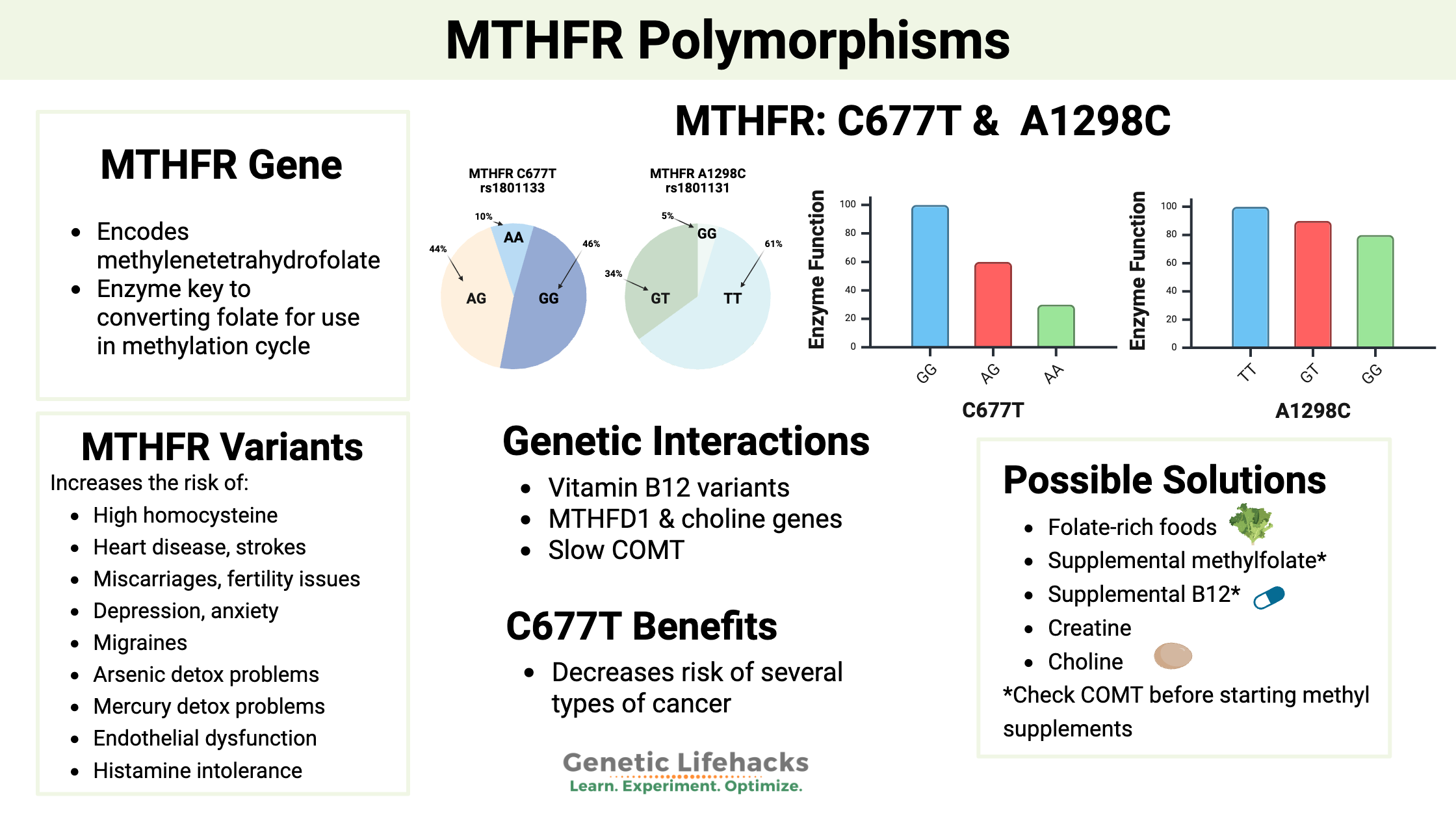
MTHFR Gene Explained: C677T and A1298C Variants, Testing, and Solutions
The MTHFR gene is important for how your body utilizes folate (vitamin B9) for creating neurotransmitters, detoxifying toxicants, and maintaining a healthy heart. It is a key gene in the methylation cycle.
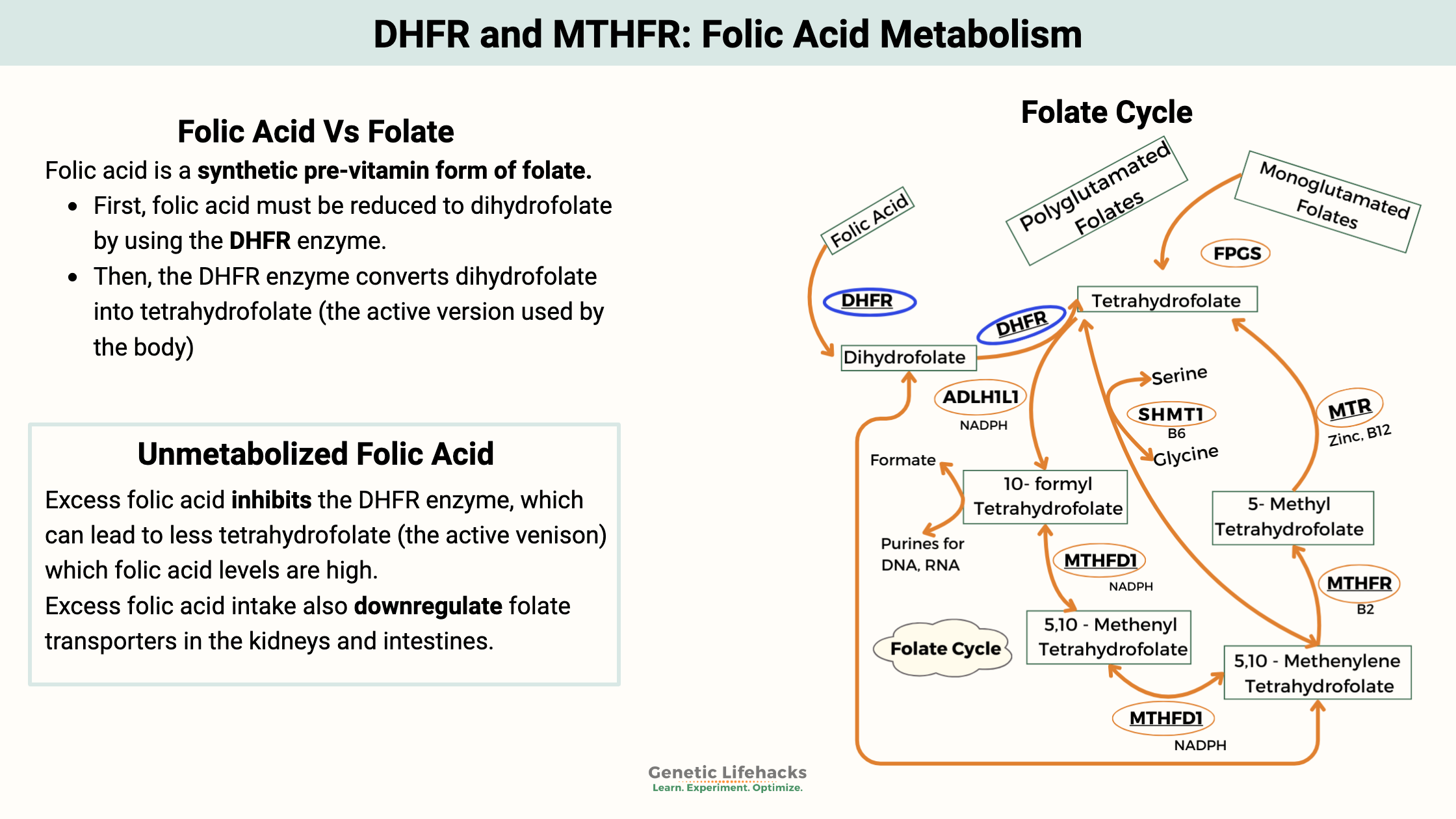
DHFR and MTHFR: Folic Acid Metabolism
Methylfolate and folic acid—what’s the difference? Learn how DHFR and MTHFR variants affect folic acid metabolism, unmetabolized folic acid, cancer and autism risk, BH4 recycling, and how to choose the right supplement for your genes.
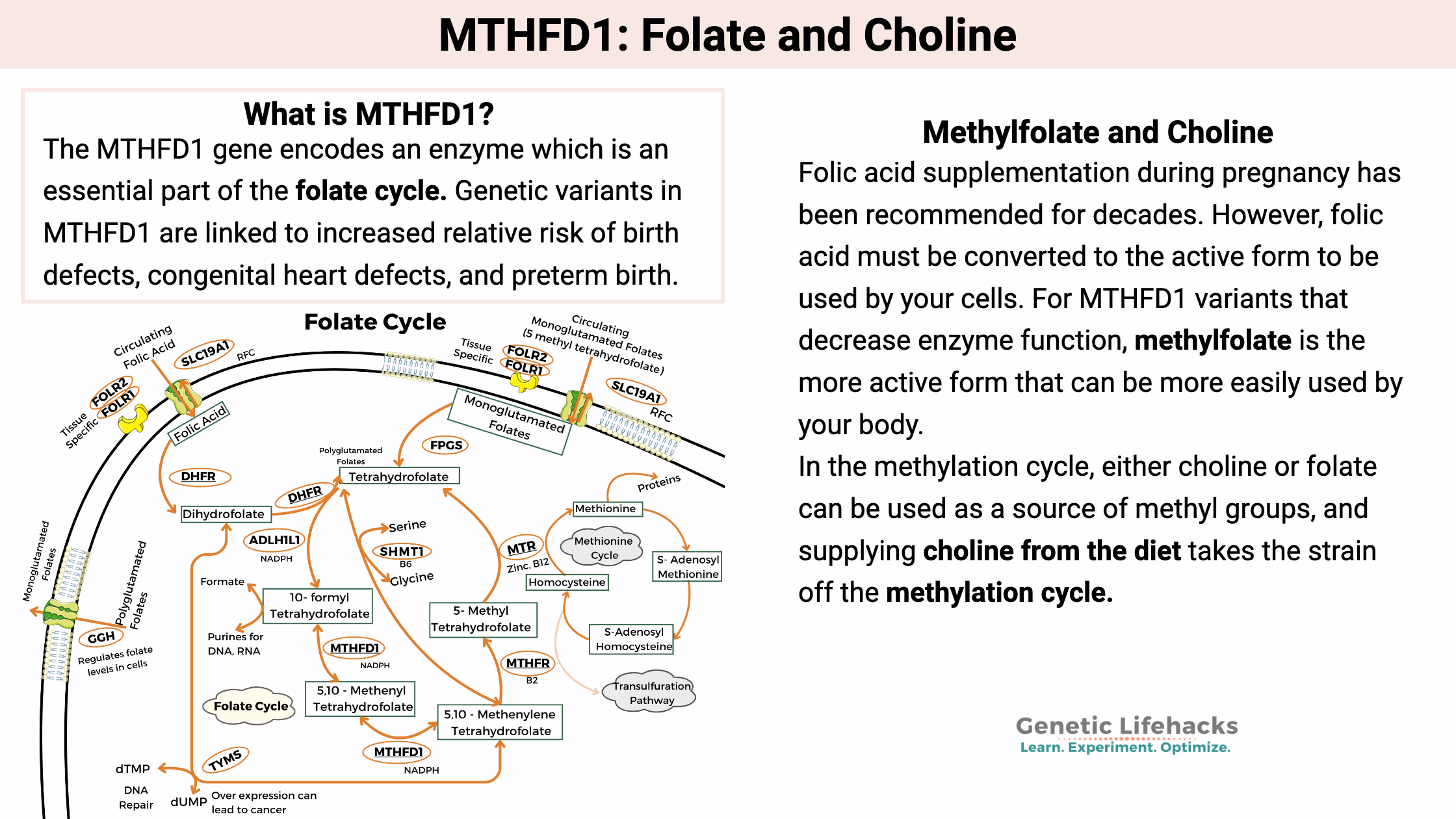
MTHFD1: Folate and Choline
The MTHFD1 gene encodes an enzyme in the folate cycle. Genetic variants here can indicate a greater need for choline or folate in the diet.
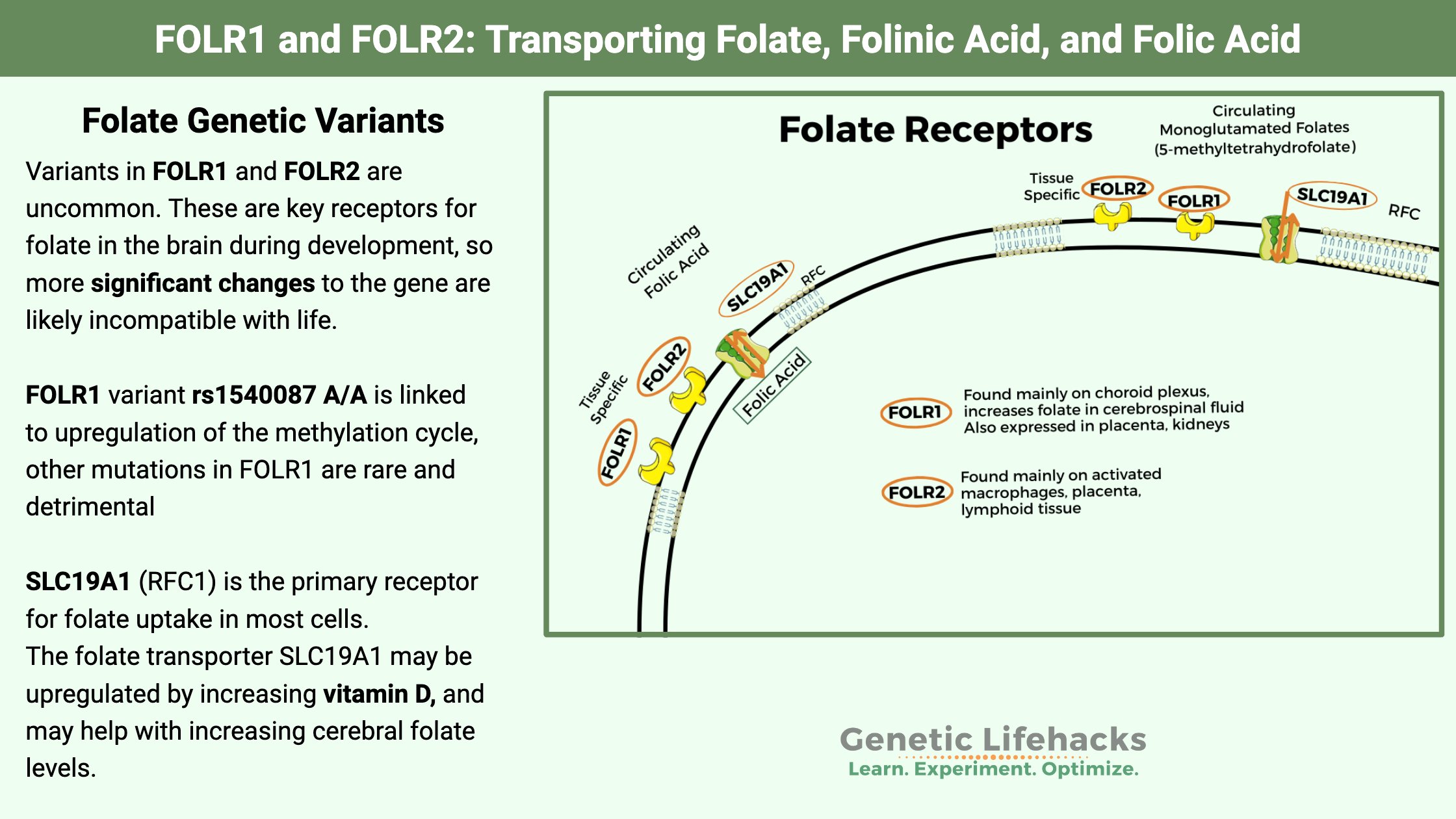
FOLR1 and FOLR2: Transporting Folate, Folinic Acid, and Folic Acid into Cells
Genetic variants in the FOLR1 and FOLR2 genes (folate receptors alpha and beta) can impact folate in the brain and in the immune response.
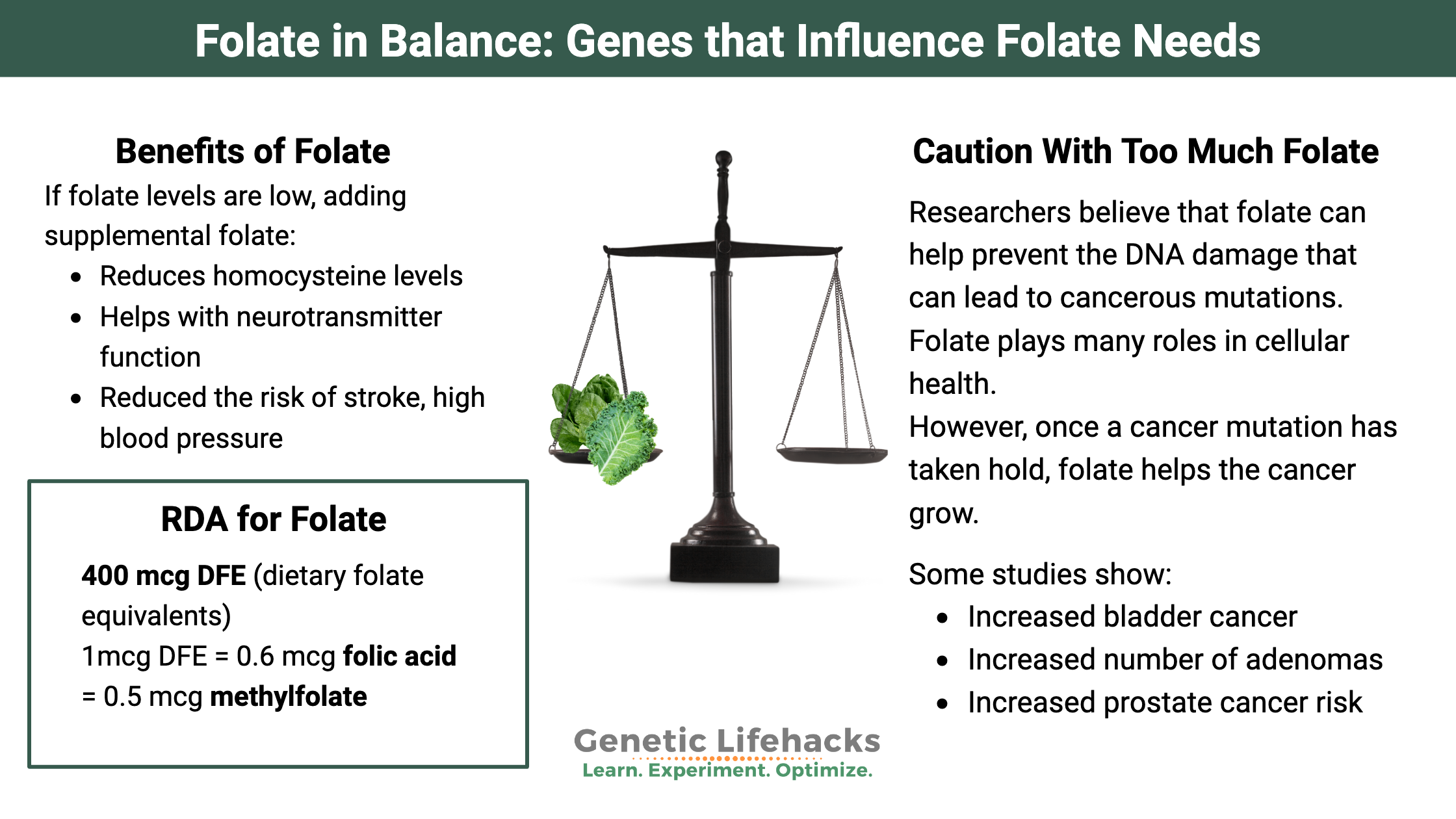
Folate Intake: How Much Is Too Much for Optimal Health?
Folate is an essential vitamin with many benefits from getting an adequate amount. However, excess folate from high dose supplements may have potentially detrimental effects.
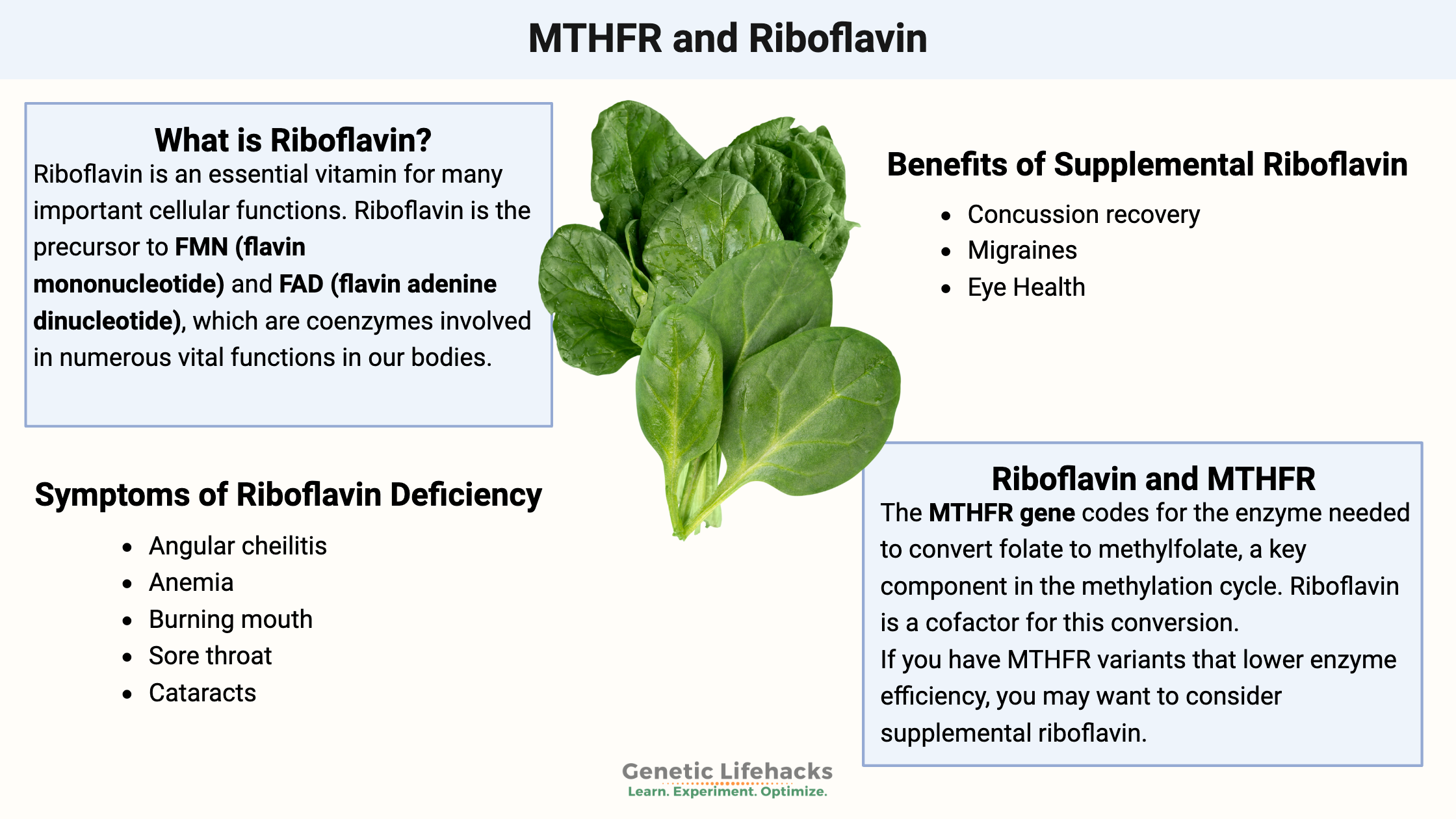
Riboflavin (Vitamin B2), MTHFR, and Deficiency Symptoms
Riboflavin, or vitamin B2, is an essential cofactor for many biological pathways. Learn how to check your genetic raw data to see if you may need more riboflavin.
Vitamins, cofactors, and related nutrients
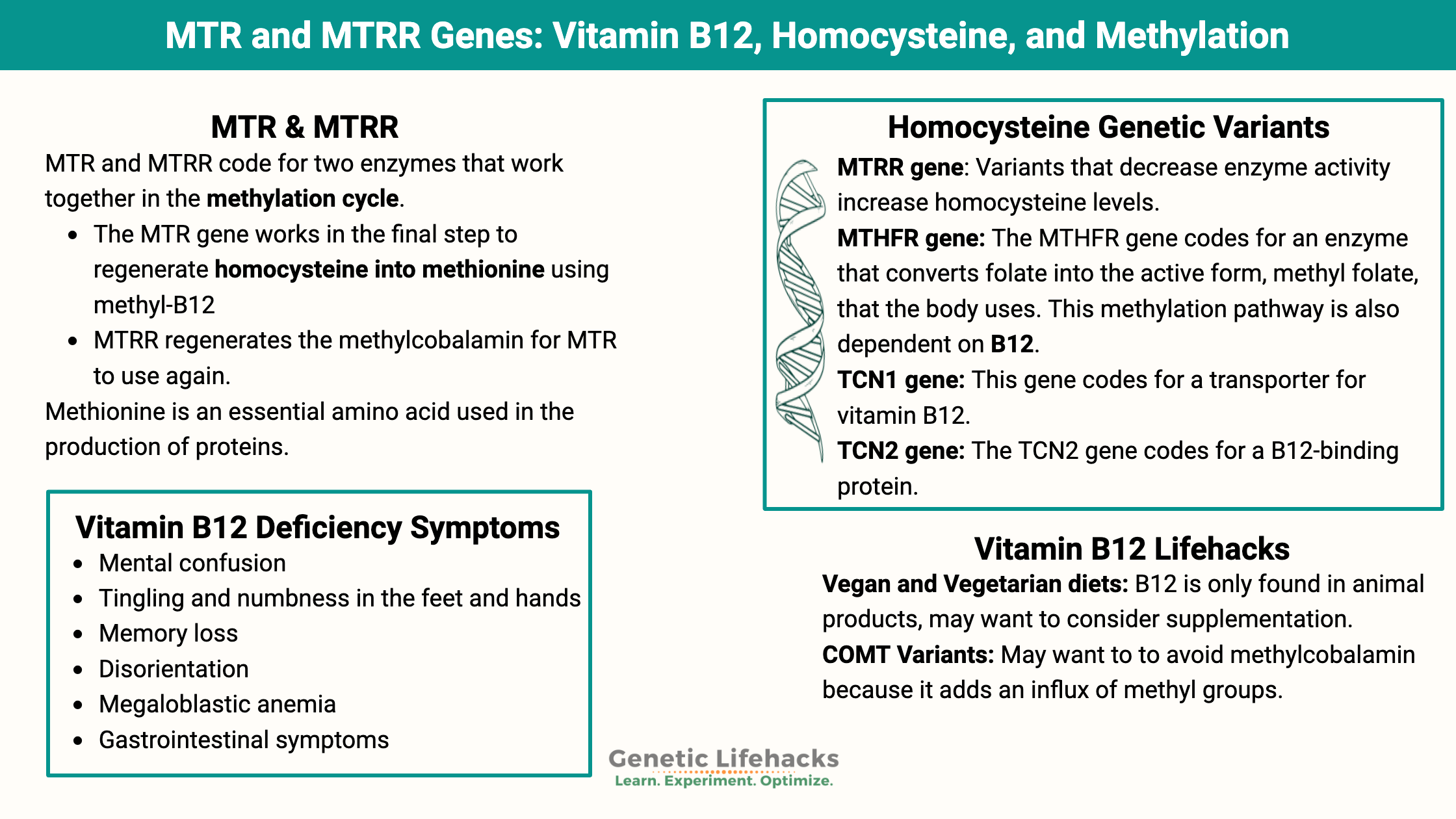
Vitamin B12, MTR & MTRR, and Methylation
There are several genes that can influence your absorption, transport, and need for vitamin B12. Some people need higher amounts of B12, and some people thrive on different forms of B12. Take a look at your genetic data to see if you should up your intake of B12.
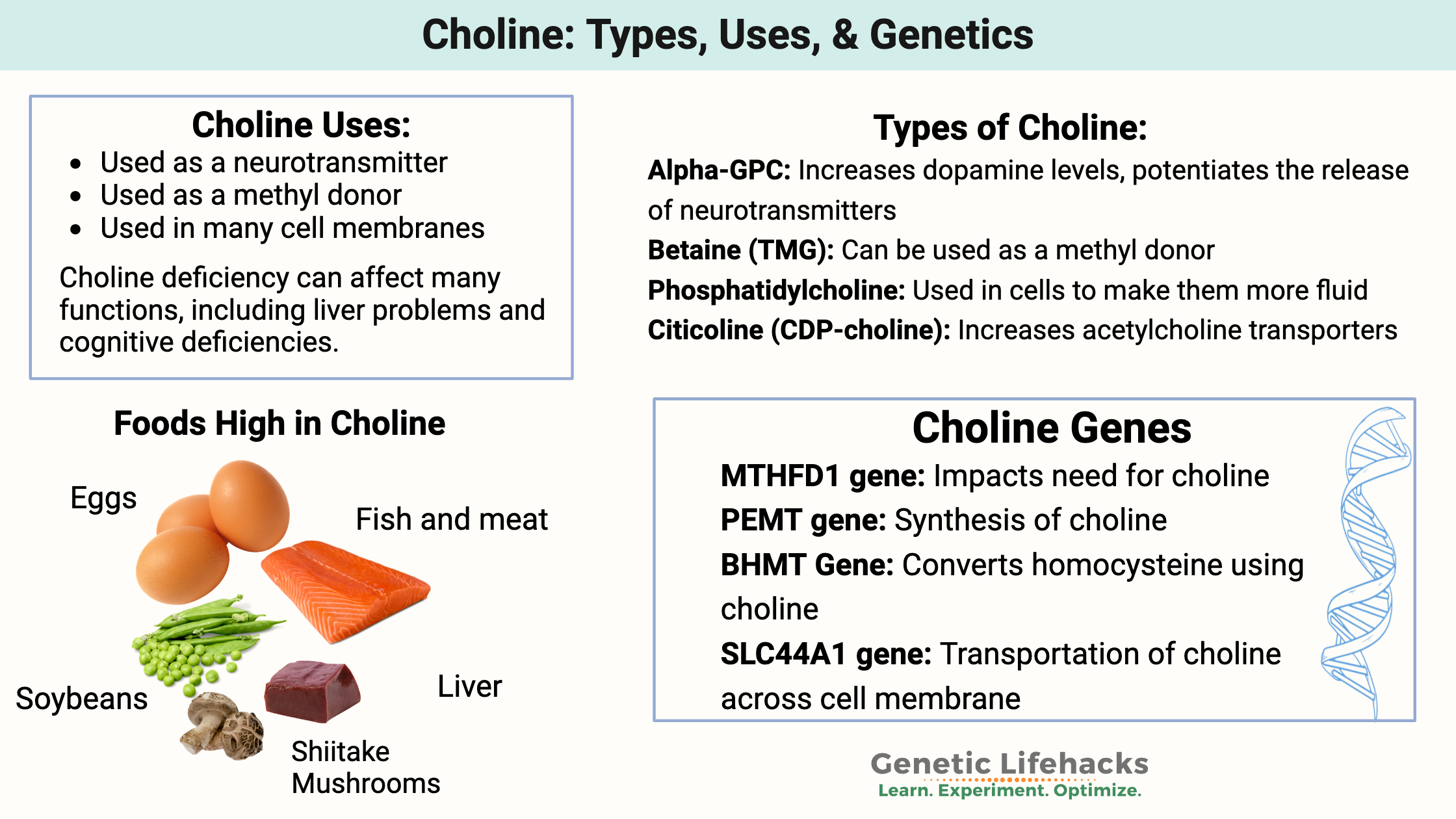
Which Type of Choline Works Best with Your Genes?
Riboflavin, or vitamin B2, is an essential cofactor for many biological pathways. Learn how to check your genetic raw data to see if you may need more riboflavin.
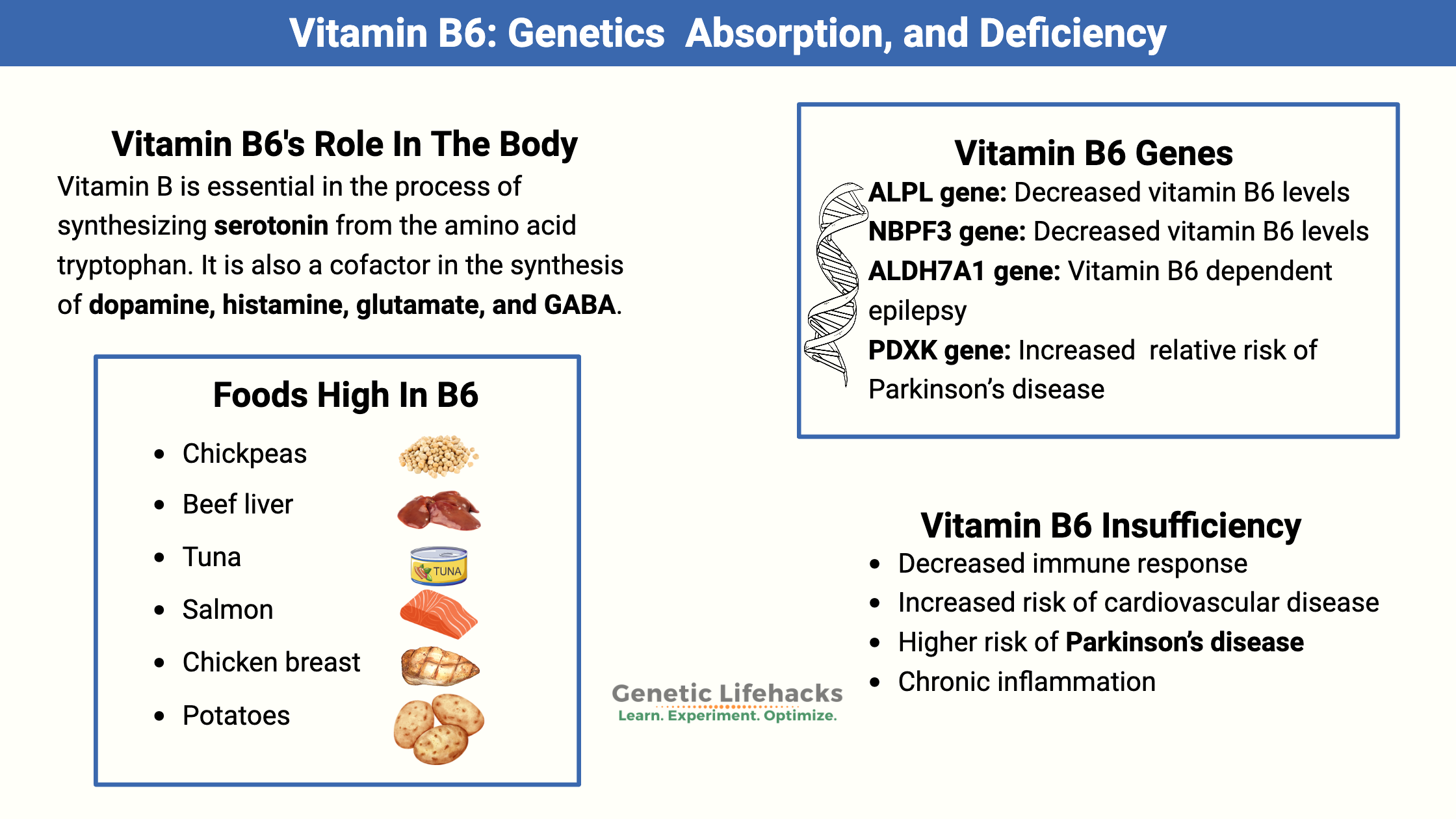
Vitamin B6: Genetics, Absorption, and Deficiency
Vitamin B6 is an important cofactor in hundreds of different enzymatic reactions. Low levels of B6 are linked to an increased risk of diabetes, cardiovascular disease, neurodegenerative diseases, and cancer. B6 is also essential for reducing oxidative stress and inflammation.
Riboflavin (Vitamin B2), MTHFR, and Deficiency Symptoms
Riboflavin, or vitamin B2, is an essential cofactor for many biological pathways. Learn how to check your genetic raw data to see if you may need more riboflavin.
Homocysteine and key methylation genes
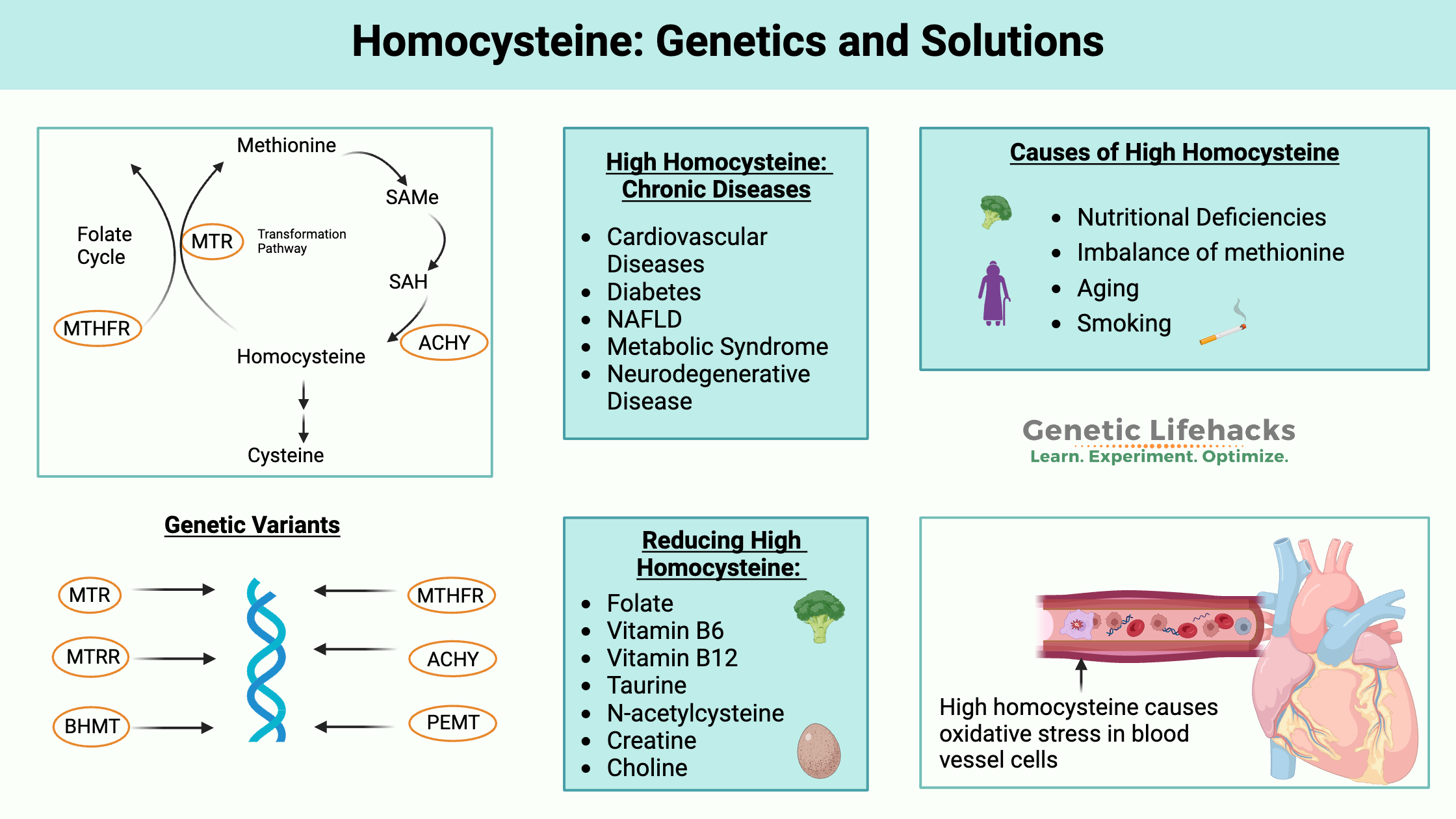
Homocysteine: Genetics, High Homocysteine Levels, and Solutions
High homocysteine levels are strongly linked to an increased relative risk of cardiovascular diseases. Find out how your genes impact homocysteine levels.
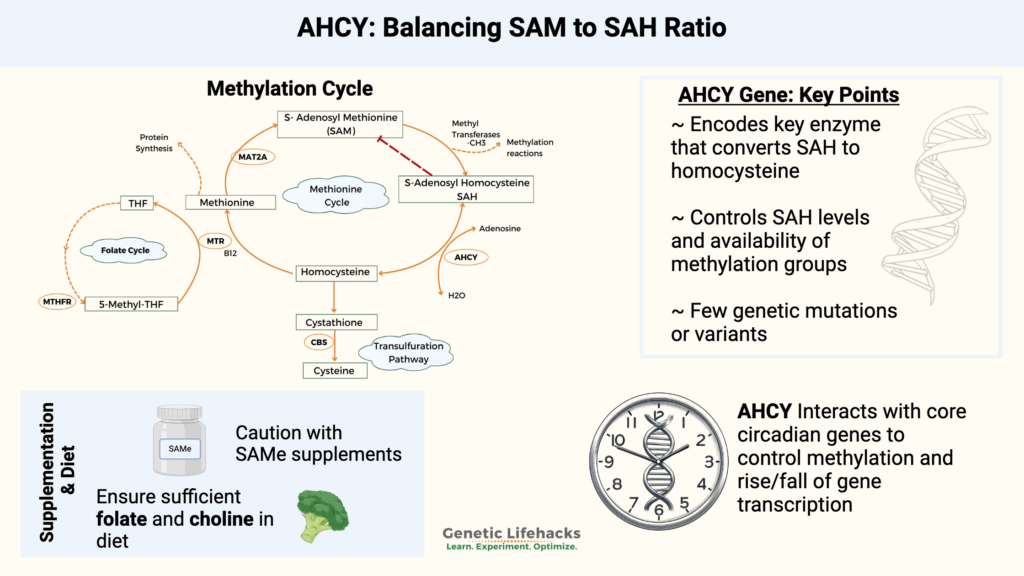
AHCY Gene: Tying together methylation and homocysteine
AHCY is a key gene in the conversion of SAH to homocysteine and in the regulation of the SAM/SAH ratio. It also plays an important role in the circadian regulation of gene expression.
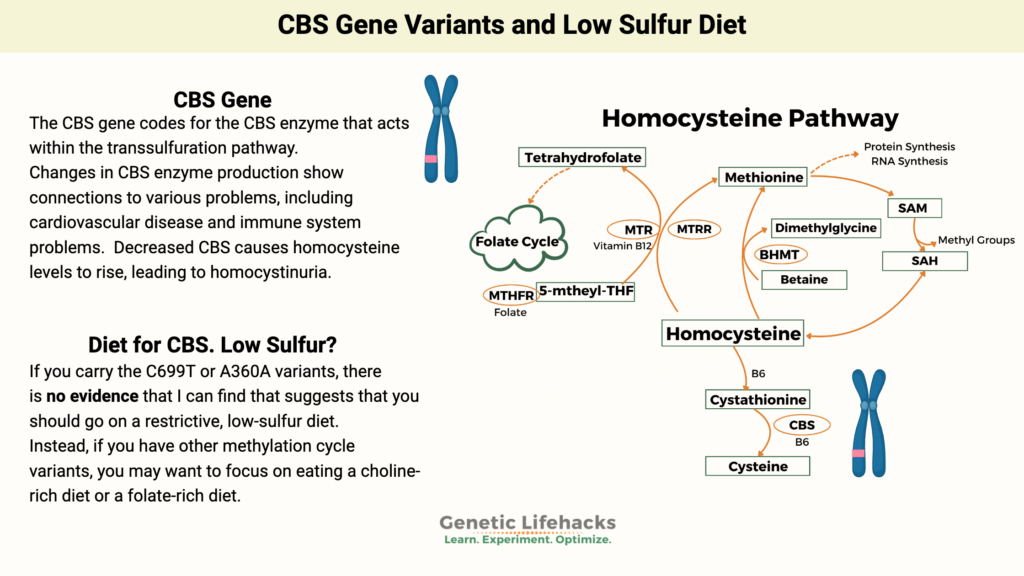
CBS Gene Variants and Low Sulfur Diet
Some clinicians recommend a low-sulfur diet for people with CBS mutations. Find out what the research shows – and why that recommendation is not backed up.
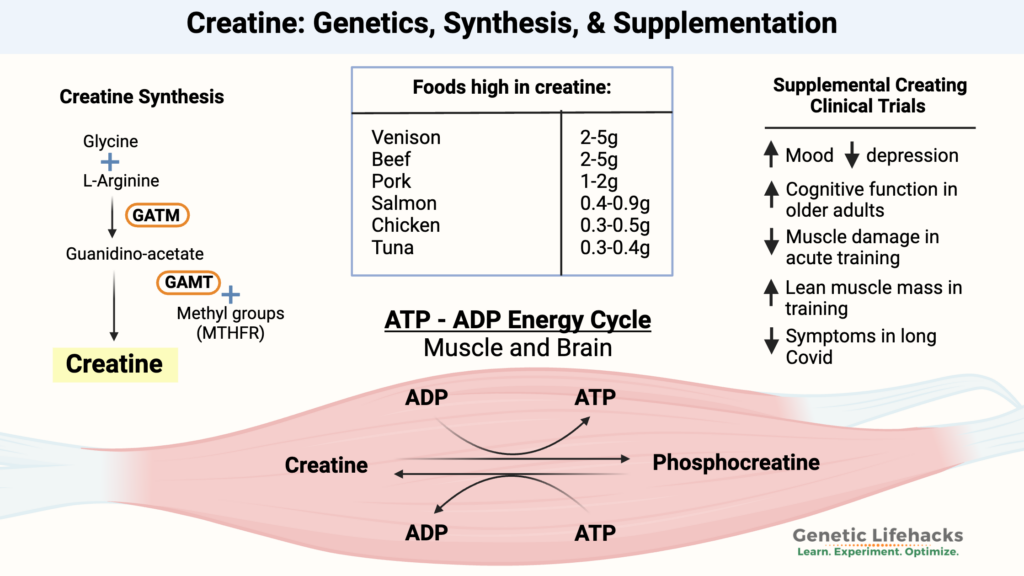
Creatine: Boosting Muscles and Increasing Brain Power
Creatine is an amino acid used in muscle tissue and the brain for energy in times of stress. Genes play a role in creatine synthesis. Find out what the research shows about creatine supplements for muscle mass and cognitive function.
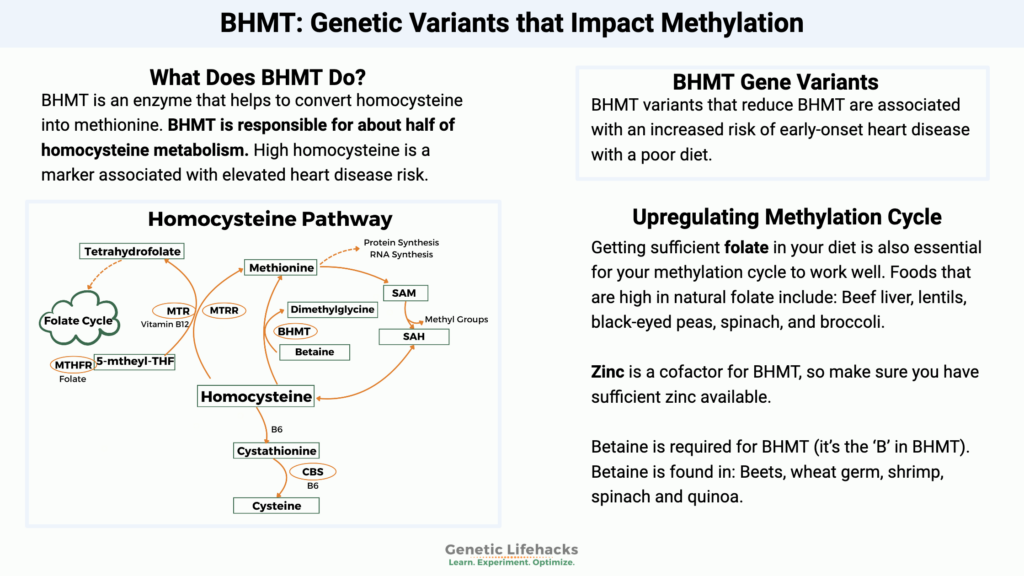
BHMT: Genetic Variants that Impact Methylation
BHMT is involved in homocysteine methylation and impacts the methylation cycle.
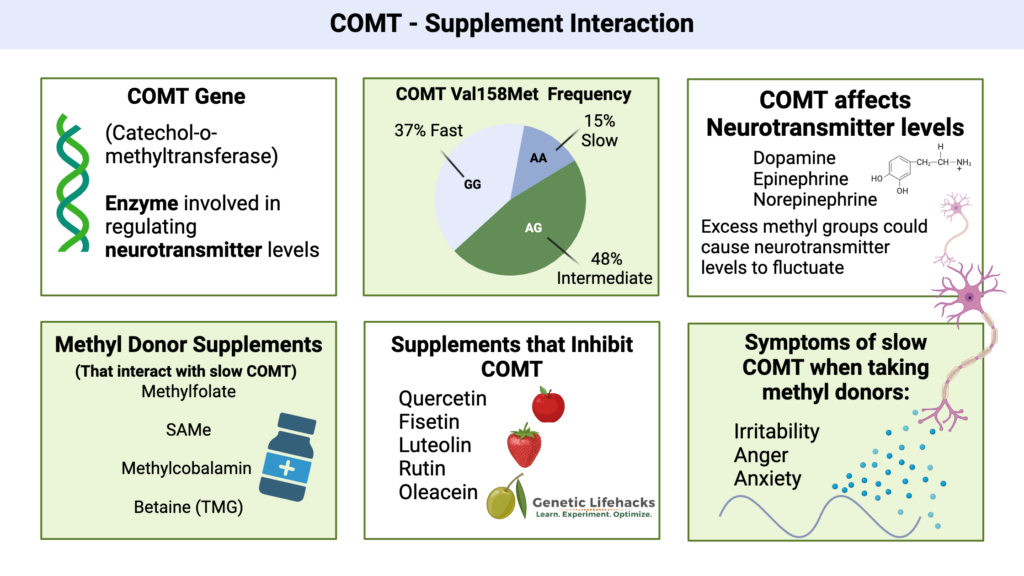
COMT: How to Optimize Your Supplements for Your COMT Genotype
Some supplements interact with COMT variants to impact the rate at which neurotransmitters are broken down. Check your COMT genotype and discover how this may affect your reaction to different supplements or combinations of supplements.
Conditions linked to methylation variants
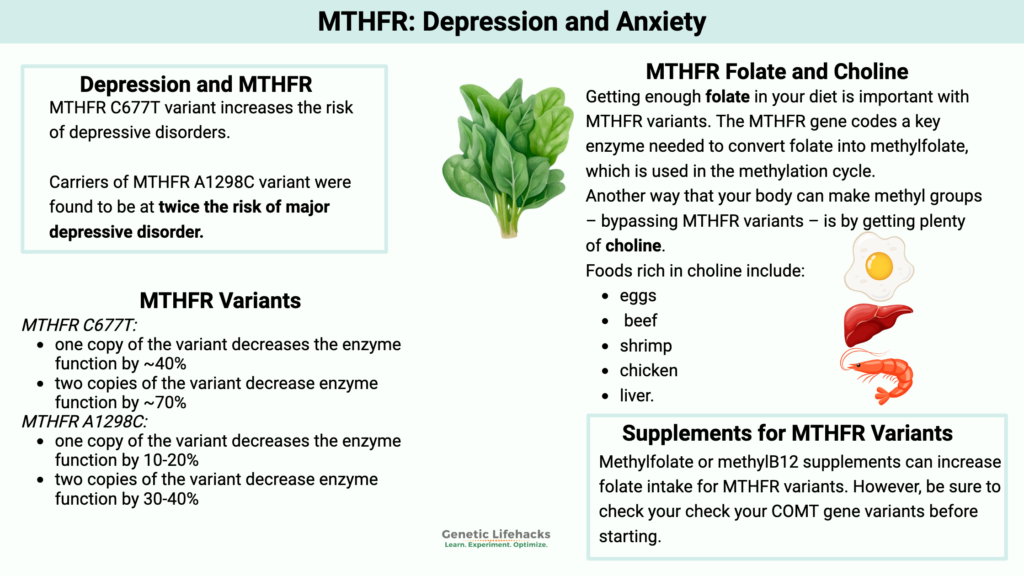
MTHFR, Depression, Anxiety, Symptoms and Treatment
We are all genetically unique, and a common genetic variant in the MTHFR gene causes some people to be more susceptible to having low folate levels. This article explains the research linking MTHFR variants, folate, and depression — and gives you information on how diet or supplements may help.
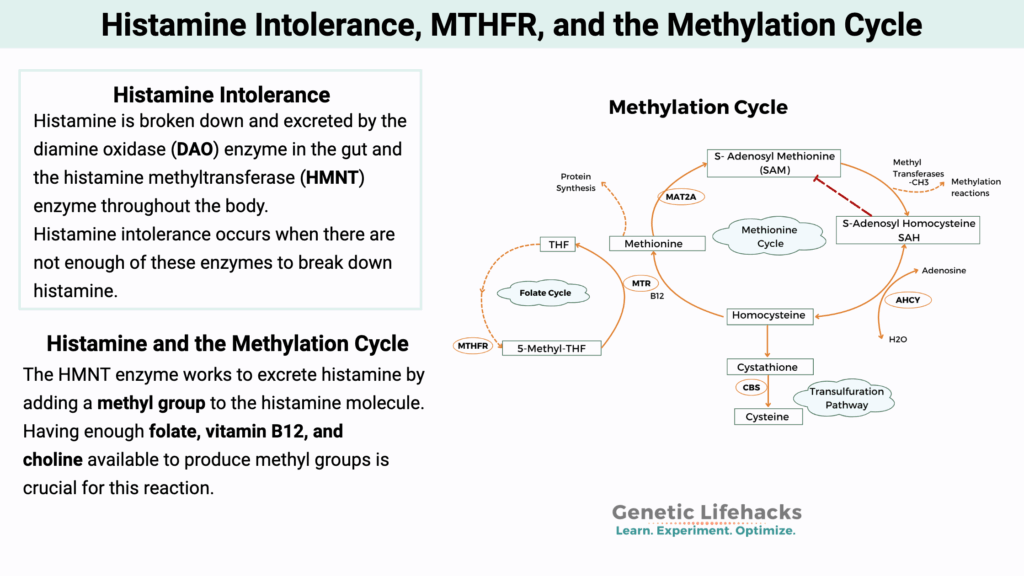
Histamine Intolerance, MTHFR, and the Methylation Cycle
Genetics plays a role in how well your body breaks down histamine. Histamine that is out of balance with the body’s ability to break it down can cause symptoms that are collectively known as histamine intolerance. Discover how to check your genes that are involved with histamine levels.
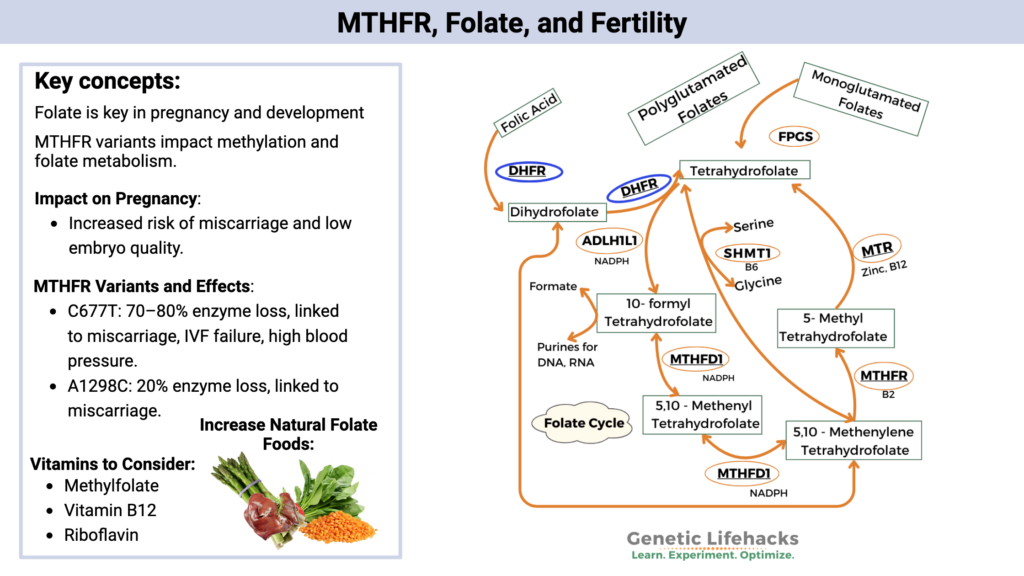
Folate Optimization: MTHFR and Fertility
MTHFR variants affect the conversion of folate into the active form. Learn how this can affect you if you are trying to get pregnant.
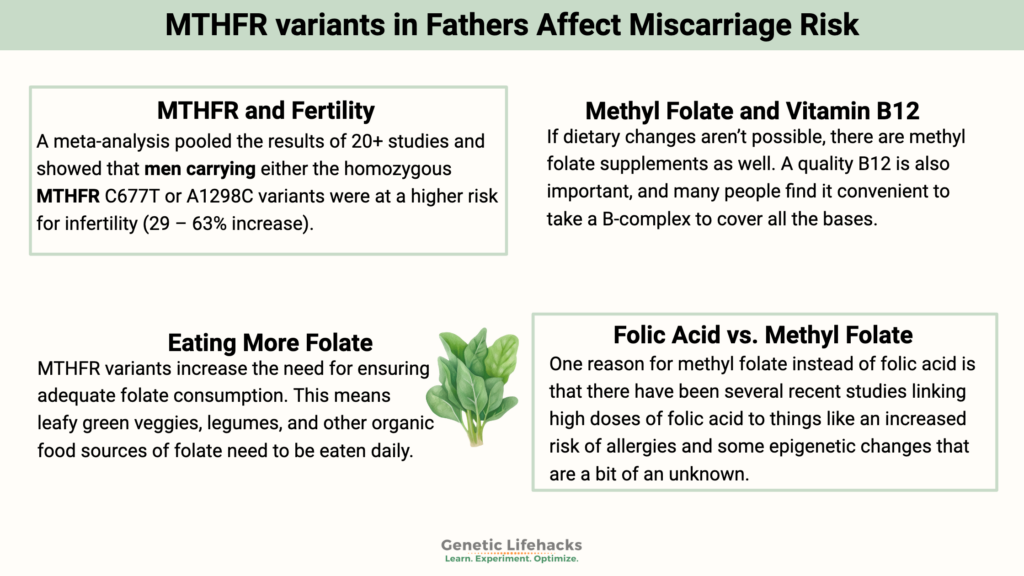
Dads Matter: MTHFR Variants in Fathers Affect Miscarriage Risk
Dads matter – in conception, pregnancy, and throughout life. It is easy to see how prospective moms need to clean up their diets, exercise, and sleep well before getting pregnant, but recent studies show that a dad’s MTHFR variants also affect infertility and miscarriage risk.
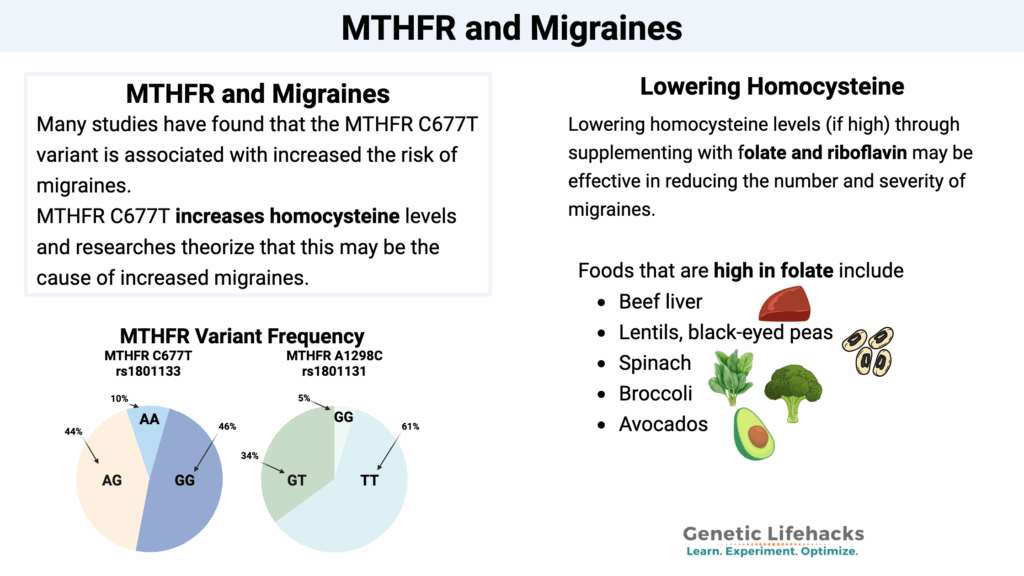
The MTHFR C677T variant increases the risk of migraines. Learn how to check your genetic data and how to mitigate the risk.
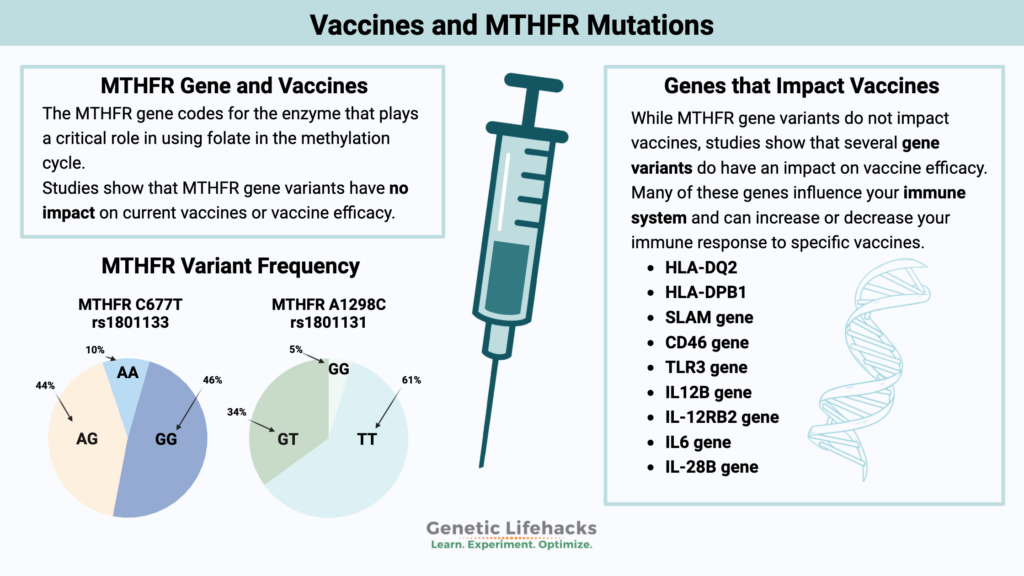
Vaccines and the MTHFR mutation
This article covers what the research shows about folate metabolism, MTHFR, and immune response. See what the research says.
Latest articles about the methylation cycle:
- MTHFR Gene Explained: C677T and A1298C Variants, Testing, and Solutions
- Homocysteine: Genetics, High Homocysteine Levels, and Solutions
- FOLR1 and FOLR2: Transporting Folate, Folinic Acid, and Folic Acid into Cells
- DHFR and MTHFR: Folic Acid Metabolism
- Vitamin B12, MTR & MTRR, and Methylation
- Folate Intake: How Much Is Too Much for Optimal Health?
- AHCY Gene: Tying together methylation and homocysteine
- MTHFD1: Folate and Choline
- Creatine: Boosting Muscles and Increasing Brain Power
- COMT: How to Optimize Your Supplements for Your COMT Genotype
- Riboflavin (Vitamin B2), MTHFR, and Deficiency Symptoms
- MTHFR and Fertility: Folate Optimization for Pregnancy
- CBS Gene Variants and Low Sulfur Diet
- MTHFR: Going Beyond C677T and A1298C
- MTHFR, Depression, Anxiety, Symptoms and Treatment
- Vaccines and the MTHFR mutation
- BHMT: Genetic Variants that Impact Methylation
- MTHFR and Migraines
- Histamine Intolerance, MTHFR, and the Methylation Cycle
- COMT Gene: Neurotransmitter Levels, Estrogen Metabolism, and SNPs
- MTR and MTRR Genes: Methylation cycle and the need for Vitamin B12
- Methylation Cycle Topic Summary
Methylation FAQs
The methylation cycle is a core pathway that donates a methyl group (one carbon plus three hydrogens) for cellular reactions — including DNA synthesis and repair, neurotransmitter production, epigenetics, and detoxification. When this cycle isn’t running efficiently, it can affect mood, cognitive function, cardiovascular risk, overall energy, and how your body handles certain toxins.
Common MTHFR variants, such as C677T and A1298C, can reduce the efficiency of converting folate into its active form, methylfolate, which is needed to support the methylation cycle. For some people, this may cause high homocysteine levels or a greater need for folate from food or supplements.
Not everyone with an MTHFR SNP needs to supplement with methylfolate. Studies show that people who eat plenty of folate-rich foods and B12 don’t have negative effects from the MTHFR variants. Talk with your doctor or a nutritionist if you need help deciding what is right for you.
Homocysteine is an amino acid involved in the methylation cycle. It must be recycled back to methionine or converted through pathways involving genes like AHCY, BHMT, and CBS. High homocysteine levels are linked to increased cardiovascular risk, and genes can influence whether your levels tend to run high. Optimizing the methylation cycle is one way to address high homocysteine.
Folate, vitamin B12, riboflavin (B2), and vitamin B6 are central to methylation. Choline and creatine also play important roles in methyl group supply and usage. Genetic variants in MTHFR, MTR, MTRR, DHFR, MTHFD1, and related genes can change how much of these nutrients you may need from diet or supplements, as can stress or health issues.
The COMT gene encodes an enzyme that uses methyl groups to break down catecholamine neurotransmitters (like dopamine and norepinephrine) and estrogen metabolites. Methyl groups are also used to convert serotonin to melatonin. Slower or faster COMT genetic variants can change how you respond to certain supplements, medications, and hormones.