
Key takeaways:
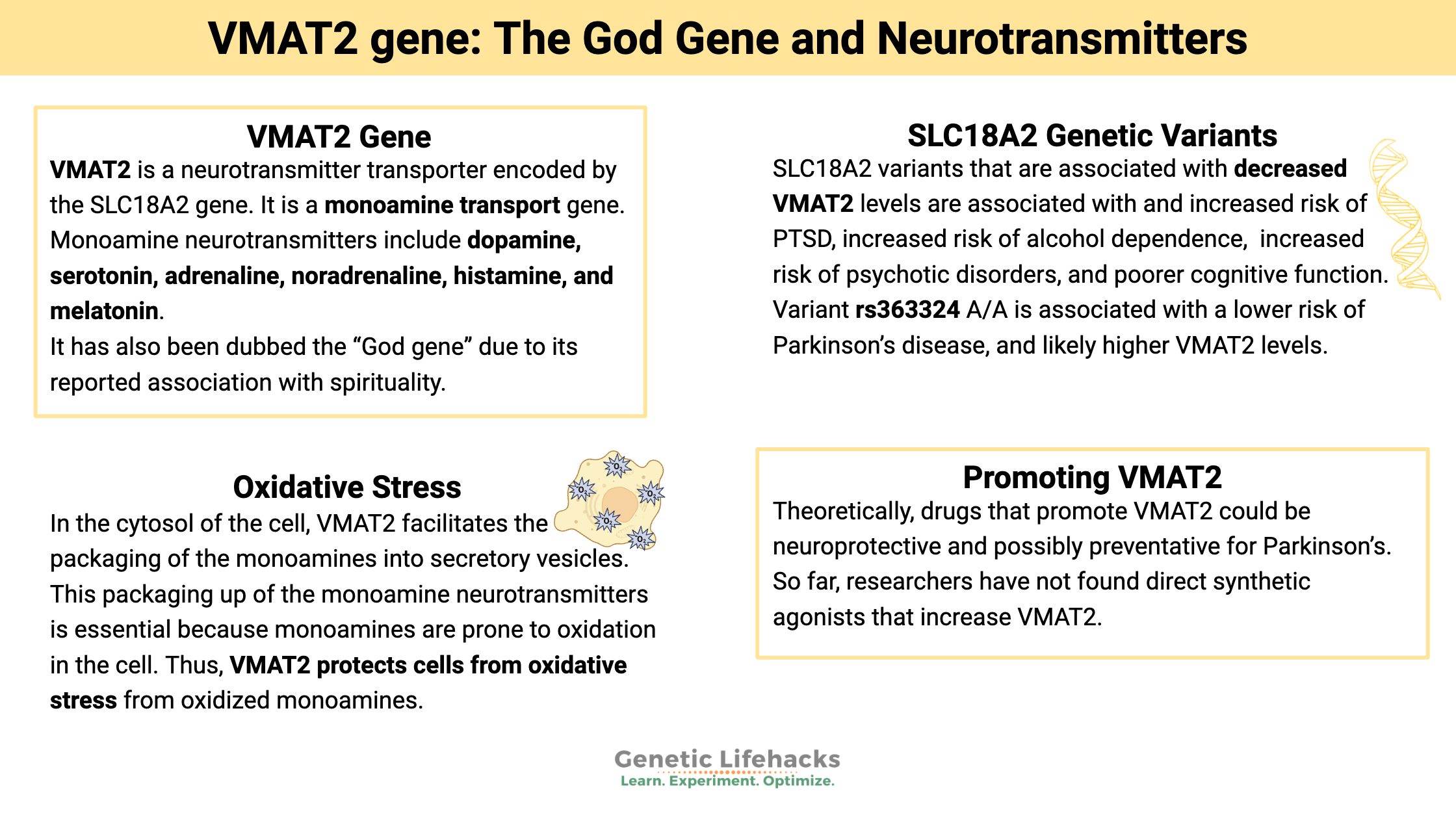
- VMAT2 (encoded by the SLC18A2 gene) is the vesicular monoamine transporter that packages dopamine, serotonin, histamine, and other monoamines into synaptic vesicles for release in the synapse.
- VMAT2 is nicknamed the “God gene” due to research studies linking it to spirituality.
- Genetic variants and altered VMAT2 expression are linked to differences in dopamine and neurotransmitter levels – influencing risks for Parkinson’s disease, PTSD, alcohol dependence, psychotic disorders, and type 2 diabetes.
- Lower VMAT2 levels have been associated with long Covid, slower gait and greater fatigability in older adults, and increased anxiety‑like PTSD behavior in animal models, while higher VMAT2 appears protective in several neurodegenerative and addiction contexts.
- Research suggests that certain natural compounds (e.g., baicalin/baicalein, theaflavins, puerarin) may modulate VMAT2 activity or expression, but these findings are mainly in animal studies and not clinical trials.
What is the VMAT2 “God gene”?
VMAT2 is a neurotransmitter transporter encoded by the SLC18A2 (solute carrier family 18 member A2) gene. It regulates the release of monoamine neurotransmitters in the synapses of neurons in the brain.
The God Gene:
Humans have long sought to integrate spirituality and science – wondering how consciousness, thought, feelings, self-transcendence, and spirituality are created in the brain. Genetic researchers have tried to answer these questions over the past few decades, and their search for a genetic basis for spirituality is intriguing.
VMAT2 has been dubbed the “God gene” due to a hypothesized association with spirituality.[ref] In a 2004 book by Dean Hammer, the VMAT2 gene was hypothesized to be the hereditary or genetic influence on spirituality. The book, called The God Gene: How Faith is Hardwired into our Genes, laid out the idea that spirituality is heritable and, at least partly, due to the VMAT2 gene. The author suggests that positive selection for feel-good genes creates optimism for living, even though death is inevitable.[ref] Most of the research – more recent studies – focus on VMAT2’s role in neurotransmitter signaling and the risk of mood disorders, Parkinson’s, and long Covid. While the nickname “God gene” is catchy, many studies criticize that initial representation as an oversimplification.
What does the VMAT2 gene do?
Here’s a quick overview of what VMAT2 actually does before we dive into specifics.
| Topic | Simple explanation | Why it matters |
|---|---|---|
| What VMAT2 does | VMAT2 (encoded by SLC18A2) packages dopamine, serotonin, histamine, adrenaline, noradrenaline, melatonin, and other monoamines into vesicles inside neurons for controlled release | Vesicle packaging is required for normal neurotransmitter release at synapses |
| Oxidative stress protection | By moving monoamines out of the cytosol and into vesicles, VMAT2 prevents them from being oxidized and generating damaging free radicals inside the neuron | Helps protect dopaminergic neurons (brain) and dopamine-producing beta cells (pancreas) from oxidative damage |
| “God gene” nickname | VMAT2 was nicknamed the “God gene” after a 2004 book that speculated about links between VMAT2 and spirituality | The nickname is historical; VMAT2 is better thought of as a monoamine transport and neurotransmitter modulator gene |
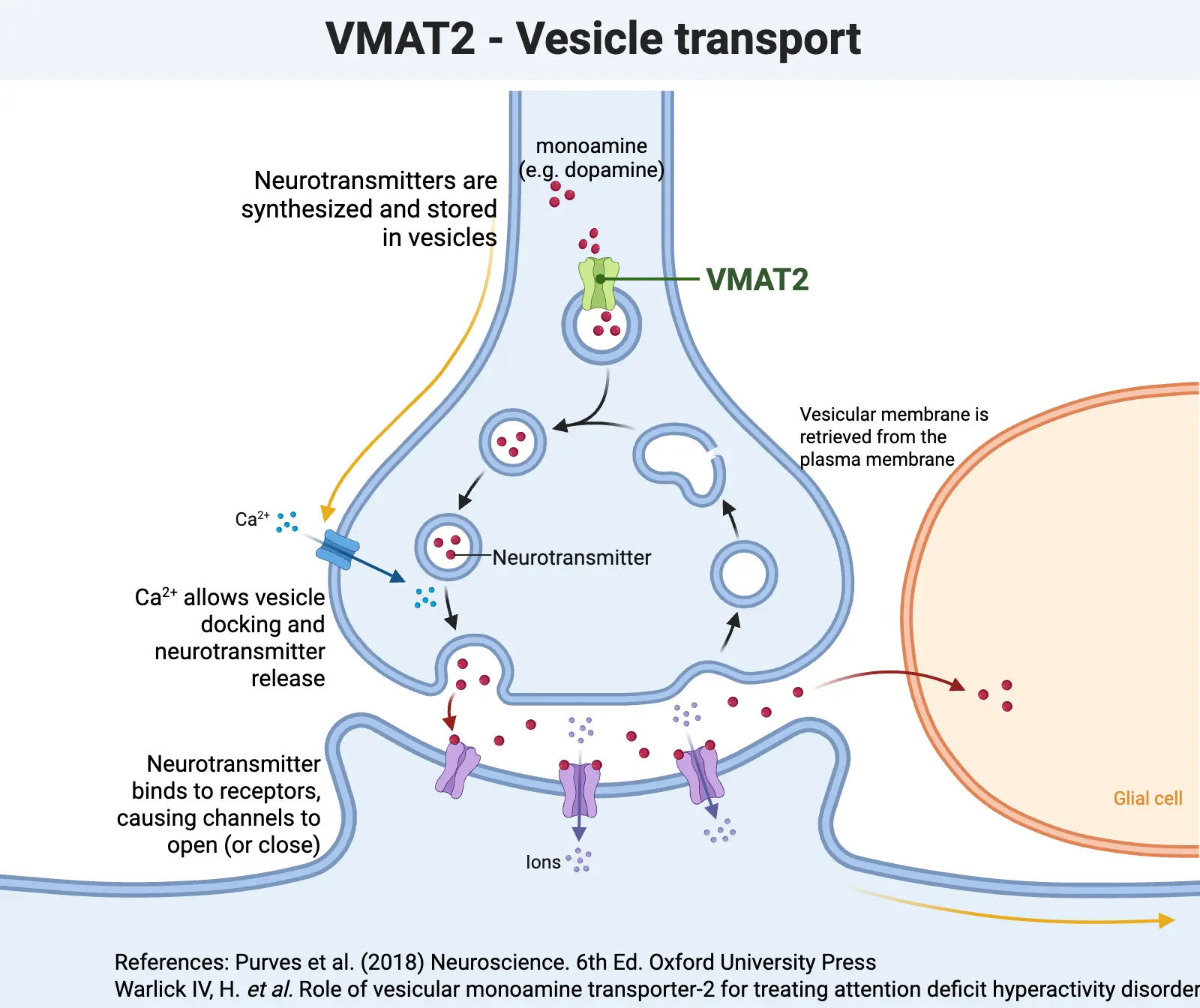
VMAT2 (SLC18A2 gene) is a monoamine transporter. It packages the monoamine neurotransmitters synthesized in the cytosol of neurons into vesicles, which can then be released into the synapse to send a signal to neighboring neurons.
Monoamine neurotransmitters include:
- dopamine
- serotonin
- adrenaline
- noradrenaline
- histamine
- melatonin
These are the neurotransmitters important in thinking, behavior, physical movement, pain, emotion, wakefulness, and circulation.[ref][ref]
Learn more about neurotransmitters: dopamine receptors, dopamine synthesis genes, serotonin genes, histamine genes, and COMT.
VMAT2 is important for transporting dopamine, serotonin, and other neurotransmitters into vesicles that are then released in the synapses of the neurons. In the cytosol of the neuronal cell, VMAT2 facilitates the packaging of the monoamines into secretory vesicles. These vesicles then move to the cell membrane to release their neurotransmitter payload into the synapse to send a signal to the next neuron.[ref]
Dopamine turns toxic:
This packaging up of the monoamine neurotransmitters is essential because monoamines, especially dopamine, are prone to oxidation in the cell. Oxidized dopamine is neurotoxic. Thus, VMAT2 protects cells from oxidative stress from oxidized monoamines.[ref][ref]
With its role in protecting neurons from oxidative stress, VMAT2 prevents damage to dopaminergic neurons. Examples of the importance of this includes that Parkinson’s results from damage to the dopaminergic neurons in the brain, and type 2 diabetes can result from dopamine damage in the pancreas. Newly developed VMAT2 inhibitors have a possible side effect of causing Parkinson’s disease.[ref]
ATP dependent: VMAT2 requires a proton egradient generated by vacuolar adenosine triphosphatase (ATPase),which depends on ATP from mitochondria. This makes mitochondrial function important in VMAT2 function and for the protection against oxidized dopamine.[ref]
Histamine and VMAT2:
Histamine has many roles in the body (allergic reactions, mast cell degranulation, stomach acid release, heart rhythm, motion sickness, etc), including as a neurotransmitter involved in alertness and circadian rhythm. In the brain, histamine is packaged into vesicles via VMAT2 for release in the synapse of histaminergic neurons. Mast cells also utilize VMAT2 to package up histamine for storage and then release during degranulation.[ref][ref]
VMAT2 and GABA:
GABA is an inhibitory neurotransmitter, balancing out the excitation and keeping you calm. In many neurons, GABA is packaged into vesicles using a specific transporter (VGLUT2), but in dopaminergic neurons that also synthesize GABA, VMAT2 can transport it into vesicles. Recent studies on this show that in many brain regions, dopaminergic neurons also synthesize and release GABA. [ref]
VMAT2 outside of the brain:
While much of the focus on VMAT2 is on neurotransmitter levels in the brain, VMAT2 is also found in the sympathetic nervous system, adrenal glands (adrenaline release), platelets, and the stomach. [ref]
Drugs and chronic neurotransmitter changes:
Keep in mind as we dive into the research studies on specific conditions that VMAT2 can be up- or downregulated in response to chronic changes in monoamine levels or drug exposure, contributing to tolerance or adaptation. Psychostimulants like methamphetamine and methylphenidate alter VMAT2 as part of their effects on synaptic dopamine, and chronic exposure can lead to adaptive changes in VMAT2 function.[ref] MDMA also affects VMAT2. Initially, MDMA causes a disruption in VMAT2, resulting in higher cytosolic levels of serotonin and dopamine and rapid efflux into the synapse.[ref]
Research studies on VMAT-2:
For more than three decades, researchers have probed the functions of VMAT2.
| Area | What the study found | Take-home message |
|---|---|---|
| Parkinson’s disease | Higher VMAT2 expression protects dopaminergic neurons and reduces Parkinson’s risk and toxin-induced neurodegeneration | More VMAT2 appears neuroprotective against Parkinson’s and dopaminergic toxins. |
| Long Covid | PET scans showed ~16–20% lower VMAT2 levels in long Covid patients’ striatum, correlated with apathy, memory decline, and motor slowing | Long Covid may involve reduced dopaminergic transmission partly via lower VMAT2. |
| Cocaine use | Long-term cocaine users show a 10–16% decrease in VMAT2 levels | Chronic cocaine can lower VMAT2; this overlaps with findings in long Covid and Parkinson’s. |
| Gait and fatigue | Older adults with higher striatal VMAT2 had faster walking speeds, better muscle energetics, and less fatigue | VMAT2 relates not only to mood and movement but also to physical performance and fatigability. |
| Whole-brain monoamines | Conditional reduction of VMAT2 in animals causes a global drop in brain monoamine levels (dopamine, serotonin, etc.) | VMAT2 is essential for maintaining monoamine neurotransmitter levels. |
| PTSD and anxiety | VMAT2 variants increase the relative risk of PTSD. Low VMAT2 in animal models produces more fear, anxiety | VMAT2 influences stress resilience and anxiety/trauma-related phenotypes. |
Parkinson’s Disease and VMAT2:
Faulty dopaminergic transmission is at the root of Parkinson’s. Increased VMAT2 is protective against Parkinson’s disease and also protects against toxicants that can cause Parkinson’s.[ref] As mentioned above, an excess of dopamine in the cytosol of the neuron is easily oxidized, which turns it into a neurotoxin. Recent studies point to mitochondrial dysfunction increasing oxidative stress leading to dopamine oxidation. Without sufficient VMAT2 to encapsulate the dopamine, the excess oxidative stress leads to the degeneration of dopaminergic neurons seen in Parkinson’s.
VMAT2 in gait and fatigability:
Along the same lines as the long Covid and Parkinson’s studies, a 2024 study in older adults showed that higher VMAT2 levels correlated with faster walking time, better muscle energy, and less muscle fatigue.[ref]
VMAT2 is essential for dopamine and serotonin:
Animal studies show that conditionally reducing VMAT2 expression causes a whole-brain decrease in monoamine neurotransmitters, including serotonin and dopamine.[ref]
PTSD and anxiety connection:
Genetic variants in the SLC18A2 gene that encodes VMAT2 increase the relative risk of PTSD. Animals that are genetically altered to have low VMAT2 levels also show increased fear, exaggerated startle response, and anxiety-like phenotypes. The lack of VMAT2 causes a decreased ability to release dopamine and overall decreased monoamine neurotransmitter levels.[ref]
Long Covid and reduced VMAT2:
A 2026 study involving long Covid patients matched to a healthy control group used PET brain scans to measure VMAT2 levels in specific brain regions (ventral striatum, dorsal putamen, and dorsal caudate). The results showed that VMAT2 levels were significantly lower (16-20% ) in individuals with long Covid. In addition, the lower levels of VMAT2 correlated with increased problems with apathy, memory decline, and motor slowing. The authors of the study concluded that the VMAT2 reduction may reflect reduced dopaminergic transmission in the striatal neurons in patients with long Covid. The authors hypothesize that the reduced VMAT2 binding in the striatum is evidence that long COVID involves injury (or loss) to dopamine‑releasing nerve terminals. Prior studies on long COVID patients show neuroinflammation in the striatum, and the ACE2 receptor is expressed in dopaminergic neurons.[ref]
What is compelling about this study is that the areas of the brain with low VMAT2 (and possibly low dopaminergic neruon function) correlate specifically to symptoms. For exaple, lower ventral striatal VMAT2 binding → higher apathy scores and lower dorsal putamen VMAT2 binding → fewer taps on Finger Tapping Test indicating motor function slowing.
The theory that long Covid patients have dopaminergic neuronal injury or loss isn’t proven by the study showing low VMAT2 levels– I want to emphasize here that it is one explanation. The study clearly shows lower than normal VMAT2 in those specific brain regions, but it doesn’t necessarily follow that there is neuronal loss or injury. Another consideration is that VMAT2 is dependent on ATP and mitochondrial function, and studies show that reduced ATP can cause a decrease in VMAT2.[ref]
To put the long Covid results into perspective, long-term cocaine abuse also reduces VMAT2 levels in the brain. A study involving long-term cocaine users who had recently abstained showed a 10-16% decrease in VMAT2 levels.[ref] So, many of the long Covid users who reported neurocognitive symptoms had VMAT2 levels that were worse than those of long-term cocaine abusers.
One reason that researchers focused in on dopaminergic neurons is that in vitro studies show they are susceptible to SARS-CoV-2 infection and subsequent cellular senescence.[ref][ref]
Environmental exposures that decrease VMAT2:
Exposure to environmental toxins can also affect VMAT2 levels, with some of the specific toxicants connecting the risk of Parkinson’s disease and low VMAT2.
- Pesticides: Certain types of pesticides, including organochlorides and paraquat, have been shown in studies to affect VMAT2 levels. Animal studies show that heptachlor, an organochloride pesticide, can alter VMAT2 levels during exposure in utero.[ref][ref]
- Environmental toxins: Studies show that brominated flame retardants and PCBs are also able to disrupt VMAT2 function.[ref]
- Heavy metals: VMAT2 levels are also reduced after exposure to heavy metals (arsenic, lead, and cadmium).[ref]
- Excess environmental noise: High-decibel noise exposure in an animal model of Parkinson’s causes downregulation of VMAT2.[ref]
What happens when VMAT2 levels are consistently higher?
Higher levels of VMAT2 show benefits for several chronic conditions and addictions:
- Protective against meth:
Increased levels of VMAT2 can protect the brain from damage from methamphetamine.[ref] - Protective against anxiety/depression:
Animal studies also showed that increased VMAT2 is protective against anxiety and depression. Additionally, increased VMTA2 enhances locomotion.[ref] - Protective against diabetes:
Another place where VMAT2 is essential is in the beta-cells of the pancreas. Dopamine modulates the release of insulin, and VMAT2 is important here in the packaging up of dopamine. Thus, VMAT2 protects against oxidative stress in beta cells by controlling dopamine release.[ref]
Rare mutations in VMAT2:
Rare mutations in the SLC18A2 gene that significantly disrupt VMAT2 function cause Brain Dopamine-Serotonin Vesicular Transport Disease, which is diagnosed in infancy. This very rare genetic disease causes involuntary muscle contractions, rigidity, gastrointestinal dysmotility, floppiness, epilepsy, and severe developmental delays.[ref]
Note that a complete knockout of the SLC18A2 gene in animals is fatal before birth.[ref] Animal studies also show that significantly decreased VMAT2 causes both fewer dopaminergic neurons and an increased sensitivity to neurotoxins.[ref]
More common variants in the SLC18A2 gene cause minor changes and can increase the relative risk of mood disorders, PTSD, or addiction — all conditions related to more subtle changes in neurotransmitter levels.
VMAT2 Genotype Report
SLC18A2 gene: encodes vesicular monoamine transporter 2 (VMAT2). Your VMAT2 variants (shown below) are associated with differences in transporter levels and related conditions in research studies. Remember that they are risk modifiers, not deterministic, meaning that they slightly modify your natural VMAT2 levels, which could combine with environmental factors to cause disorders.
Access this content:
An active subscription is required to access this content.
Log in below or Join as a member.
Lifehacks: Altering VMAT2 Levels
There are natural supplements and lifestyle factors that can influence VMAT2 levels. Please talk with your doctor if you have questions about neurotransmitters or about any supplements.
VMAT2 inhibitors:
VMAT2 inhibitor medications are FDA-approved for hyperkinetic movement disorders such as tardive dyskinesia or Huntington’s disease. They work to deplete presynaptic dopamine.
In general, inhibiting VMAT2 too much can cause Parkinson’s-like symptoms due to its effect on dopamine. The positive side of VMAT2 inhibitors is that they theoretically may help with addiction treatment for cocaine or meth.
Inhibitors of VMAT2 include reserpine, tetrabenazine, valbenazine, and deutetrabenazine:
- Reserpine, used in traditional Indian medicine, is a natural alkaloid derived from Rauwolfia plant species. Used as an antipsychotic and for treating hypertension, this medication’s side effects, such as depression, can be severe.[ref] Researchers use reserpine as a way to determine VMAT2 functionality in different cell types. As an example, resperpine can block VMAT2 in mast cells and prevent the storage of histamine and serotonin.[ref]
- Benazines, such as tetrabenazine, are reversible VMAT2 inhibitors that are FDA-approved for the treatment of Huntington’s disease.[ref]
An excess of dopamine should reduceVMAT2 levels through a feedback loop.
Medications that may interact with VMAT2:
In addition to the above drugs that are specifically made to inhibit VMAT2, a recent study showed that the following commonly used drugs may also interact with VMAT2, inhibiting it to some extent. The inhibition of VMAT2 explains some of the neurological adverse events seen with some of these medications. [ref – open access, read for more info and complete drug list]
- Carvedilol – beta-blocker
- Donepezil – Alzheimer’s/dementia drug.
- Aripiprazole – antipsychotic, antidepressant add-on.
- Haloperidol (Haldol) — antipsychotic
- Doxazosin and terazosin — alpha-blockers for enlarged prostate (BPH) and hypertension
- Formoterol — long-acting bronchodilator
- Raloxifene — for osteoporosis and breast-cancer risk reduction in postmenopausal women
Promoting higher VMAT2 levels:
When would you want higher VMAT2 levels?
- Parkinson’s: Theoretically, drugs that promote VMAT2 could be neuroprotective and possibly preventative for Parkinson’s. So far, researchers have not found direct synthetic agonists that increase VMAT2. [ref]
- Long Covid: If decreased VMAT2 is at the root of many long Covid symptoms, increasing expression may be helpful for brain fog, fatigue, and motor neuron symptoms.
Baicalin:
A study in an ADHD model showed that baicalin increased VMAT2 levels and enhanced dopamine balance in the brain. Parkinson’s studies also show that baicalein is likely to have a protective effect against the dopaminergic dysfunction seen in the striatum.[ref] [ref] Baicalin is a natural flavonoid found in Chinese skullcap and traditionally used in Chinese medicine.
Theaflavins:
Theaflavins are the polyphenols in tea. Research shows that higher levels of theaflavins can improve VMTA2 expression in the substantia nigra.[ref]
Kudzu root extract (Puerarin):
Puerarin, found in kudzu root extract, is a dopamine neuron-protecting agent. Animal studies show that it interacts with VMAT2.[ref][ref]
Boosting dopamine levels:
This is a bigger topic (full article here on dopamine synthesis), but the thought here is that making sure the brain has the substrates needed for dopamine production could help with overall dopamine balance and increased VMAT2 levels.
Dopamine synthesis requires:
- Tyrosine – an amino acid found in high-protein foods. Good sources include beef, pork, poultry, fish, dairy, eggs, lentils, and pumpkin seeds.
- Tetrahydrobiopterin (BH₄) – cofactor required for tyrosine hydroxylase
- Vitamin B6 (active pyridoxal 5′ phosphate) – required as a cofactor for the DOPA decarboxylase (AADC) enzyme.
- Iron-tyrosine hydroxylase is an iron-dependent enzyme
Substances that interact with VMAT2:
Keep in mind that anything that raises dopamine should cause a concomitant reduction in VMAT2 through feedback loops that prevent too much dopamine from being released. So drugs, such as cocaine or amphetamines, can increase dopamine and decrease VMAT2 levels. [ref]
Beyond psychoactive drugs, the following also interact with VMAT2:
Nicotine and VMAT2:
Nicotine alters dopamine levels, which is one reason it is addictive. In an animal model of nicotine withdrawal after addiction, the researchers found an increase in VMAT2 mRNA levels. The researchers theorize that this is a compensatory mechanism during nicotine withdrawal to restore dopamine transmission in midbrain neurons.[ref]
NMN (nicotinomide mononucleotide) and muscle function:
Neuromuscular junctions are the specialized neuron synapses where the motor neuron communicates with skeletal muscles – where the signal gets sent for moving a muscle. A study in younger adult mice compared to aged mice showed that VMAT2 levels and β2-adrenergic receptors declined in aging in the neuromuscular junctions. This decline could be reversed to the younger adult levels with supplemental NMN (in mice).[ref]
Access this content:
An active subscription is required to access this content.
Log in below or Join as a member.
VMAT2 FAQ:
If you’ve skimmed or just want a quick recap, here are answers to common questions about VMAT2 and why it matters.
What is VMAT2?
VMAT2 (encoded by the SLC18A2 gene) is a transporter that moves monoamine neurotransmitters—like dopamine, serotonin, histamine, adrenaline, noradrenaline, and melatonin—into synaptic vesicles inside neurons. This vesicle packaging is essential for normal neurotransmitter release.
Why does VMAT2 matter clinically?
Changes in VMAT2 levels or function are linked to differences in dopaminergic tone and monoamine balance, which can influence risks for Parkinson’s disease, long Covid symptoms, PTSD, alcohol dependence, psychotic disorders, and type 2 diabetes.
What happens when VMAT2 is too low?
When VMAT2 is reduced, more monoamines remain in the cytosol, where they can be oxidized and generate free radicals. This increases oxidative stress in dopamine-producing neurons and pancreatic beta cells, lowers effective monoamine signaling, and has been associated with neurodegeneration, fatigue, and greater anxiety- or PTSD-like phenotypes in research.
What happens when VMAT2 is higher or preserved?
Higher or preserved VMAT2 expression appears protective in several contexts: it can reduce dopaminergic neuron loss in Parkinson’s models, mitigate methamphetamine-induced neurotoxicity, and protect beta cells from dopamine-related toxicity in diabetes models. In older adults, higher VMAT2 levels in the striatum have also been linked to faster gait and lower fatigability.
Is VMAT2 really the “God gene”?
VMAT2 was dubbed the “God gene” in a 2004 popular science book that speculated about links between VMAT2 variants and spirituality. That nickname is catchy but oversimplified; current research supports VMAT2 as a key monoamine transporter involved in brain health and stress responses, not as a single gene that determines religious belief.
Can you “hack” VMAT2 with supplements or lifestyle changes?
Some natural compounds—such as baicalin/baicalein (Chinese skullcap), theaflavins (tea polyphenols), and puerarin (kudzu)—have been reported in animal and mechanistic studies to increase VMAT2 expression or protect dopaminergic neurons. However, human evidence is limited, doses are not standardized, and these findings should be viewed as early research rather than treatment guidance. Prescription VMAT2 inhibitors like reserpine and tetrabenazine can significantly lower VMAT2 and can have serious side effects.
Related Articles and Topics:
Serotonin 2A receptor: Psychedelic response and Alzheimer’s disease
References:
Liu, Yuhan Karida, et al. “Loss of Vesicular Monoamine Transporter 2 in Striatum of Long COVID and Relationship to Neuropsychiatric Symptoms.” eBioMedicine, July 2026, p. 106339. DOI.org (Crossref), https://doi.org/10.1016/j.ebiom.2026.106339.