Join Here   |   Log In

Saffron Extract: What does the research show?

Key takeaways:
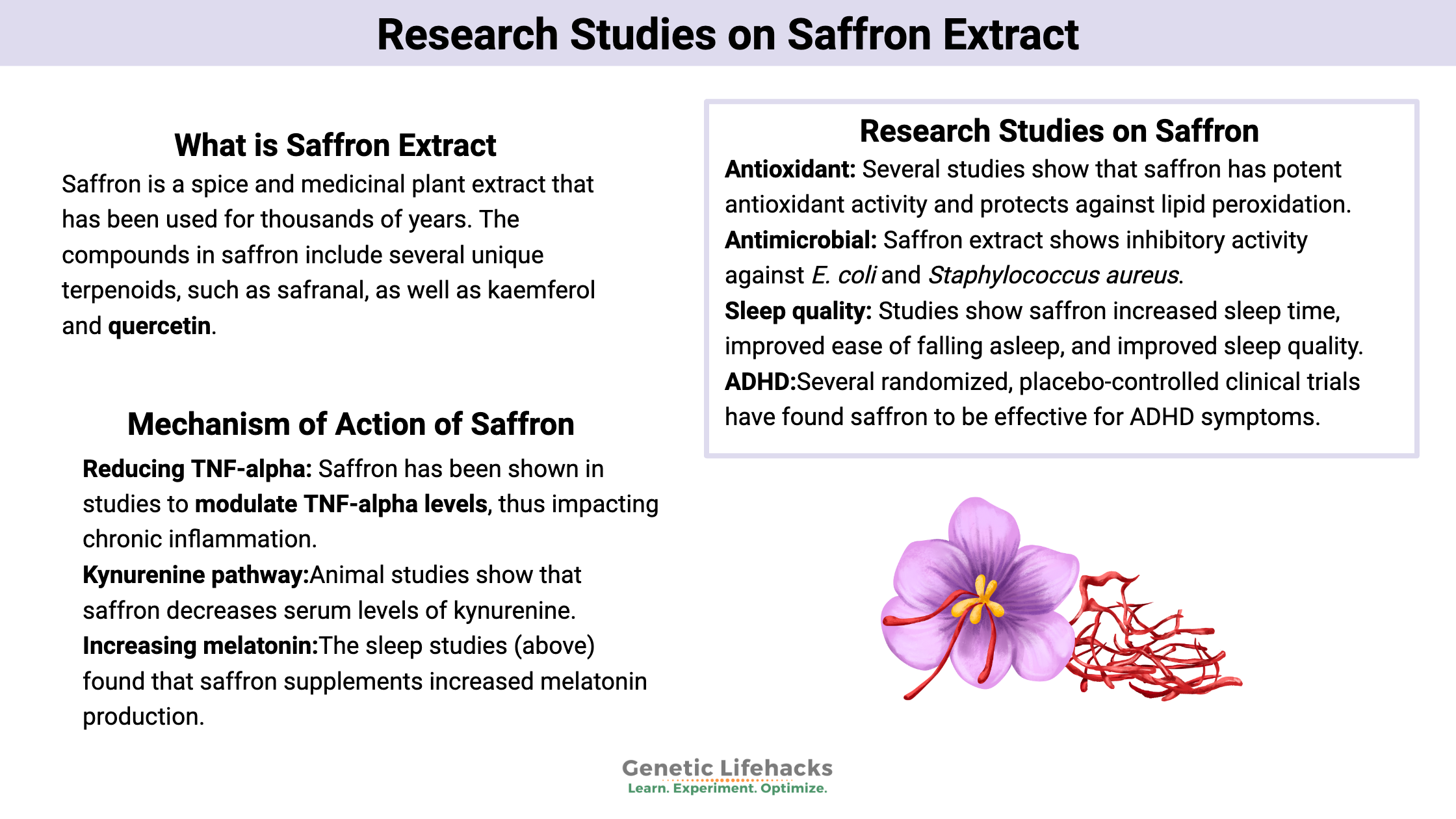
~ Saffron is a spice and medicinal plant extract that has been used for thousands of years.
~ Recent clinical trials show that saffron extract is as effective as standard medications in some people for ADHD, Alzheimer’s, major depressive disorder, and high cholesterol.

What is saffron extract?

Saffron comes from the stigmas of the flower of Crocus sativus L. The known use of saffron dates back to the Minoan civilization in Crete some 4,000 years ago, but some records date its use as far back as the 12th century BC. Historically, it has been used as a spice and medicinal food throughout India, Europe, and the Middle East.

The compounds in saffron include several unique terpenoids, such as safranal, as well as kaemferol and quercetin. The distinctive color comes from the carotenoid content of saffron. All of these combine to give saffron health-promoting properties as well as antimicrobial properties when added to foods as a spice.[ref][ref]
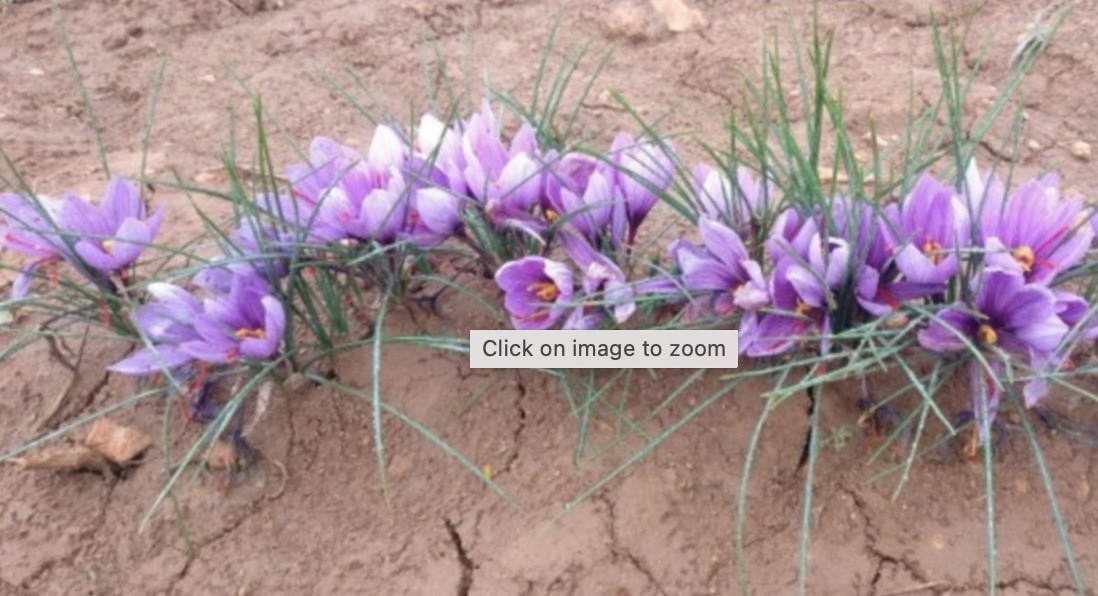
Picture of Crocus sativus L from PMC6696252

Research studies on saffron or saffron extract:

Antioxidant:
Oxidative stress in cells is at the heart of most chronic diseases. Several studies show that saffron has potent antioxidant activity and protects against lipid peroxidation.[ref][ref] Saffron is also a free-radical scavenger and iron-reducing antioxidant.[ref]

Antimicrobial: 
Saffron extract shows inhibitory activity against E. coli and Staphylococcus aureus.[ref]

Randomized clinical trial data:

While animal and cell studies are great for demonstrating a mechanism of action and the potential of a supplement or drug, the gold standard is randomized, placebo-controlled clinical trials.

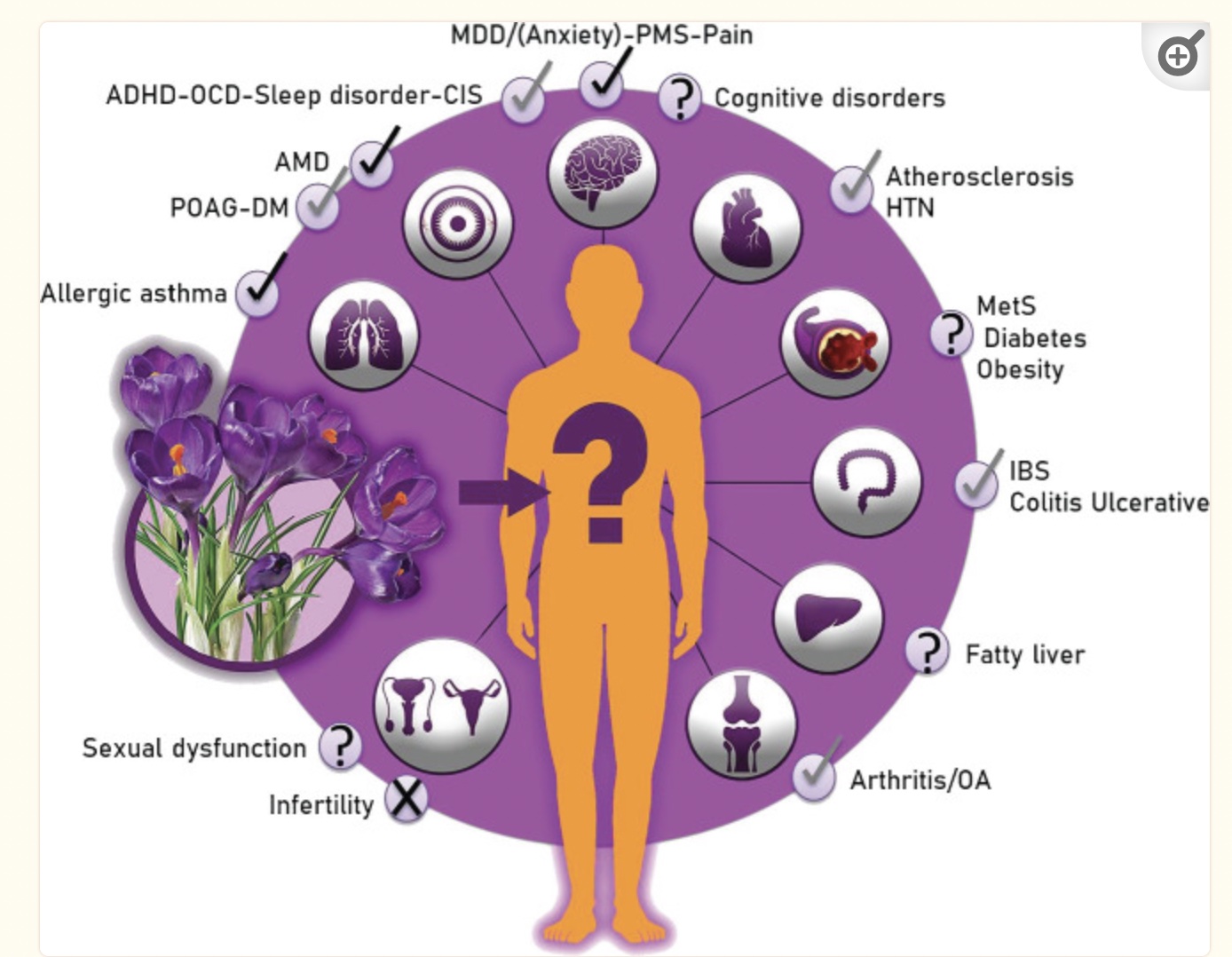
Below are just some of the double-blind, randomized, placebo-controlled clinical trials on saffron for:

  • Sleep
  • ADHD
  • Stress response
  • Depression
  • Cholesterol and Triglycerides
  • Alzheimer’s and MCI
  • Blood pressure
  • Ulcerative colitis
  • Fatigue in MS
  • AMD
  • Rheumatoid arthritis
  • Asthma
  • Sexual dysfunction from SSRI
From PMC9464341 (CC 4.0)

What can you do with this information?
Click through to the referenced study to read the details, and then talk with your doctor if you have any medical questions.

Sleep quality:
A six-week placebo-controlled trial found that saffron extract (15.5 mg/day) was effective for sleep. Study participants who took saffron had increased sleep time, improved ease of falling asleep, and improved sleep quality. [ref] Another study in adults with poor sleep found that 14mg/day of saffron improved sleep quality.[ref] In a dosage study, there was no difference between 14mg/day and 28mg/day in improving sleep quality. Interestingly, saffron supplementation increased evening melatonin concentrations.[ref] A randomized placebo-controlled clinical trial found that four weeks of 30 mg/day of saffron supplementation improved sleep quality and modulated gut microbiome. [ref]

Related article: Sleep and Your Genes

ADHD:
Several randomized, placebo-controlled clinical trials have found saffron to be effective for ADHD symptoms. The trials have included children, adolescents, and adults. One study compared saffron extract with methylphenidate (Ritalin) and found equal efficacy.[ref][ref]

Related article: ADHD  Genes

Cortisol and stress response:
In a double-blind, placebo-controlled, randomized, cross-over study, healthy young men underwent an acute stress test after taking 30 mg of saffron extract (Safr’InsideTM). Compared to placebo, saffron reduced peak salivary cortisol and cortisone concentrations.[ref]

Related article: Cortisol and HPA Axis

Mood and depression:
Several clinical trials have examined the efficacy of saffron extract for treating depression.

  • In one study,  128 adults with low mood but not diagnosed depression were given a saffron extract (affron) at 28mg/day, 22mg/day, or a placebo for 4 weeks. The results showed that mood improved and anxiety decreased at the 28mg/day dose.[ref]
  • For patients with major depressive disorder, a study showed that the combination of curcumin (250mg) plus saffron (15mg/day) was effective in reducing depression scores, especially in people with atypical depression.[ref]
  • In a comparison trial, saffron (30mg/day) was as effective as fluoxetine (Prozac) for mild to moderate depression after six weeks.[ref]
  • Another study in adults with anxiety and depression looked at a 50mg saffron capsule taken twice a day. This study found that saffron was significantly more effective than placebo in reducing depression scores after 12 weeks. [ref]
  • In older adults with major depressive disorder, saffron (60mg/day) was compared to sertraline (Zoloft) for depression. They were found to be equally effective at reducing depression.[ref]
  • A study involving postmenopausal women showed that saffron tea significantly improved “happiness”.[ref]
  • A randomized placebo-controlled clinical trial of 200 patients with depressive symptoms found that 3 months of 28mg of saffron supplementation daily was beneficial in reducing depression without adverse side effects. [ref]

Related article: Genetic pathways and depression root causes

Parkinson’s disease:
A triple-blind, randomized, parallel clinical trial used 100 mg/day of saffron powder vs placebo for 12 weeks in 94 Parkinson’s patients. The results showed that saffron extract improved CRP, quality of life, sleep, depression, mobility improvements, and bodily discomfort.[ref]

Related article: Parkinson’s disease and genetic risk factors

Lowering triglycerides and total cholesterol:
A placebo-controlled trial showed that saffron was remarkably effective in lowering triglycerides and total cholesterol. The intervention group (saffron petal extract, 30mg/day) had an average triglyceride level of 291 at the beginning of the study, which dropped to 177 after four weeks of saffron. LDL cholesterol also dropped by almost 40 points as well (from a baseline average of 137 mg/dL).[ref]

Another study in people with more moderate cholesterol levels found that saffron infusion reduced  LDL and triglyceride levels (e.g. total cholesterol from 199 to 179 mg/dL).[ref]

In a study of coronary artery disease, a saffron aqueous extract was found to reduce oxidized LDL levels.[ref]

Related article: Cholesterol and your genes

Alzheimer’s disease:
Several clinical trials in patients with mild to moderate Alzheimer’s disease show that saffron is as effective (or more effective) than standard treatments such as donepezil and memantine.[ref][ref]

A review of animal studies found that “Seventeen in vitro and in vivo preclinical studies have described the efficacy of saffron on cognitive impairment in animal models of AD, highlighting that crocin appears to be able to regulate glutamate levels, reduce oxidative stress, and modulate Aβ and tau protein aggregation.”[ref]

A 2025 clinical trial found that 30mg/day of saffron extract showed significant improvements in cognitive tests for patients with moderate to severe Alzheimer’s disease. [ref]

Blood pressure:
In a clinical trial of men aged 60-70 with high blood pressure, a combination of resistance training + saffron reduced blood pressure and positively affected endothelial function.[ref]

Ulcerative colitis:
A placebo-controlled randomized trial in ulcerative colitis patients found that 100mg of saffron/day (not saffron extract) reduced clinical scores and increased antioxidant status.[ref]

Related article: IBD and genetics

Age-related macular degeneration:
In a study of 100 adults with macular degeneration, supplementing with saffron extract (20 mg/day) for three months “modestly improved visual function in participants with AMD, including those using AREDS supplements.”[ref] Another clinical trial found that saffron improved retinal flicker sensitivity in early AMD.[ref]

Related article: AMD genes

Fatigue in Multiple Sclerosis:
One study found that saffron syrup taken three times a day for two months reduced fatigue scores. The results showed that “fatigue severity of the subjects after saffron syrup consumption dropped dramatically for two months.”[ref]
Another randomized placebo-controlled trial found that saffron supplementation reduced inflammation and improved mental health scores in patients with MS. [ref]

Related article: Multiple Sclerosis: Genetic Factors and Susceptibility

Rheumatoid arthritis:
A placebo-controlled randomized trial found that saffron reduced pain and swollen joints in women with rheumatoid arthritis. The researchers found that women who took saffron also had a decrease in CRP.[ref]

Related article: Rheumatoid arthritis genetic variants

Osteoarthritis:

A placebo-controlled trial found that the active ingredient in saffron, crocin, is an effective anti-inflammatory in osteoarthritis by modulating  microRNA-21 and microRNA-155 expression. [ref]

Related article: Osteoarthritis: The Role of Genetics
Related article: miRNA: What It Is and How It Works

Heat shock protein antibodies:
Antibodies to heat shock proteins (HSP27, HSP70, and HSP65) are associated with metabolic syndrome. A placebo-controlled randomized trial found that 12 weeks of saffron (100 mg/day) reduced antibodies to heat shock proteins (antiHSP27 and antiHSP70).[ref]

Related article: Heat shock proteins

Fluoxetine-induced sexual impairment:
Side effects of SSRIs, such as fluoxetine (Prozac), can include sexual dysfunction in men. A placebo-controlled double-blind study found that saffron extract (15mg/ twice daily) improved sexual function in more than half of the men by week 4. [ref]

PMS:
A placebo-controlled clinical trial in women found that saffron (15 mg / 2x daily) during their menstrual cycle effectively reduced PMS symptoms in 76% of the women after a couple of months. Symptoms were reduced in only 8% of women taking the placebo. [ref]

Asthma:
A clinical trial in adults with allergic asthma found that saffron (100mg/day) decreased the use of rescue medication and asthma severity.[ref]


Safety, Side Effects, and Dosing:

First, saffron is used as a spice and is generally considered safe. It has been used for millennia in low doses. In randomized, placebo-controlled trials, most found either no side effects or minimal side effects similar to placebo.[ref]

Most of the clinical trials listed above used doses of 15 mg, sometimes twice a day.

A safety evaluation study found that doses up to 400 mg were safe, but that at higher doses (400 mg) there was a decrease in standing systolic blood pressure. It also increases sodium, BUN, and creatinine slightly — all still in the normal range and deemed clinically unimportant.[ref]

Another safety study looked at several different markers in the coagulation system (fibrinogen, factor VII, PTT, and more) to see if there was an effect on clotting or bleeding. The study found no differences from placebo at 200 mg or 400 mg of saffron.[ref]

High doses of 1200mg and up may cause side effects such as nausea, vomiting, and bleeding.[ref]

Toxicity studies in animals show that high doses of saffron have toxic effects. In doses in the grams/kg range in animals, saffron does have significant adverse effects. (This is true for many substances, and a good reminder that even spices that are traditionally used can have limits.)[ref]

Cautions: For any supplement or vitamin, please talk with your doctor if you have medical questions or are on a medication, especially one that lowers blood pressure. While I didn’t find any contraindications in the research studies, the notable effects on mood may mean that people with bipolar depression should use caution.

Access this content:

An active subscription is required to access this content.

Join as a member


Conclusion:

At lower doses, saffron seems to be a safe natural alternative to several prescription medications for depression, Alzheimer’s, or ADHD.  I would like to see more studies on saffron as far as the mechanism of action and interactions with genetic polymorphisms. This is one traditional medicinal food that has quite a lot of solid scientific research on it.


Related articles:

Berberine: Research, Benefits, Absorption, and Genetics

TNF-alpha: Inflammation, Chronic Diseases, and Genetic Susceptibility

Curcumin Supplements: Decreasing Inflammation


References:

Abedimanesh, Nasim, et al. “Effects of Crocin and Saffron Aqueous Extract on Gene Expression of SIRT1, AMPK, LOX1, NF-κB, and MCP-1 in Patients with Coronary Artery Disease: A Randomized Placebo-Controlled Clinical Trial.” Phytotherapy Research: PTR, vol. 34, no. 5, May 2020, pp. 1114–22. PubMed, https://doi.org/10.1002/ptr.6580.
Agha-Hosseini, M., et al. “Crocus Sativus L. (Saffron) in the Treatment of Premenstrual Syndrome: A Double-Blind, Randomised and Placebo-Controlled Trial.” BJOG: An International Journal of Obstetrics and Gynaecology, vol. 115, no. 4, Mar. 2008, pp. 515–19. PubMed, https://doi.org/10.1111/j.1471-0528.2007.01652.x.
Ahmadpanah, Mohammad, et al. “Crocus Sativus L. (Saffron) versus Sertraline on Symptoms of Depression among Older People with Major Depressive Disorders-a Double-Blind, Randomized Intervention Study.” Psychiatry Research, vol. 282, Dec. 2019, p. 112613. PubMed, https://doi.org/10.1016/j.psychres.2019.112613.
Akhondzadeh, S., et al. “Saffron in the Treatment of Patients with Mild to Moderate Alzheimer’s Disease: A 16-Week, Randomized and Placebo-Controlled Trial.” Journal of Clinical Pharmacy and Therapeutics, vol. 35, no. 5, Oct. 2010, pp. 581–88. PubMed, https://doi.org/10.1111/j.1365-2710.2009.01133.x.
Akhondzadeh, Shahin, et al. “A 22-Week, Multicenter, Randomized, Double-Blind Controlled Trial of Crocus Sativus in the Treatment of Mild-to-Moderate Alzheimer’s Disease.” Psychopharmacology, vol. 207, no. 4, Jan. 2010, pp. 637–43. PubMed, https://doi.org/10.1007/s00213-009-1706-1.
Almodóvar, Paula, et al. “Bioaccessibility and Pharmacokinetics of a Commercial Saffron (Crocus Sativus L.) Extract.” Evidence-Based Complementary and Alternative Medicine : eCAM, vol. 2020, Jan. 2020, p. 1575730. PubMed Central, https://doi.org/10.1155/2020/1575730.
Ashtiani, Alireza Rezaee, et al. “The Effect of Novel Simple Saffron Syrup on Fatigue Reduction in Patients with Multiple Sclerosis.” Journal of Basic and Clinical Physiology and Pharmacology, vol. 31, no. 6, July 2020. PubMed, https://doi.org/10.1515/jbcpp-2020-0063.
Ayatollahi, Hossein, et al. “Effect of Crocus Sativus L. (Saffron) on Coagulation and Anticoagulation Systems in Healthy Volunteers.” Phytotherapy Research: PTR, vol. 28, no. 4, Apr. 2014, pp. 539–43. PubMed, https://doi.org/10.1002/ptr.5021.
Baziar, Sara, et al. “Crocus Sativus L. Versus Methylphenidate in Treatment of Children with Attention-Deficit/Hyperactivity Disorder: A Randomized, Double-Blind Pilot Study.” Journal of Child and Adolescent Psychopharmacology, vol. 29, no. 3, Apr. 2019, pp. 205–12. PubMed, https://doi.org/10.1089/cap.2018.0146.
Blasco-Fontecilla, Hilario, et al. “Effectivity of Saffron Extract (Saffr’Activ) on Treatment for Children and Adolescents with Attention Deficit/Hyperactivity Disorder (ADHD): A Clinical Effectivity Study.” Nutrients, vol. 14, no. 19, Sept. 2022, p. 4046. PubMed, https://doi.org/10.3390/nu14194046.
Broadhead, Geoffrey K., et al. “Saffron Therapy for the Treatment of Mild/Moderate Age-Related Macular Degeneration: A Randomised Clinical Trial.” Graefe’s Archive for Clinical and Experimental Ophthalmology = Albrecht Von Graefes Archiv Fur Klinische Und Experimentelle Ophthalmologie, vol. 257, no. 1, Jan. 2019, pp. 31–40. PubMed, https://doi.org/10.1007/s00417-018-4163-x.
Butnariu, Monica, et al. “The Pharmacological Activities of Crocus Sativus L.: A Review Based on the Mechanisms and Therapeutic Opportunities of Its Phytoconstituents.” Oxidative Medicine and Cellular Longevity, vol. 2022, Feb. 2022, p. 8214821. PubMed Central, https://doi.org/10.1155/2022/8214821.
De la Fuente Muñoz, Mario, et al. “Effects of Supplementation with the Standardized Extract of Saffron (Affron®) on the Kynurenine Pathway and Melatonin Synthesis in Rats.” Antioxidants (Basel, Switzerland), vol. 12, no. 8, Aug. 2023, p. 1619. PubMed, https://doi.org/10.3390/antiox12081619.
Delam, Hamed, et al. “The Effect of Crocus Sativus L. (Saffron) Herbal Tea on Happiness in Postmenopausal Women: A Randomized Controlled Trial.” BMC Complementary Medicine and Therapies, vol. 23, June 2023, p. 176. PubMed Central, https://doi.org/10.1186/s12906-023-04014-8.
D’Onofrio, Grazia, et al. “Crocus Sativus L. (Saffron) in Alzheimer’s Disease Treatment: Bioactive Effects on Cognitive Impairment.” Current Neuropharmacology, vol. 19, no. 9, 2021, pp. 1606–16. PubMed, https://doi.org/10.2174/1570159X19666210113144703.
Falsini, Benedetto, et al. “Influence of Saffron Supplementation on Retinal Flicker Sensitivity in Early Age-Related Macular Degeneration.” Investigative Ophthalmology & Visual Science, vol. 51, no. 12, Dec. 2010, pp. 6118–24. PubMed, https://doi.org/10.1167/iovs.09-4995.
Hajhashemy, Zahra, et al. “The Effect of Saffron Supplementation on Indices of Oxidative Stress, Inflammation, Mental Health, and Quality of Life in Patients with Parkinson’s Disease: A Randomized, Triple-Blind, Placebo-Controlled Clinical Trial.” Food & Function, vol. 17, no. 2, Jan. 2026, pp. 889–901. pubs.rsc.org, https://doi.org/10.1039/D5FO01924A.
Hamidi, Zahra, et al. “The Effect of Saffron Supplement on Clinical Outcomes and Metabolic Profiles in Patients with Active Rheumatoid Arthritis: A Randomized, Double-Blind, Placebo-Controlled Clinical Trial.” Phytotherapy Research: PTR, vol. 34, no. 7, July 2020, pp. 1650–58. PubMed, https://doi.org/10.1002/ptr.6633.
Hooshmand-Moghadam, Babak, et al. “Saffron (Crocus Sativus L.) in Combination with Resistance Training Reduced Blood Pressure in the Elderly Hypertensive Men: A Randomized Controlled Trial.” British Journal of Clinical Pharmacology, vol. 87, no. 8, Aug. 2021, pp. 3255–67. PubMed, https://doi.org/10.1111/bcp.14746.
Karimi, Ehsan, et al. “Evaluation of Crocus Sativus L. Stigma Phenolic and Flavonoid Compounds and Its Antioxidant Activity.” Molecules, vol. 15, no. 9, Sept. 2010, pp. 6244–56. PubMed Central, https://doi.org/10.3390/molecules15096244.
Kehtari, Tarlan, et al. “From Mood to Memory: Unlocking Saffron’s Potential in Brain Health.” Cureus, vol. 17, no. 4, p. e82924. PubMed Central, https://doi.org/10.7759/cureus.82924. Accessed 19 Mar. 2026.
Kell, Graham, et al. “Affron® a Novel Saffron Extract (Crocus Sativus L.) Improves Mood in Healthy Adults over 4 Weeks in a Double-Blind, Parallel, Randomized, Placebo-Controlled Clinical Trial.” Complementary Therapies in Medicine, vol. 33, Aug. 2017, pp. 58–64. PubMed, https://doi.org/10.1016/j.ctim.2017.06.001.
Kouchaki, Ebrahim, et al. “Effects of Crocin on Inflammatory Biomarkers and Mental Health Status in Patients with Multiple Sclerosis: A Randomized, Double-Blinded Clinical Trial.” Multiple Sclerosis and Related Disorders, vol. 83, Mar. 2024, p. 105454. PubMed, https://doi.org/10.1016/j.msard.2024.105454.
Lang, Leonie, et al. “A Standardised Saffron Extract Improves Subjective and Objective Sleep Quality in Healthy Older Adults with Sleep Complaints: Results from the Gut-Sleep-Brain Axis Randomised, Double-Blind, Placebo-Controlled Pilot Study.” Food & Function, vol. 16, no. 17, Aug. 2025, pp. 6817–32. PubMed, https://doi.org/10.1039/d5fo00917k.
Lopresti, Adrian L., Stephen J. Smith, Wolfgang Marx, et al. “An Examination into the Effects of a Saffron Extract (Affron) on Mood and General Wellbeing in Adults Experiencing Low Mood: A Randomized, Double-Blind, Placebo-Controlled Trial.” The Journal of Nutrition, vol. 155, no. 7, July 2025, pp. 2300–11. PubMed, https://doi.org/10.1016/j.tjnut.2025.05.024.
Lopresti, Adrian L., Stephen J. Smith, and Peter D. Drummond. “An Investigation into an Evening Intake of a Saffron Extract (Affron®) on Sleep Quality, Cortisol, and Melatonin Concentrations in Adults with Poor Sleep: A Randomised, Double-Blind, Placebo-Controlled, Multi-Dose Study.” Sleep Medicine, vol. 86, Oct. 2021, pp. 7–18. PubMed, https://doi.org/10.1016/j.sleep.2021.08.001.
Lopresti, Adrian L., Stephen J. Smith, Alexandra P. Metse, et al. “Effects of Saffron on Sleep Quality in Healthy Adults with Self-Reported Poor Sleep: A Randomized, Double-Blind, Placebo-Controlled Trial.” Journal of Clinical Sleep Medicine: JCSM: Official Publication of the American Academy of Sleep Medicine, vol. 16, no. 6, June 2020, pp. 937–47. PubMed, https://doi.org/10.5664/jcsm.8376.
Lopresti, Adrian L., and Peter D. Drummond. “Efficacy of Curcumin, and a Saffron/Curcumin Combination for the Treatment of Major Depression: A Randomised, Double-Blind, Placebo-Controlled Study.” Journal of Affective Disorders, vol. 207, Jan. 2017, pp. 188–96. PubMed, https://doi.org/10.1016/j.jad.2016.09.047.
Mazidi, Mohsen, et al. “A Double-Blind, Randomized and Placebo-Controlled Trial of Saffron (Crocus Sativus L.) in the Treatment of Anxiety and Depression.” Journal of Complementary & Integrative Medicine, vol. 13, no. 2, June 2016, pp. 195–99. PubMed, https://doi.org/10.1515/jcim-2015-0043.
Modabbernia, Amirhossein, et al. “Effect of Saffron on Fluoxetine-Induced Sexual Impairment in Men: Randomized Double-Blind Placebo-Controlled Trial.” Psychopharmacology, vol. 223, no. 4, Oct. 2012, pp. 381–88. PubMed, https://doi.org/10.1007/s00213-012-2729-6.
Modaghegh, Mohammad-Hadi, et al. “Safety Evaluation of Saffron (Crocus Sativus) Tablets in Healthy Volunteers.” Phytomedicine: International Journal of Phytotherapy and Phytopharmacology, vol. 15, no. 12, Dec. 2008, pp. 1032–37. PubMed, https://doi.org/10.1016/j.phymed.2008.06.003.
Mohebbi, Maryam, et al. “Significant Effect of Crocin on the Gene Expression of MicroRNA-21 and MicroRNA-155 in Patients with Osteoarthritis.” Iranian Journal of Allergy, Asthma, and Immunology, vol. 21, no. 3, June 2022, pp. 322–31. PubMed, https://doi.org/10.18502/ijaai.v21i3.9805.
Noorbala, A. A., et al. “Hydro-Alcoholic Extract of Crocus Sativus L. versus Fluoxetine in the Treatment of Mild to Moderate Depression: A Double-Blind, Randomized Pilot Trial.” Journal of Ethnopharmacology, vol. 97, no. 2, Feb. 2005, pp. 281–84. PubMed, https://doi.org/10.1016/j.jep.2004.11.004.
Pachikian, Barbara D., et al. “Effects of Saffron Extract on Sleep Quality: A Randomized Double-Blind Controlled Clinical Trial.” Nutrients, vol. 13, no. 5, Apr. 2021, p. 1473. PubMed, https://doi.org/10.3390/nu13051473.
Pouchieu, Camille, et al. “Acute Effect of a Saffron Extract (Safr’InsideTM) and Its Main Volatile Compound on the Stress Response in Healthy Young Men: A Randomized, Double Blind, Placebo-Controlled, Crossover Study.” Nutrients, vol. 15, no. 13, June 2023, p. 2921. PubMed, https://doi.org/10.3390/nu15132921.
Schmidt, Mathias, et al. “Saffron in Phytotherapy: Pharmacology and Clinical Uses.” Wiener Medizinische Wochenschrift (1946), vol. 157, nos. 13–14, 2007, pp. 315–19. PubMed, https://doi.org/10.1007/s10354-007-0428-4.
Shemshian, Maryam, et al. “Saffron in Metabolic Syndrome: Its Effects on Antibody Titers to Heat-Shock Proteins 27, 60, 65 and 70.” Journal of Complementary & Integrative Medicine, vol. 11, no. 1, Feb. 2014, pp. 43–49. PubMed, https://doi.org/10.1515/jcim-2013-0047.
Tahvilian, Negin, et al. “Effects of Saffron Supplementation on Oxidative/Antioxidant Status and Severity of Disease in Ulcerative Colitis Patients: A Randomized, Double-Blind, Placebo-Controlled Study.” Phytotherapy Research: PTR, vol. 35, no. 2, Feb. 2021, pp. 946–53. PubMed, https://doi.org/10.1002/ptr.6848.
Trapero, Almudena, et al. “Characterization of a Glucosyltransferase Enzyme Involved in the Formation of Kaempferol and Quercetin Sophorosides in Crocus Sativus1[C][W].” Plant Physiology, vol. 159, no. 4, Aug. 2012, pp. 1335–54. PubMed Central, https://doi.org/10.1104/pp.112.198069.
Vafaei, Shayan, et al. “The Effects of Crocin on Bone and Cartilage Diseases.” Frontiers in Pharmacology, vol. 12, Jan. 2022, p. 830331. PubMed Central, https://doi.org/10.3389/fphar.2021.830331.
Vafaeipour, Zeinab, et al. “Effect of Saffron, Black Seed, and Their Main Constituents on Inflammatory Cytokine Response (Mainly TNF-α) and Oxidative Stress Status: An Aspect on Pharmacological Insights.” Naunyn-Schmiedeberg’s Archives of Pharmacology, vol. 396, no. 10, Oct. 2023, pp. 2241–59. PubMed, https://doi.org/10.1007/s00210-023-02501-w.
Wauquier, Fabien, et al. “Circulating Human Serum Metabolites Derived from the Intake of a Saffron Extract (Safr’InsideTM) Protect Neurons from Oxidative Stress: Consideration for Depressive Disorders.” Nutrients, vol. 14, no. 7, Apr. 2022, p. 1511. PubMed Central, https://doi.org/10.3390/nu14071511.
Yoshino, Fumihiko, et al. “Crocetin Reduces the Oxidative Stress Induced Reactive Oxygen Species in the Stroke-Prone Spontaneously Hypertensive Rats (SHRSPs) Brain.” Journal of Clinical Biochemistry and Nutrition, vol. 49, no. 3, Nov. 2011, pp. 182–87. PubMed Central, https://doi.org/10.3164/jcbn.11-01.
Zilaee, Marzie, et al. “An Evaluation of the Effects of Saffron Supplementation on the Asthma Clinical Symptoms and Asthma Severity in Patients with Mild and Moderate Persistent Allergic Asthma: A Double-Blind, Randomized Placebo-Controlled Trial.” Respiratory Research, vol. 20, no. 1, Feb. 2019, p. 39. PubMed, https://doi.org/10.1186/s12931-019-0998-x.

About the Author:
Debbie Moon is a biologist, engineer, author, and the founder of Genetic Lifehacks where she has helped thousands of members understand how to apply genetics to their diet, lifestyle, and health decisions. With more than 10 years of experience translating complex genetic research into practical health strategies, Debbie holds a BS in engineering from Colorado School of Mines and an MSc in biological sciences from Clemson University. She combines an engineering mindset with a biological systems approach to explain how genetic differences impact your optimal health.