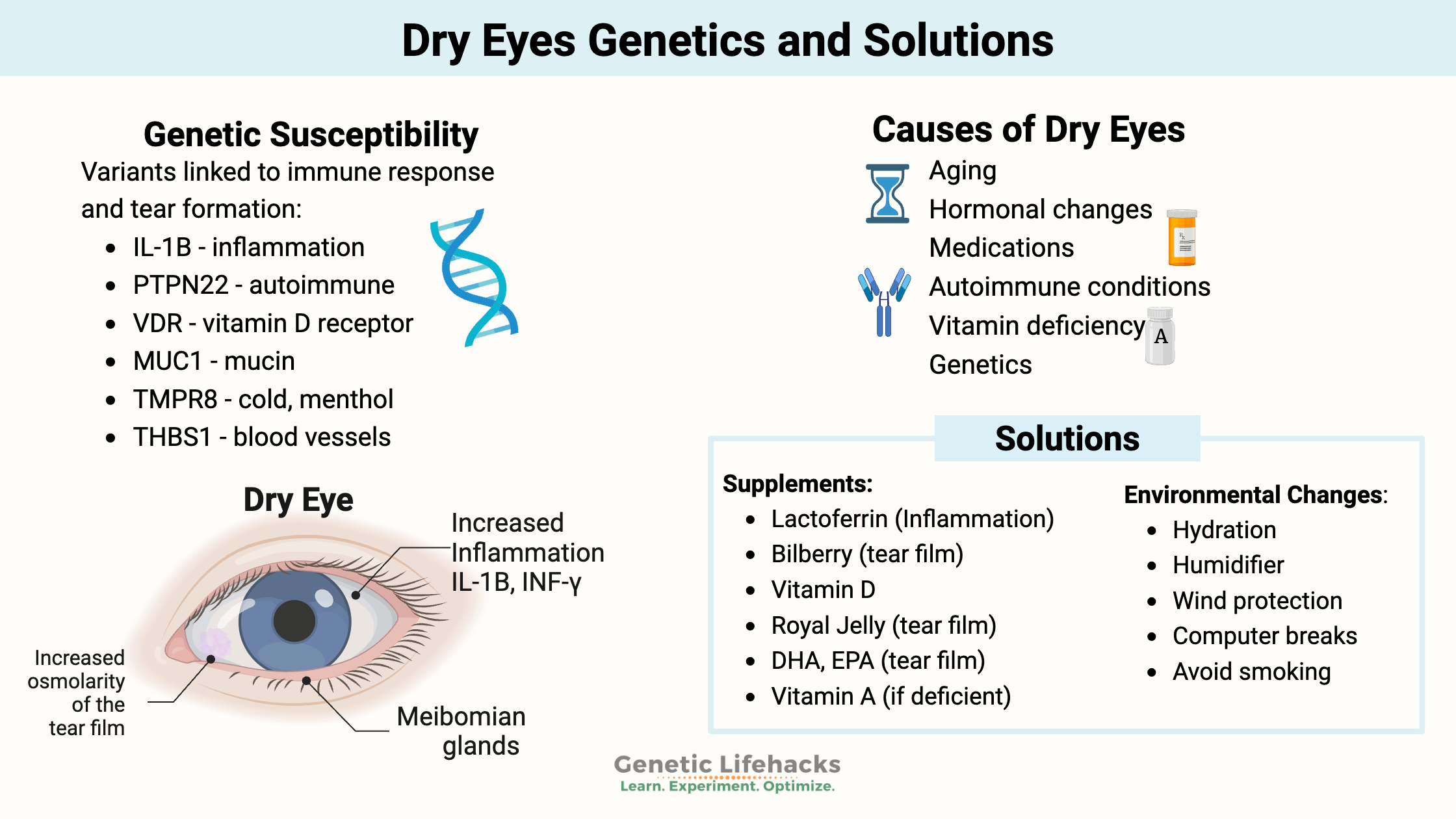
Dry Eyes: Using Genetic Data to Find the Right Solutions
Use your genetic data to understand the root causes of dry eyes, from immune response to meibomian glands, and explore research-backed options to relieve symptoms.

Use your genetic data to understand the root causes of dry eyes, from immune response to meibomian glands, and explore research-backed options to relieve symptoms.
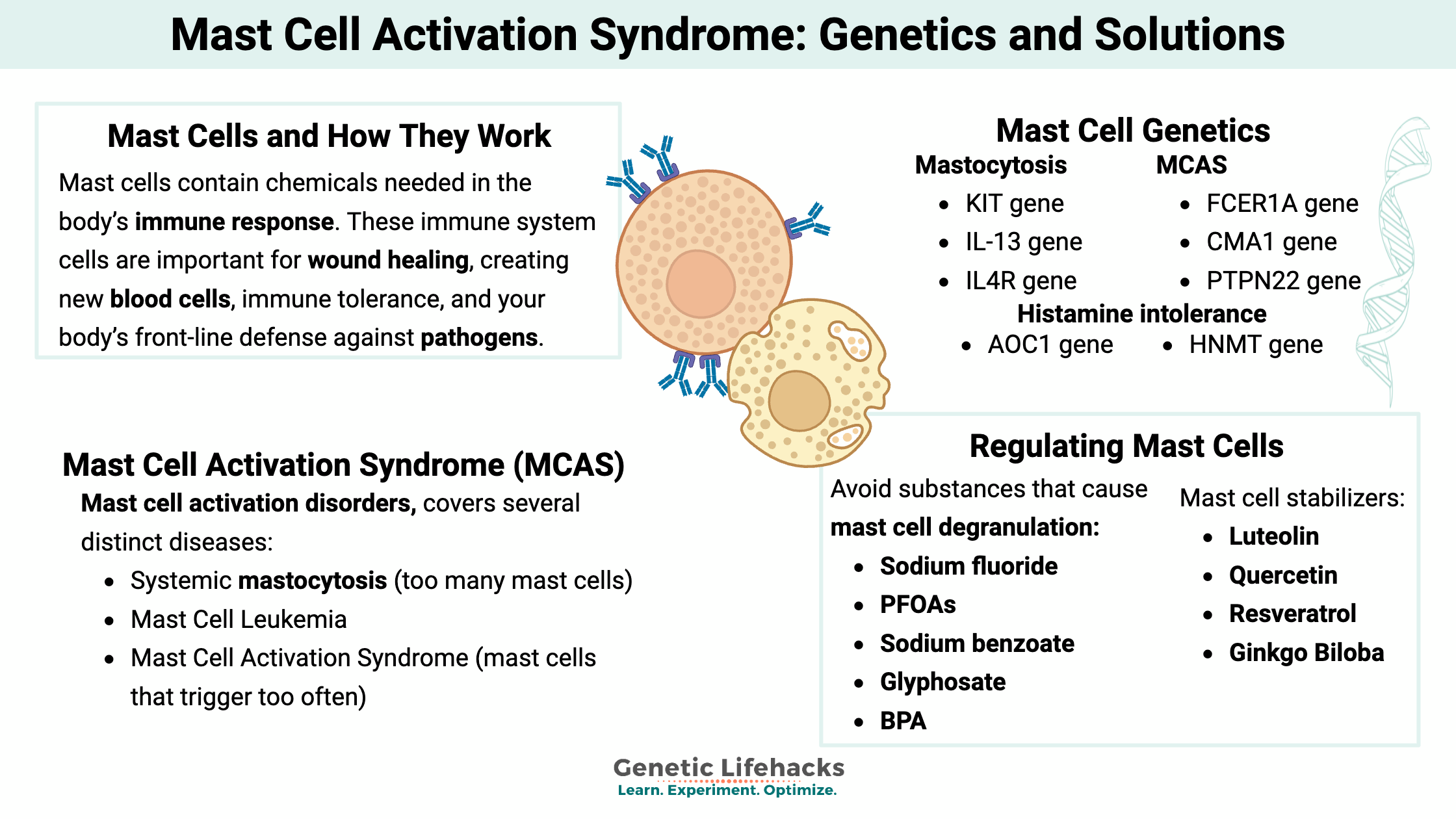
Mast cells are essential to your innate immune system, defending against pathogens and allergens. For some people, mast cells can be triggered too easily, giving allergy-like responses to lots of different substances.
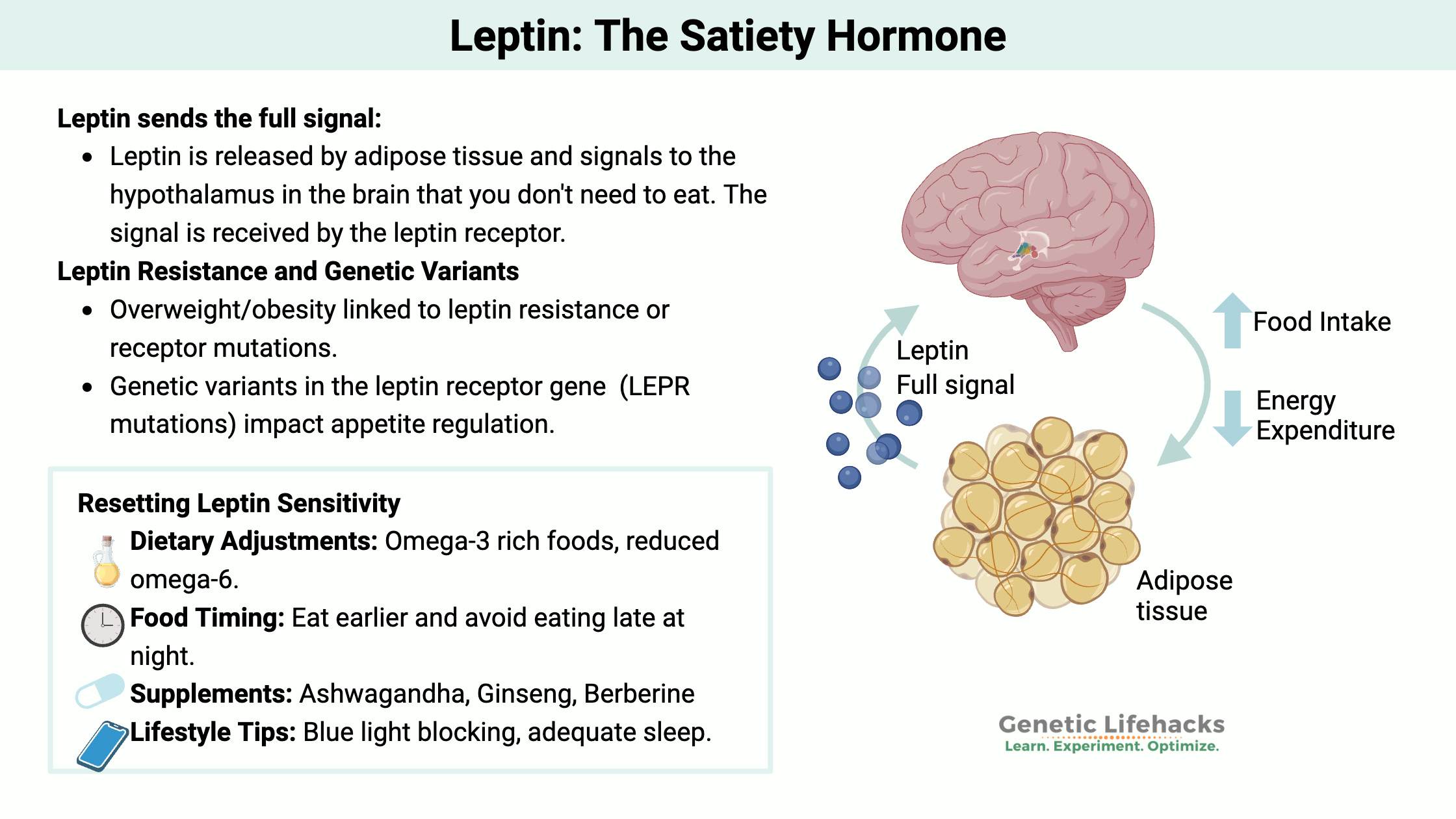
Do you wonder why other people don’t seem to struggle with wanting to eat more? Leptin is a hormone that signals to the brain when you are full and should stop eating. Genetic variants in the LEPR gene are linked to obesity and desire to eat more.
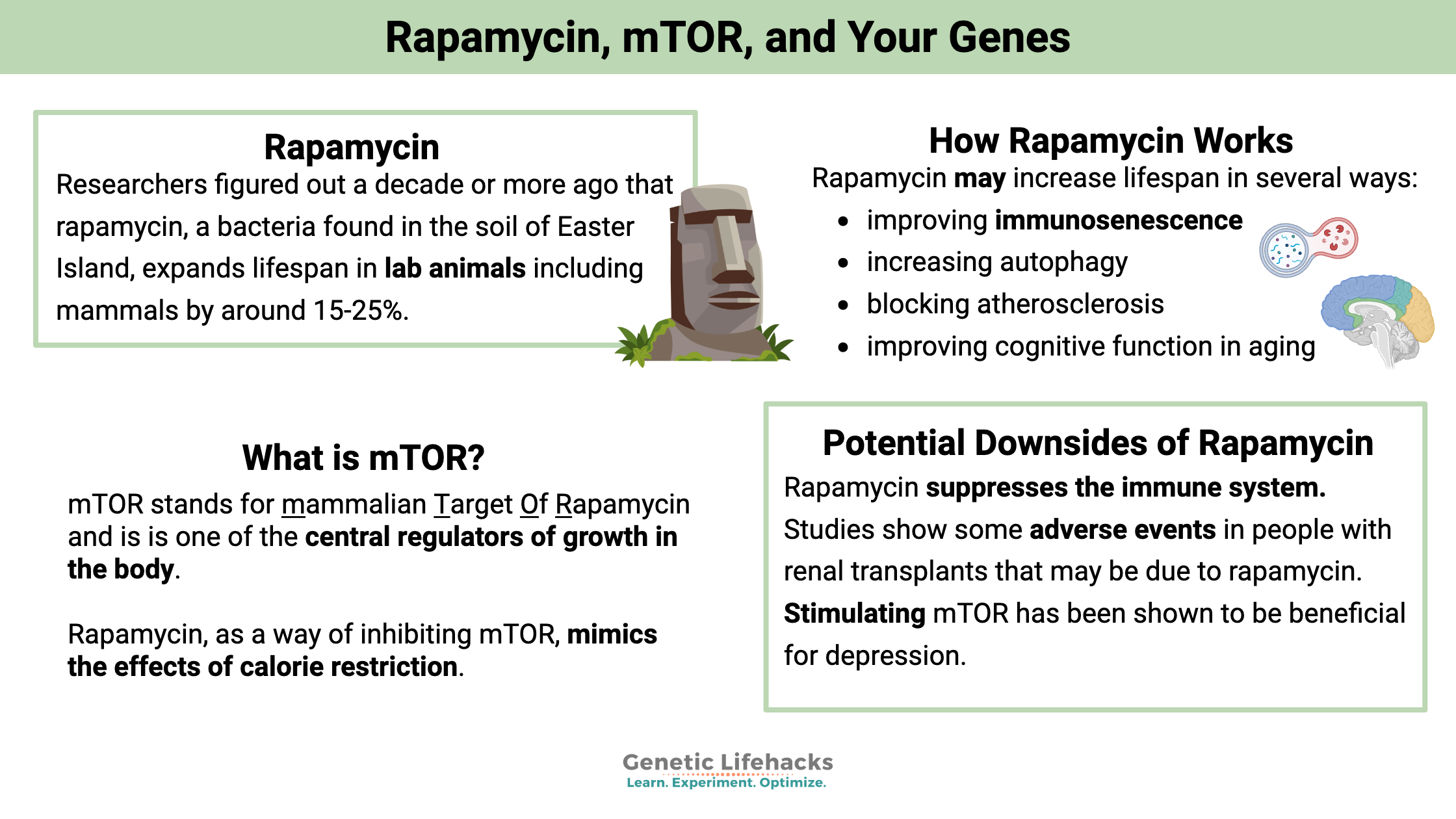
Rapamycin is an antibiotic used as an immunosuppressant, an anti-cancer agent, and to prevent blocked arteries. Rapamycin is now the focus of longevity and healthspan-extending research by inhibiting mTOR.
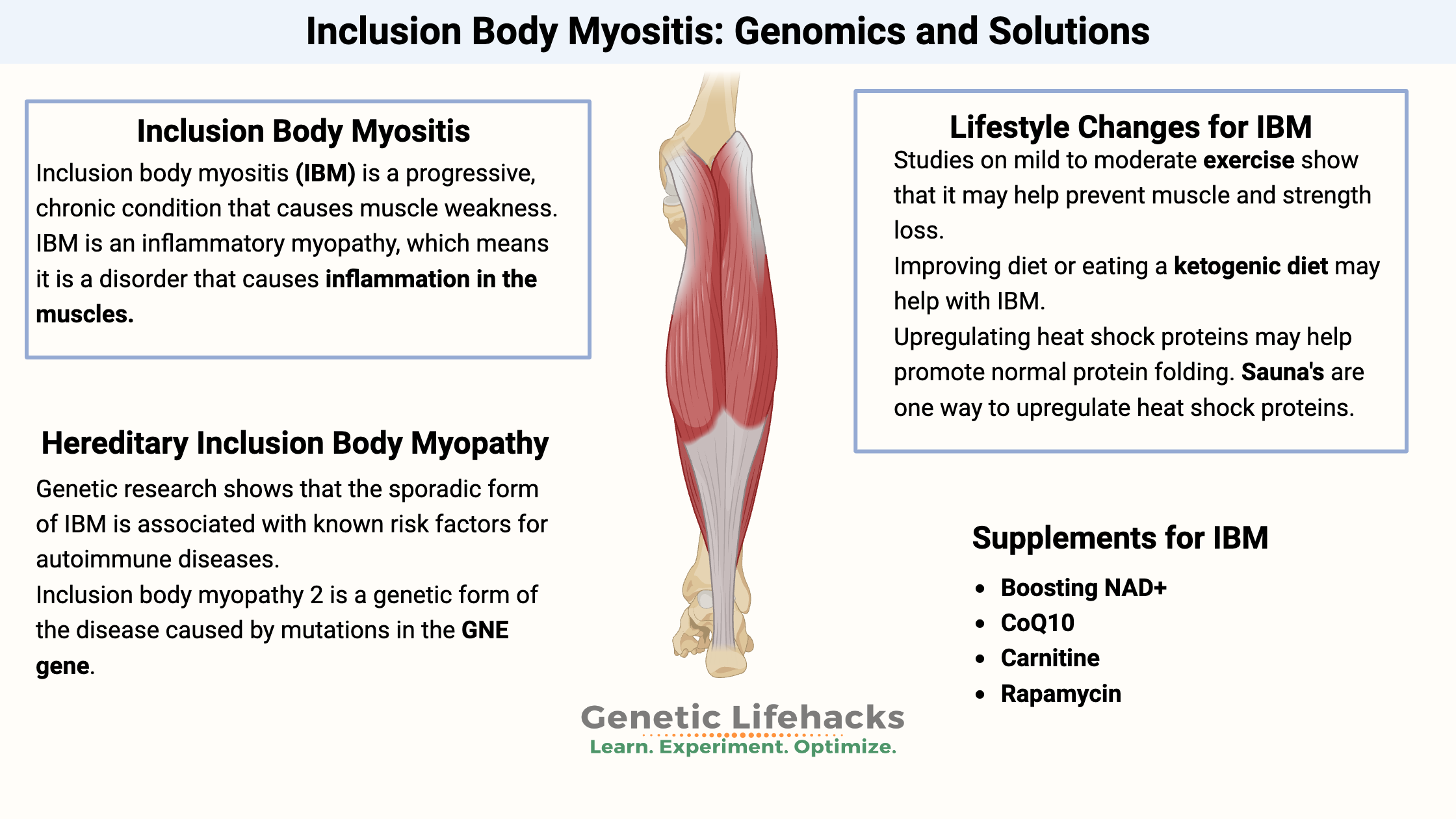
Inclusion body myositis is a progressive, chronic condition that causes muscle weakness. It may be an interplay between inflammation, the dysregulation of proteins, mitochondrial dysfunction, and changes to autophagy. Somewhere in the mix, autoimmunity may be triggering it.
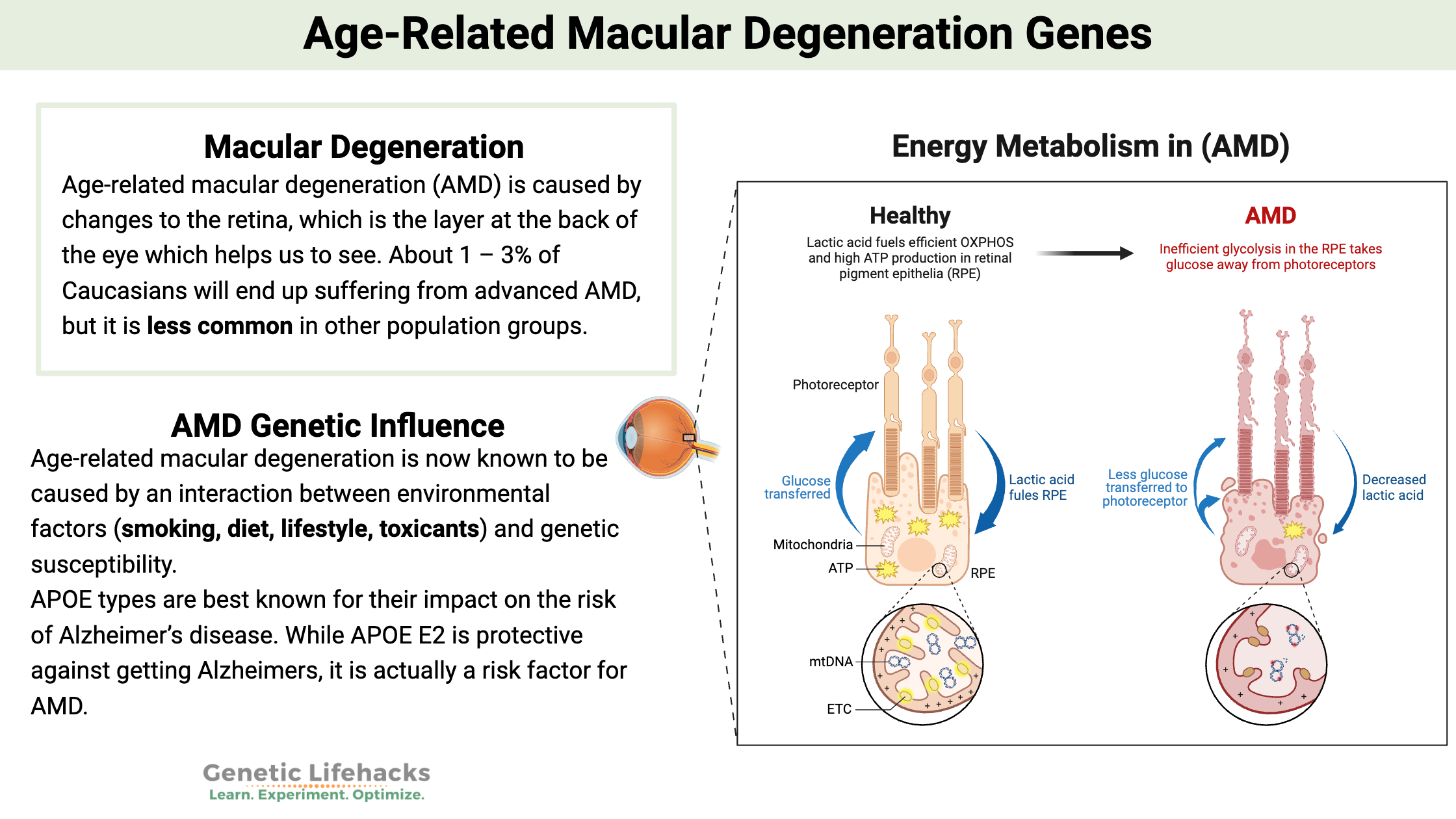
Age-related macular degeneration (AMD) is the most common cause of blindness in the elderly. You will find supplements specifically promoted for preventing AMD. This article explains age-related macular degeneration, delves into the genetic risks, and then explains which supplements are likely to be protective and which may do more harm than good.