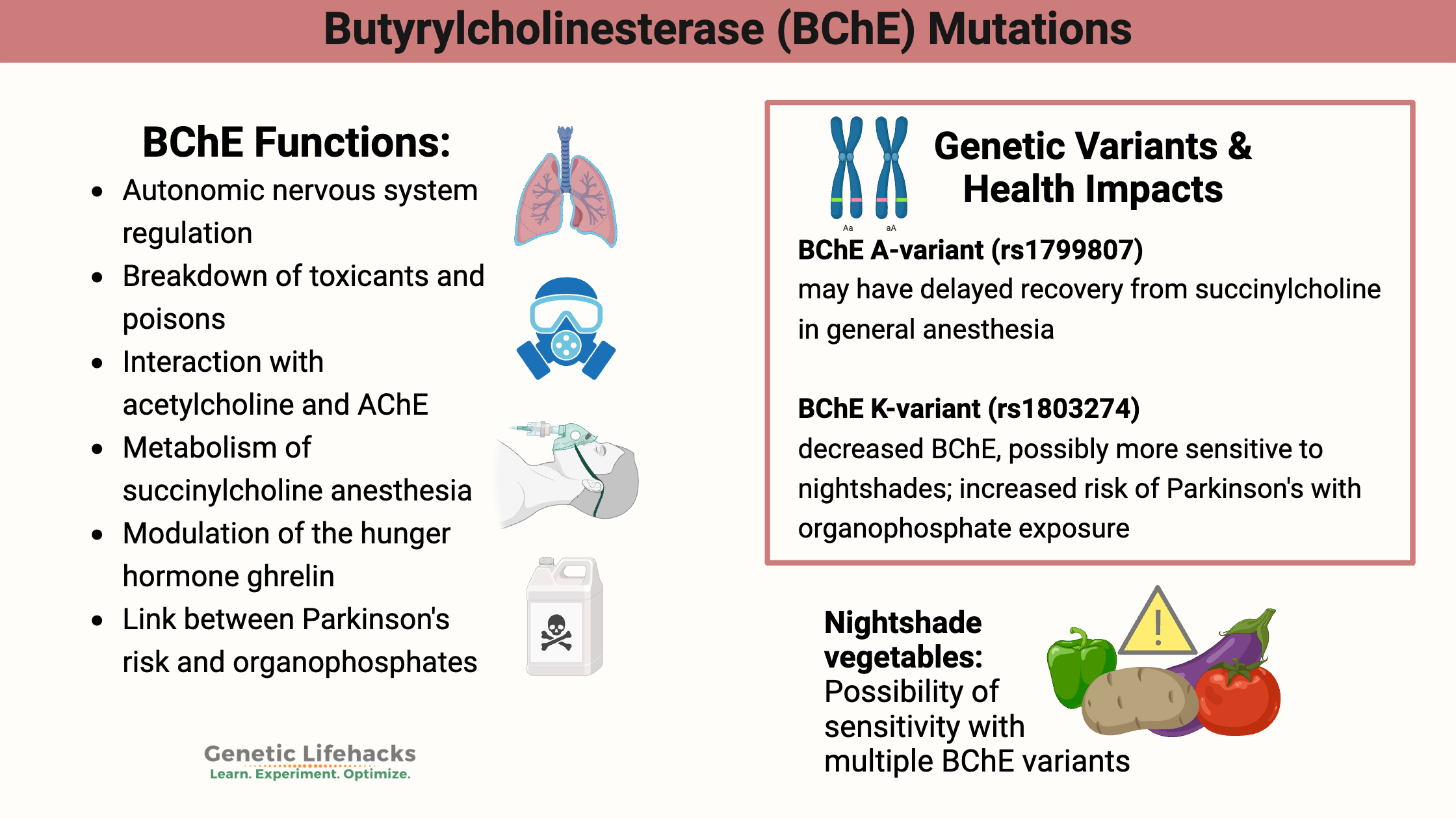
BChE gene: Nightshade sensitivity, Anesthesia risk
BCHE variants can lower butyrylcholinesterase activity. See implications for anesthesia, nightshades, pesticide susceptibility, immunity, and ghrelin.

BCHE variants can lower butyrylcholinesterase activity. See implications for anesthesia, nightshades, pesticide susceptibility, immunity, and ghrelin.
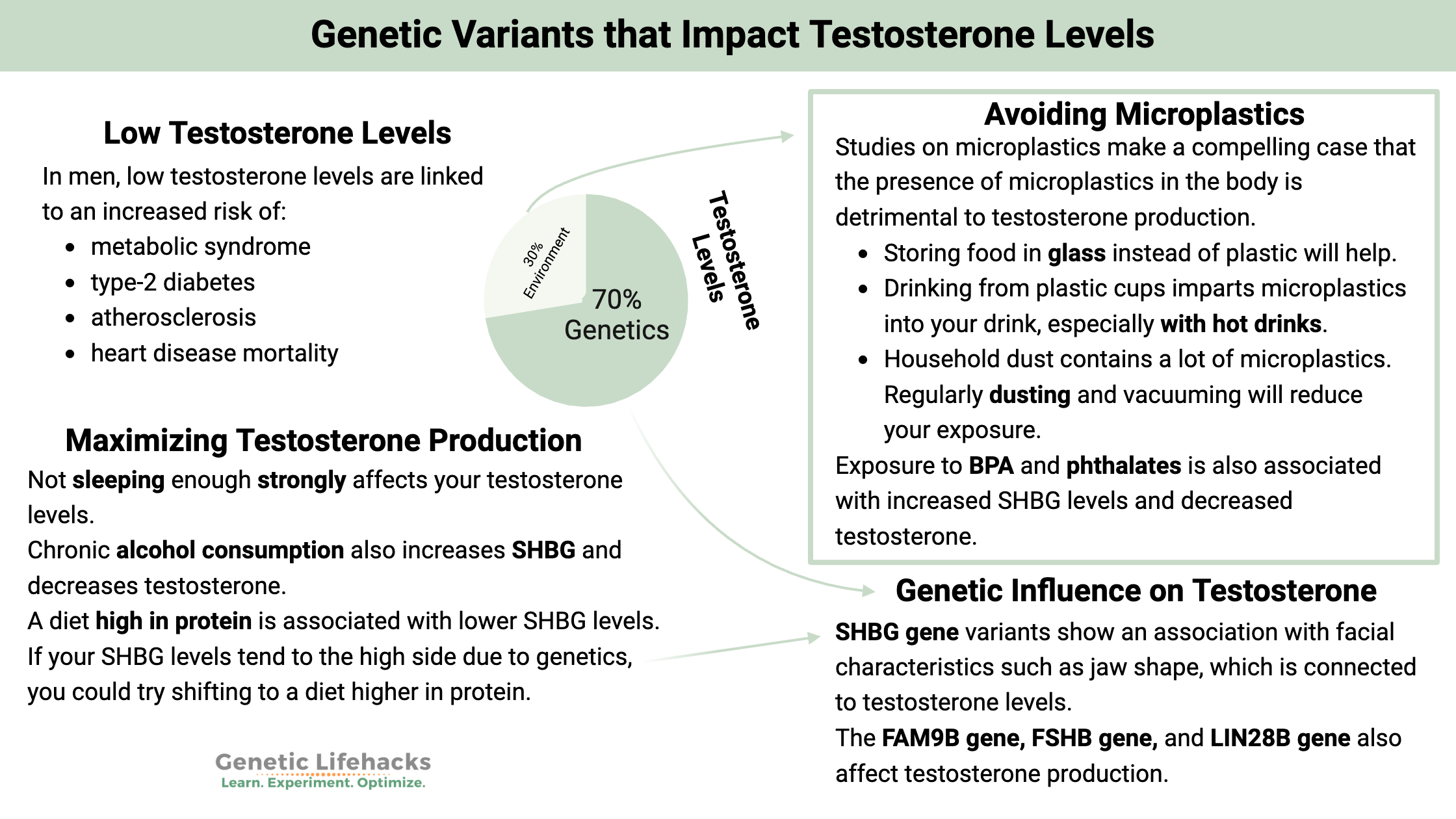
While diet and lifestyle play a role in testosterone levels, in males, there is a strong genetic component as well. Check out your genes to see if they are playing a role in your low T levels — and then check out the Lifehacks.
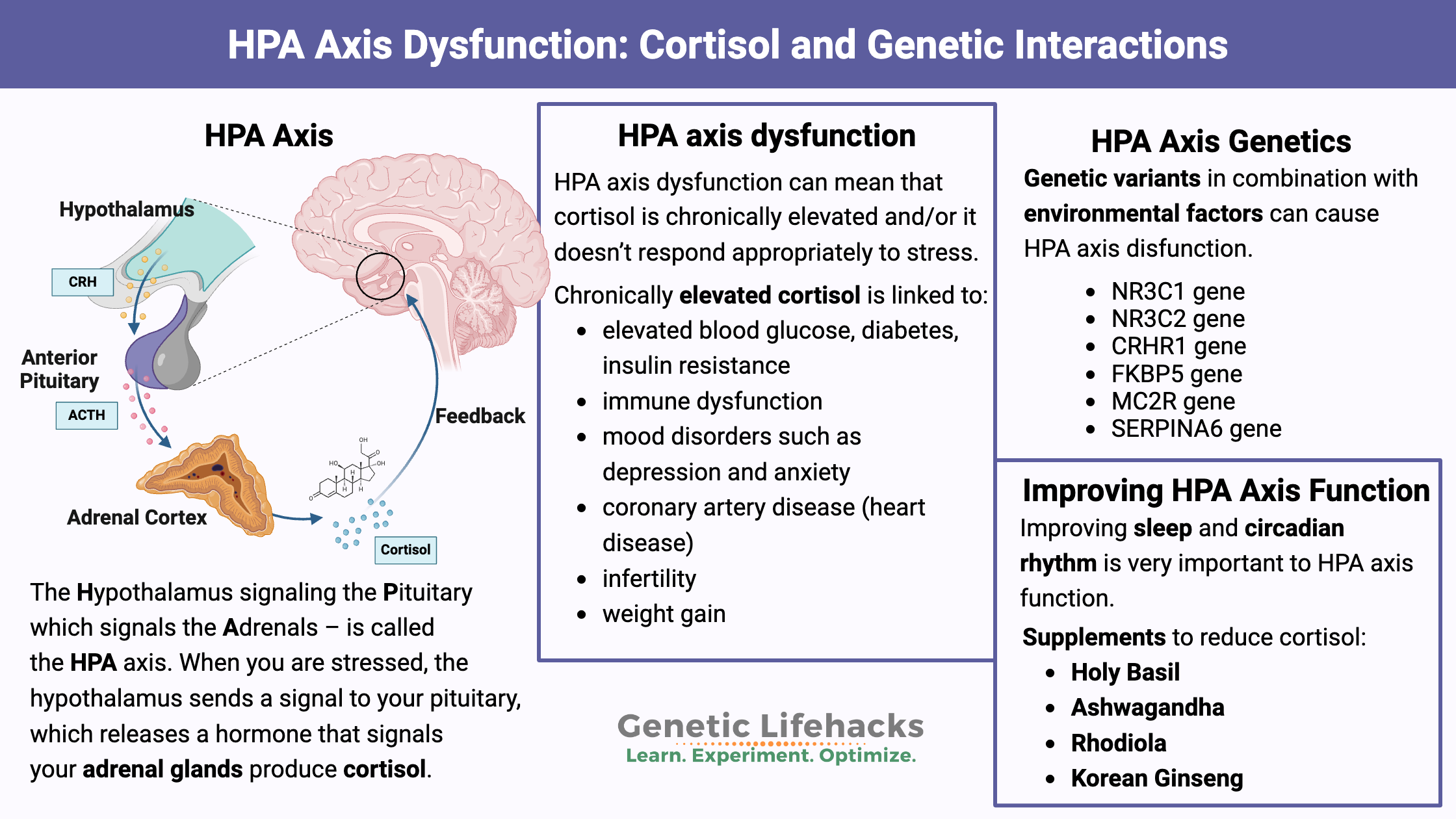
Cortisol is a hormone produced by the adrenal glands in times of stress, and it also plays many roles in your normal bodily functions. It is a multi-purpose hormone that needs to be in the right amount (not too high, not too low) and at the right time. Your genes play a big role in how likely you are to have problems with cortisol.
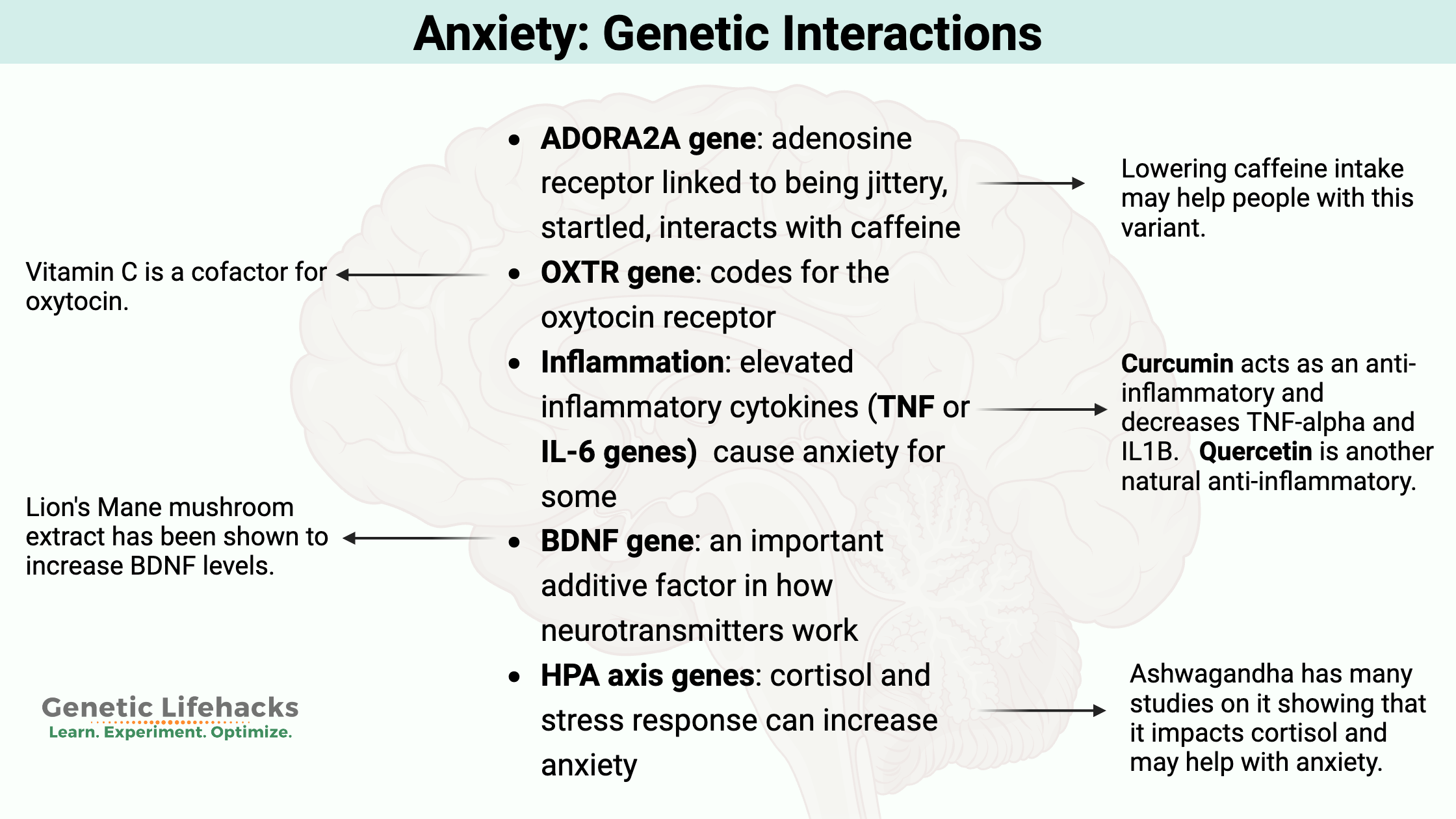
When it comes to anxiety, genetic variants combine with environmental factors (nutrition, sleep, relationships, etc) when it comes to anxiety. Understanding your anxiety genes can help you figure out which pathways to target.
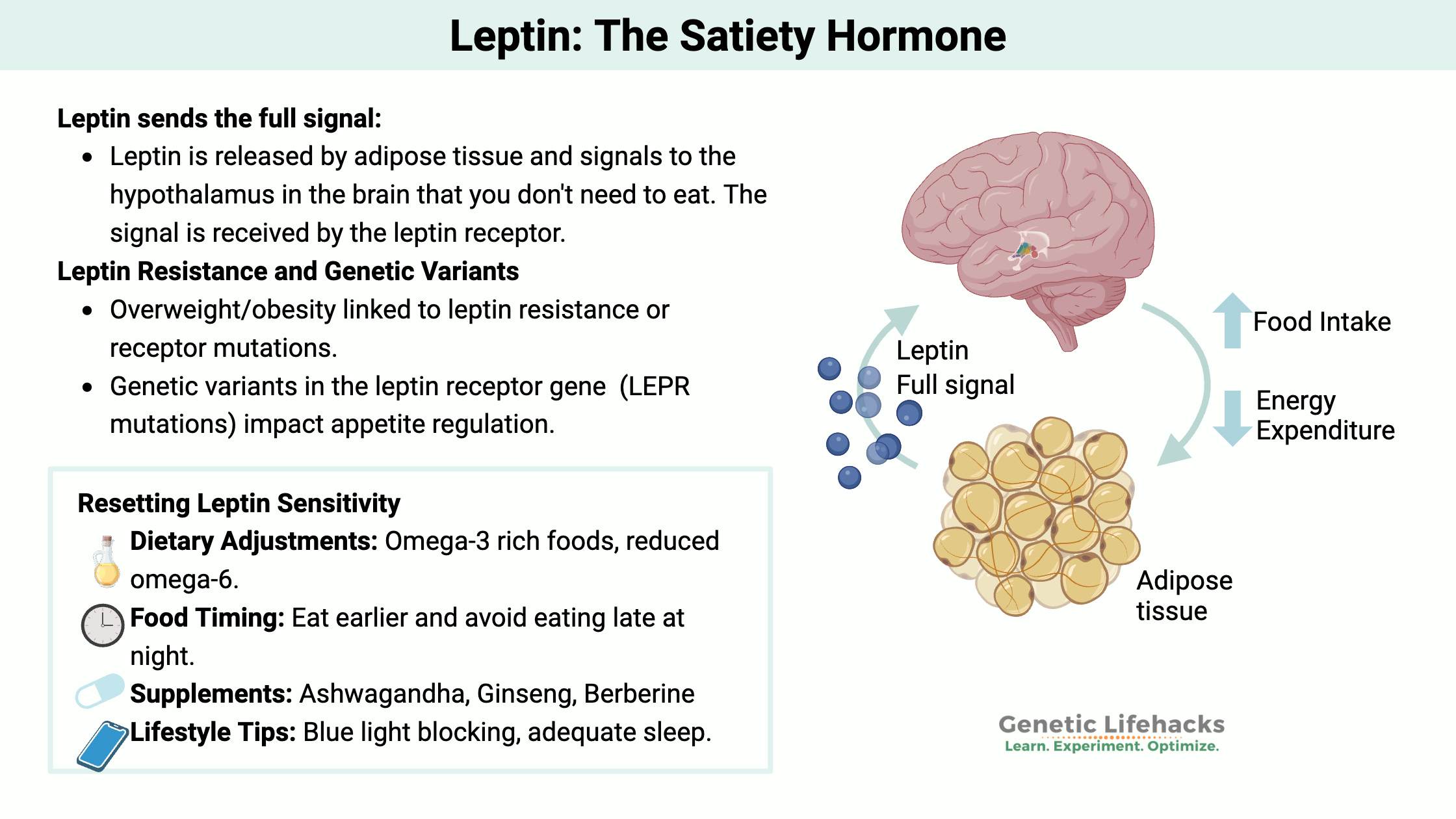
Do you wonder why other people don’t seem to struggle with wanting to eat more? Leptin is a hormone that signals to the brain when you are full and should stop eating. Genetic variants in the LEPR gene are linked to obesity and desire to eat more.
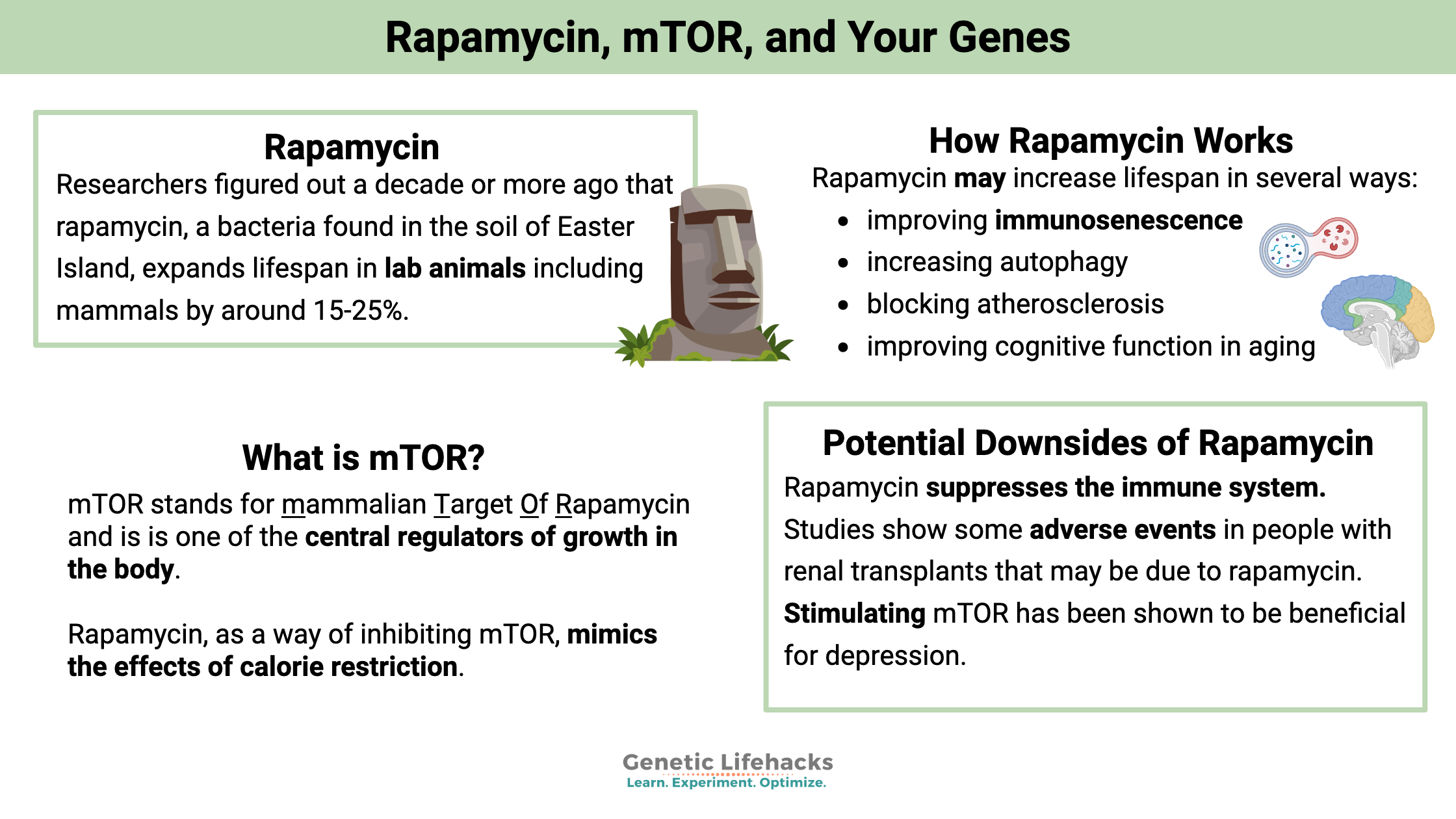
Rapamycin is an antibiotic used as an immunosuppressant, an anti-cancer agent, and to prevent blocked arteries. Rapamycin is now the focus of longevity and healthspan-extending research by inhibiting mTOR.

Are there benefits to taking ashwagandha? Learn more about this supplement and where the newest clinical research shows promise and results.
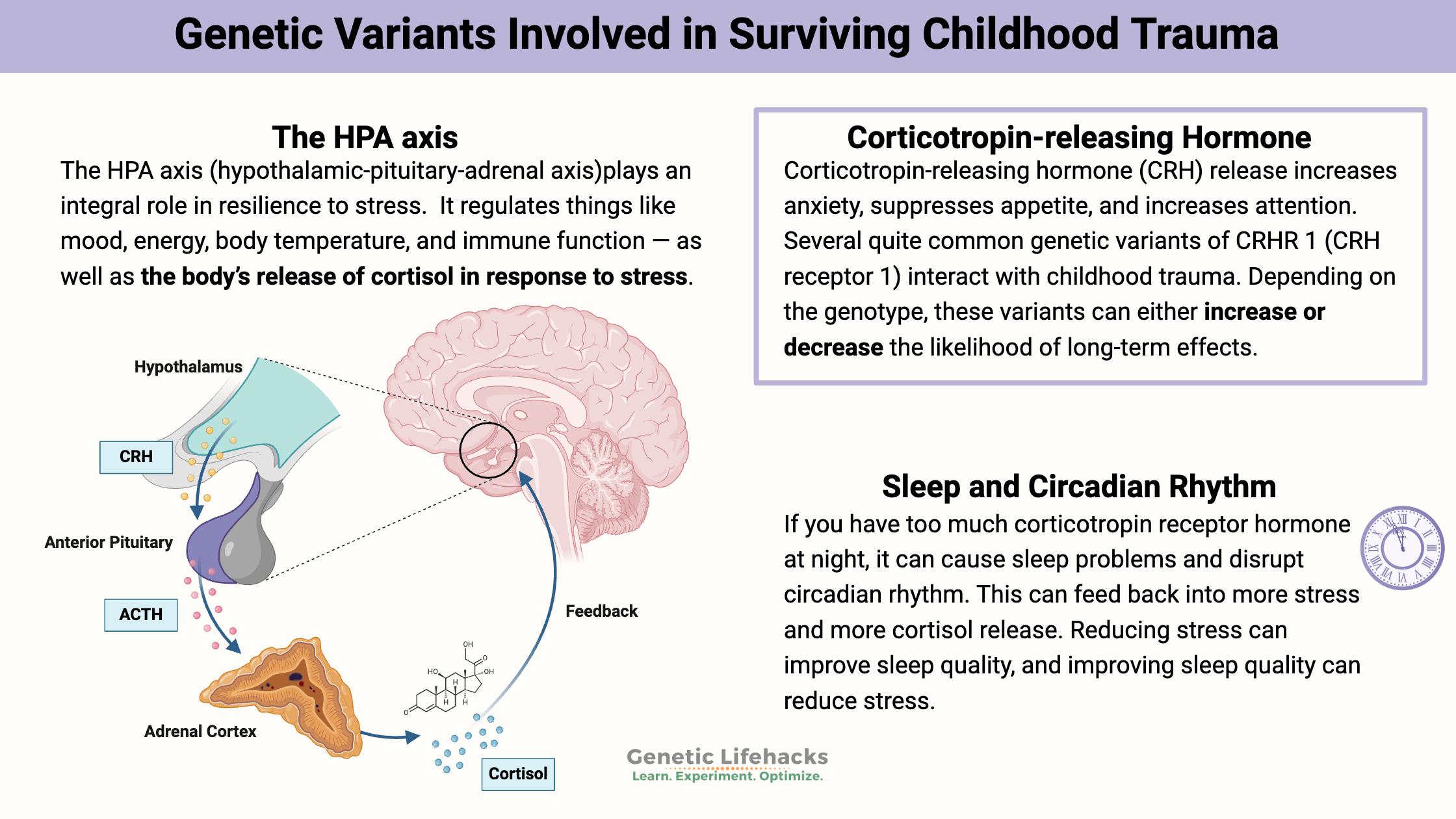
Exposure to childhood trauma, such as exposure to abuse, violence, or repeated stress, can have a long-lasting effect. Genetic differences in the CRHR1 gene are linked to elevated cortisol levels in adults who were exposed to trauma in childhood.