
Last fact-checked and updated: | Published:
Key takeaways:
- The FUT2 gene helps determine whether you are a secretor or non-secretor, which affects whether your blood type (ABO) oligosaccharides show up in saliva, intestinal mucus, and other secretions.
- Secretor status influences your gut microbiome, including the abundance and diversity of Bifidobacteria and other mucosal microbes.
- Non-secretors are generally more resistant to specific viral infections, especially norovirus and rotavirus, which is good; however, they may have some negative microbiome-related trade-offs.
- FUT2 variants can also be relevant for vitamin B12 lab test interpretation, because serum B12 may not always reflect cellular B12 status in non-secretors, depending on the type of test.
- FUT2 secretor status also affects the lung microbiome, the oral microbiome, and the types of oligosaccharides found in breast milk.
Members will see their genotype report below, plus additional solutions in the Lifehacks section. Consider joining today.
Non-secretors, the FUT2 gene, and health symptoms
The FUT2 gene controls whether your ABO blood type sugars are added to mucus and other secretions, which in turn shapes which microbes can colonize your gut and how certain viruses can infect you. If you struggle with gut issues, frequent ‘stomach flu’ episodes, or puzzling vitamin B12 results, your FUT2 gene and secretor status may be part of the story. In this article, we’ll look at how your FUT2 secretor status relates to gut symptoms, infection risk, and vitamin B12 levels — and show you exactly how to see your own FUT2 genotype.
First, let me explain a little bit of the background science on being a secretor or non-secretor of your blood type, and then I’ll explain how to check your 23andMe or AncestryDNA raw data for your secretor status.
Oligosaccharides and Blood Type
Your blood type – type A, B, AB, or O – refers to the oligosaccharides that are present on your red blood cells. Oligosaccharides are carbohydrates consisting of three to nine monosaccharides (simple sugars). You may be familiar with oligosaccharides as prebiotics in supplements or foods like chicory and Jerusalem artichokes.
Your body also makes oligosaccharides, and one of those oligosaccharides is what makes up your ABO blood type. You’re likely familiar with blood types, such as type A positive or type O negative. The A, B, AB, and O refer to the type of oligosaccharide found on your red blood cells and in secretions such as saliva, tears, and the mucosa lining your intestines.
Interestingly, about 20% of people don’t secrete their blood type. And this creates some fascinating differences.
What is a blood type secretor?
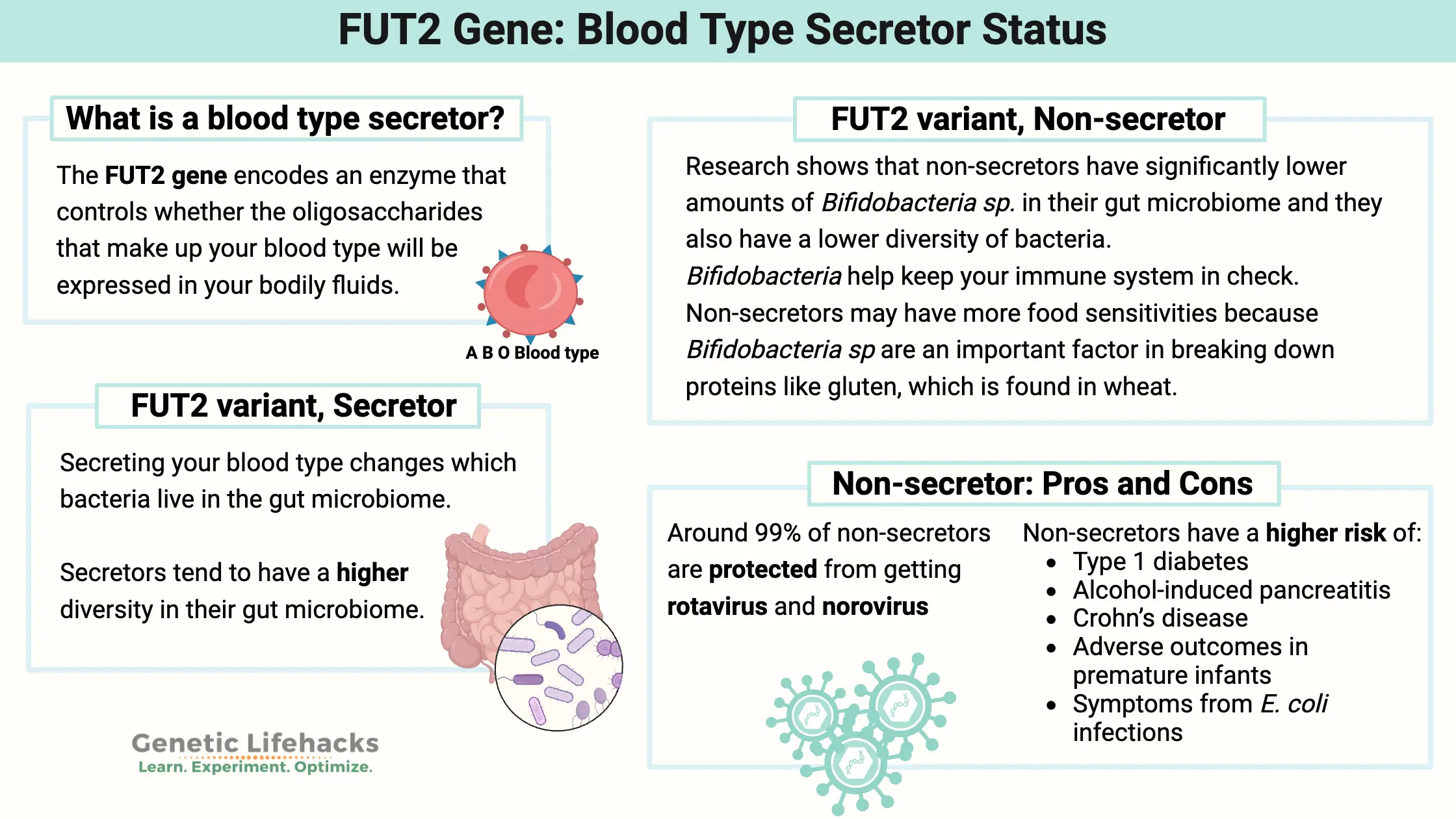
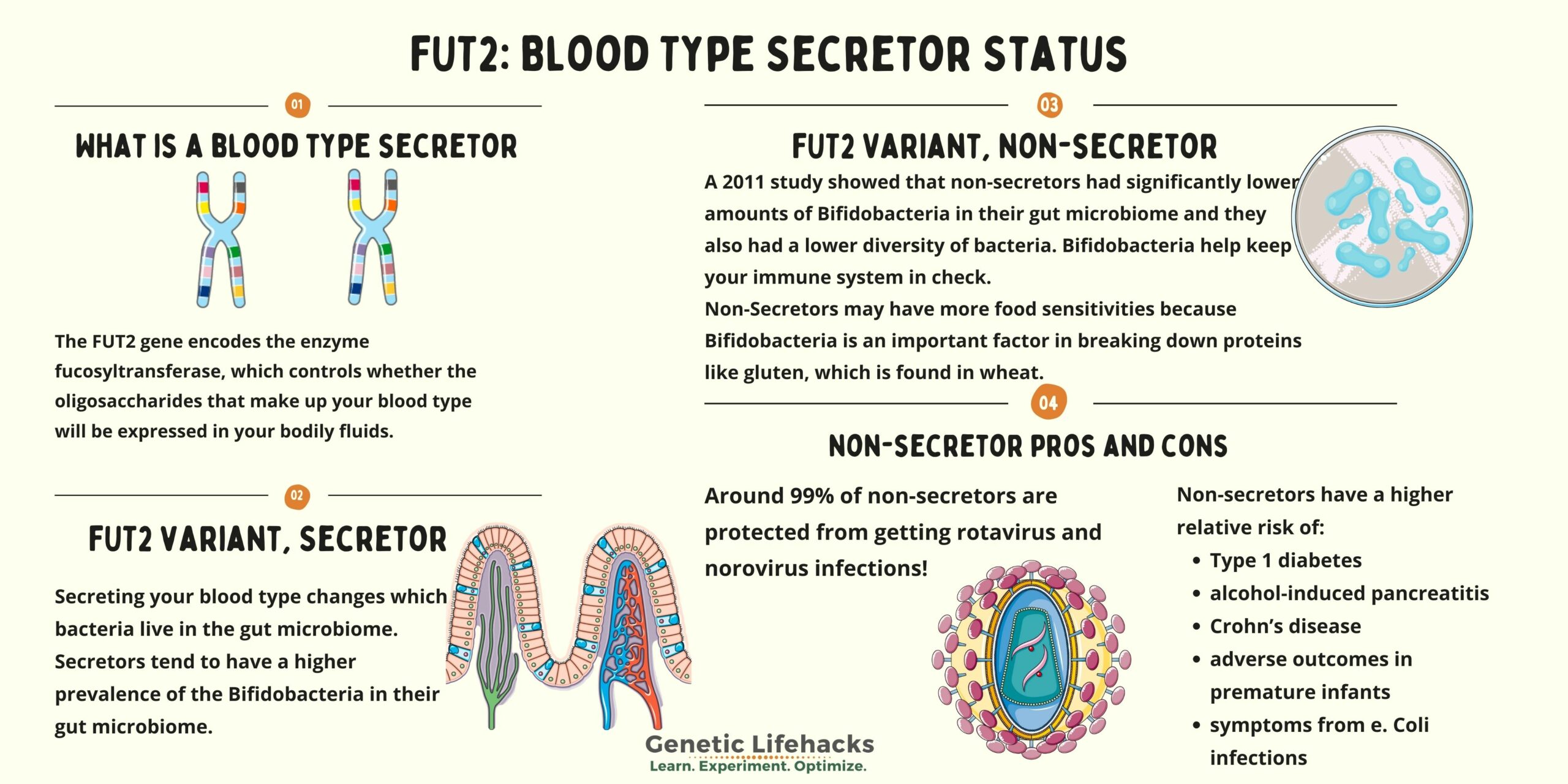
The FUT2 gene encodes the enzyme fucosyltransferase, which controls whether the oligosaccharides that make up your blood type will be expressed in your bodily fluids (other than your blood). This enzyme adds a fucose sugar onto the precursor molecules in saliva, intestinal mucus, and other secretions – thus creating the H antigen that your ABO blood type builds on. [ref]
If FUT2 is working, you “secrete” your blood type antigens into bodily fluids and are called a secretor. If both FUT2 copies are non‑functional, those antigens are absent from secretions, making you a non‑secretor.
Which bodily fluids? For about 80% of people, the oligosaccharides that indicate their blood type are also found in:
- intestinal mucosa (important)
- sweat
- saliva
- tears
- vaginal mucosa
- semen
About 20% of the Caucasian and African populations are non-secretors of their blood type.
Why is this important? Being a non-secretor affects how your body interacts with bacteria inside you and impacts your response to certain viruses. Your gut microbiome continually interacts with your immune system, and the species of bacteria present can have an impact on your digestion and also on your immune response.
Is it good or bad to be a non-secretor or a secretor?
Being a “non‑secretor” is not rare or inherently pathological. It’s a common, conserved variant that is shaped by historical pathogen exposure. There are pros and cons to being either a secretor or a non-secretor, depending on your age, pathogen exposure, environment, and diet.
Let’s dig into some specifics on what is going on with the gut microbiome of non-secretors.
Bifidobacteria, gut microbiome, and secretors
Researchers consider Bifidobacteria species to be one of the good guys when it comes to your gut microbiome. They are lactic and acetic acid-producing bacteria that help keep your immune system in check.
Bifidobacteria break down carbohydrates (specifically oligosaccharides) from the foods you eat. They also chow down on the oligosaccharides produced by our body in the intestinal mucosa. Your intestinal mucosa is what lines your intestines. It keeps your gut microbiome in the right place and away from your cells.
That’s where secreting your blood type (an oligosaccharide) comes into play.
Secretors tend to have a higher prevalence of the Bifidobacteria good guys in their gut microbiome.[ref][ref]
In fact, some studies show non-secretors have either low or no Bifidobacteria in their gut microbiome. Other studies show that there is decreased Bifidobacteria species diversity in non-secretors.[ref][ref]
Pathogenic bacteria can’t get a grip
There is one big advantage to being a non-secretor of your blood type — and it is likely that this advantage keeps the non-secretor phenotype so prevalent in the human population.
Certain viruses, such as norovirus, use the blood group glycans to attach to cells and enter them for infection. Without the blood group glycans in the intestinal mucosa, the viruses cannot attach to the intestinal cell walls and enter the body.
Thus, non-secretors are very unlikely to get sick from certain intestinal viruses such as Norovirus and Rotavirus (stomach flu). It is a superpower that likely kept your ancestors from dying from diarrheal disease.[ref][ref]
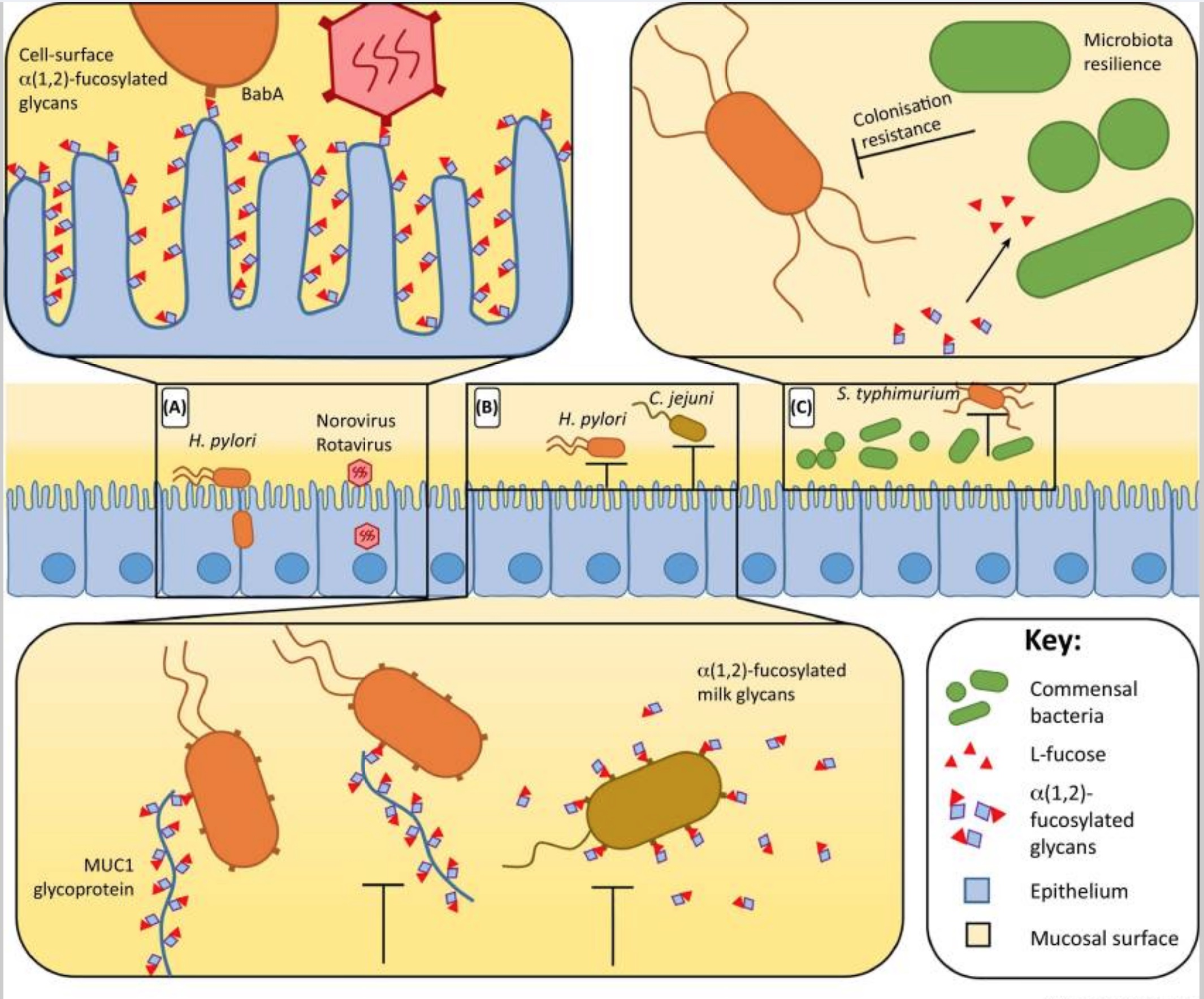
Recent genetic studies using ancient DNA show that the mutation was introduced into Europe by Anatolian farmers (modern-day Turkey) around 6000 BCE. The mutation then increased in frequency under what is called “positive selection”, meaning that those with the mutation were more likely to survive to have children. This time period was around the transition to agricultural living, which led to higher population densities, bringing increased pathogen exposure.[ref]
Non-secretors: Gut microbiome, nutrition, norovirus, B12
So what’s the big deal about being a non-secretor? Well, a lot of it comes back to our body’s interactions with the microbiome.
| Microbiome area | What changes in non-secretors | Why it matters |
|---|---|---|
| Gut microbiome overall | Lower abundance of Bifidobacteria and lower species richness/diversity.[ref] | Suggests a less favorable mucosal ecosystem for some readers, though not necessarily a disease state by itself. |
| Bifidobacteria | Reduced Bifidobacteria in several studies; some show low or absent levels.[ref] | Bifidobacteria are often discussed as beneficial mucin- and oligosaccharide-utilizing bacteria. |
| Microbial diversity | Lower richness and altered community composition in non-secretors. | Less diverse communities may be less resilient, especially under stressors like antibiotics or diet shifts. |
| Microbial function | FUT2 is linked to altered microbiome energy metabolism and glycan-related pathways. | This is the most mechanistic way to explain that FUT2 changes not only who is there but what they may be doing. |
| Oral microbiome | Non-secretors show a different oral microbiome profile, and host glycans also affect bacterial attachment.[ref] | Helps explain why FUT2 matters beyond the colon and why mucosal surfaces are a key theme. |
| Lung microbiome | In COPD, non-secretors showed more disturbed airway microbial networks and worse exacerbation risk.[ref] | Useful if you want to show FUT2 is a mucosal-glycan gene, not just a gut gene. |
| Infant microbiome | Maternal non-secretor status is linked to altered infant bifidobacterial colonization and breast milk oligosaccharide exposure.[ref] | This supports the life-course angle: FUT2 can shape microbiome development early in life. |
| Infection tradeoff | Non-secretors are relatively protected from norovirus and rotavirus, likely because those viruses need secretor glycans for attachment.[ref] | This is the key tradeoff that balances the microbiome’s downside in many explanations. |
Let’s take a look at each of these in more detail.
Non-secretor status changes the microbiome
Gut microbiome: Secretors are different than non-secretors
Being a non-secretor of your ABO blood type can change which bacteria are likely to thrive and multiply in your gut microbiome.
- Lack of Bifidobacteria:
A 2011 study showed that non-secretors had significantly lower amounts of bifidobacteria in their gut microbiome. This makes sense because bifidobacteria are fed, in part, by the oligosaccharides in the intestinal mucosa. The same study showed that non-secretors also had a lower diversity of bacteria.[ref] - Overall decreased species variety:
Another study in 2014 confirmed the findings regarding low bifidobacteria in non-secretor gut microbiomes. Additionally, non-secretors had lower species richness than the secretors.[ref] - Bifidobacteria and gluten sensitivity:
Bifidobacteria are good guys to have in the gut microbiome. They also may play a role in whether you have food sensitivities. Bifidobacteria help with the digestion of gluten, so a wheat or gluten sensitivity in someone who is a non-secretor may be related to the gut microbiome changes.
Lung microbiome, FUT2 non-secretor, and COPD
The lung microbiome is also affected by secretor status. Non-secretors with COPD were shown to be at a 2-fold increased risk of severe exacerbations. In addition, the researchers found that non-secretors have a less diverse lung microbiome with different keystone species.[ref]
Oral microbiome changes for non-secretors
Your blood type is secreted in saliva, and a 2026 study in Nature Portfolio showed that non-secretors tend to have different oral microbiomes than secretors. Interestingly, the research showed that not only does the presence or lack of ABO oligosaccharides as a food source affect the bacterial species, but the oligosaccharides also affect bacterial attachment to host cell surfaces.[ref]
A huge plus for non-secretors: Resistance to the norovirus and rotavirus
Non-secretor status plays a role in infectious diseases as well. One big advantage of being a non-secretor is resistance to some viruses which cause what is commonly called the ‘stomach flu’.
- The norovirus and the rotavirus are much, much less likely to infect a non-secretor. Around 99% of non-secretors are protected from getting these infections.[ref][ref]
- Infants who are non-secretors are significantly less likely to have symptomatic rotavirus and are much less likely (but not completely protected) to be asymptomatic carriers of the rotavirus.[ref][ref]
- A 2025 study in Rwandan children found that non-secretors were protected against rotavirus but not against other enteric viruses that cause diarrheal illnesses.[ref]
- Other studies show that children who are non-secretors are less likely to have diarrheal diseases, in general. Some research indicates that just carrying one copy of the non-secretor allele can reduce the risk of diarrheal diseases in children.[ref]
- H. pylori colonization is lower in non-secretors.[ref] H. pylori is a bacterium that resides in the stomach and can cause ulcers and stomach cancers.
This is much more than just not getting diarrhea on a cruise ship… Prior to modern sanitation, diarrheal infections in infants and young children were a significant mortality risk factor. So the ability to avoid getting at least some of these viruses was a benefit that may outweigh any negatives for childhood survival in the past.
Vitamin B12 levels in non-secretors
In some studies, non-secretors show higher serum vitamin B12 levels, but this can depend on exactly what the test is measuring. There are different B12 tests, including total serum B12, active B12 (Holotranscobalamin), and methylmalonic acid (MMA).
Transcobalamins are the proteins that bind to B12 for transport in the body, and about 25% of the circulating B12 is the active holotranscobalamin form.[ref] The rest of the B12 is circulating in an inert form. Total serum B12 measurements include both the active and inert forms of vitamin B12 and may not reflect what is actually available in the cells.[ref]
A number of studies have looked at why vitamin B12 levels tend to be higher in people who are non-secretors, with some researchers theorizing that the gut microbiome changes in non-secretors influence B12 production by gut bacteria. Other studies point to the interaction with FUT2 non-secretor status being driven by changes in the inert form of vitamin B12, with little consequence to the higher levels.[ref]
In general, a methylmalonic acid (MMA) test may give you a better indication of your actual vitamin B12 status.[ref]
Beyond the gut: Other conditions linked to FUT2
Secretor status also plays a role in non-infectious diseases, possibly through interactions with the gut microbiome.
Non-secretors have a higher relative risk of:
Autoimmune diseases
- Crohn’s disease[ref][ref][ref]
- Primary sclerosing cholangitis
- Celiac disease[ref]
- Type 1 diabetes[ref]
Microbiome-related conditions
- Increased risk of chronic pancreatitis and increased pancreatic fat deposition[ref] (Related article: Pancreatitis gene)
- Alcohol-induced pancreatitis[ref],
- Crohn’s disease[ref][ref][ref]
- Adverse outcomes in premature infants[ref]
Infectious diseases
- Symptoms from E. coli infections[ref]
- Slightly higher risk of the mumps[ref]
- Increase risk of middle ear infections[ref]
Certain cancers
- 3-fold increased risk of oral cancers[ref]
Breast milk: Oligosaccharides and FUT2 non-secretors
The FUT2 secretor status affects more than just blood type secretion: the 2′-FL oligosaccharide secretion in breast milk is also affected.
Let’s take a look at how this can affect an infant – with both positive and negative trade-offs for non-secretors.
An infant’s microbiome is mostly colonized from its mother, and Bifidobacteria species often make up an important part of an infant’s microbiome.
Breast milk contains oligosaccharides that feed the baby’s microbiome. Non-secretor mothers do not produce the 2′-FL oligosaccharide in their breast milk, thus impacting the baby’s microbiome.[ref]
The effects of non-secretor status can also influence breastfed babies of non-secretor mothers, even when not born by C-section. A 2015 study found that “Infants fed by non-secretor mothers are delayed in the establishment of a bifidobacteria-laden microbiota. This delay may be due to difficulties in the infant acquiring a species of bifidobacteria able to consume the specific milk oligosaccharides delivered by the mother.”[ref]
There are advantages, though, for babies with non-secretor mothers. Another 2025 study in Denmark found that infants under 1 year of age whose mothers were secretors were more likely to have had gastroenteritis (stomach flu, diarrhea). The babies’ microbiomes differed based on the mother’s secretor status.[ref]
One thing to note is that the first year of life is very important in establishing your gut microbiome. If your mom is a non-secretor, your gut microbiome may be altered a little bit.
Interestingly, research shows that babies born via C-section to non-secretor mothers have significantly altered microbiomes.[ref] Not only did they not get exposure to the vaginal microbiome during birth, but they also aren’t receiving the secreted oligosaccharides from breast milk.
Related article: Leveraging your gut microbiome to change your gene expression
FUT2: Secretor Genotype Report
? Printable Overview (Members)
FUT2 gene: encodes the fucosyltransferase enzyme that impacts the secretion of blood type into saliva, mucosal secretions, and semen.
Please note that rs601338 is almost always inherited together with rs602662 and rs492602. All of these SNPs tag the non-secretor status.[ref]
Access this content:
An active subscription is required to access this content.
Log in below or Join as a member.
Lifehacks: Supplements and foods for Non-secretors
If you are a non-secretor, you may want to minimize the ‘downside’ of the altered microbiome while enjoying the fact that you are unlikely to get the norovirus. The practical angle for FUT2 is not “treating the gene” but supporting the gut microbiome with prebiotics and probiotics / fermented foods.
Increasing Bifidobacteria
FUT2/non-secretor status is often associated with lower Bifidobacteria levels. Some clinicians recommend bifidobacteria-containing probiotics for non-secretors to make up for the changes in the gut microbiome. Look for a probiotic that contains high levels of Bifidobacteria species, and test to see whether you notice benefits from it. Some yogurt or kefir brands may contain Bifidobacteria as an alternative to supplementing with probiotics.
Dietary fiber
Fiber is generally important for gut health, but responses may differ by secretor status. Increasing your dietary fiber intake, if it is low, may help with your gut health if you are a secretor of your blood type. A study looked at the effect of dietary fiber on gut inflammation markers in both secretors and non-secretors. Blood type secretors with higher dietary fiber intake had lower levels of gut inflammatory markers. However, there was no association between fiber intake and inflammatory markers in non-secretors.[ref] Fiber may still be useful for some non-secretors, but the best type and amount may depend on individual tolerance, symptoms, and the rest of your diet.
Prebiotics containing 2′-FL (2′-Fucosyllactose)
Mothers who are non-secretors do not produce the 2′-FL oligosaccharide in their breast milk. This oligosaccharide is now available as a prebiotic via online and other sources. Various strains of bifidobacteria use 2′-FL as a food source, and those bifidobacteria then increase the amount of short-chain fatty acids produced in the gut microbiome.[ref]
Thus, combining bifidobacteria probiotics and a 2′-FL prebiotic may be beneficial for increasing short-chain fatty acids in the gut. (I’m making some assumptions here – but it may be worth trying if you are a non-secretor with gut problems…)
Decreasing Gluten Sensitivity with the right probiotic
One theory of why some people are gluten intolerant (without having Celiac) is that low levels of Bifidobacteria and Firmicutes cause alterations to the short-chain fatty acid composition in the gut. It then alters the mucosal barrier in the gut and increases the risk of gluten sensitivity.[ref] If that theory is correct, then probiotics containing Bifidobacteria may help with gluten intolerance.
Related article: Check your celiac genes
Vitamin B12: Possible test inaccuracies for non-secretors
If you are a non-secretor and get a serum vitamin B12 blood test at the doctor, you may not be getting the whole picture. For non-secretors, serum B12 is often elevated. This can hide the fact that vitamin B12 isn’t getting into your cells and mask a deficiency. Vitamin B12 deficiency symptoms can include fatigue, anemia, neurologic symptoms, and neuropathy.
- Consider getting an MMA (methylmalonic acid) test done if you have symptoms of B12 deficiency. Read more about MMA, Vitamin B12, and the MMUT gene here.
- Alternatively, try supplementing with methylcobalamin or hydroxyB12/AdenosylB12 to see if the deficiency symptoms abate. Read through the article on COMT and methylated vitamins to see which form of B12 may be best for you.
Your genotype for COMT rs4680 is —, which means your connected data file indicates slow COMT function. Some people with slow COMT report irritability or mood changes when taking methyl donors or COMT inhibitors. Read the full article on COMT here.
Access this content:
An active subscription is required to access this content.
Log in below or Join as a member.
Graphical Overview
Related Articles and Topics
Genetic Reasons Why Low FODMAPs Isn’t Working For You (SI Gene)
Irritable Bowel Syndrome (IBS): Targeted Solutions Based on Your Genes
References:
Kamitaki, Nolan, et al. “Human and Bacterial Genetic Variation Shape Oral Microbiomes and Health.” Nature, vol. 651, no. 8105, 2026, pp. 429–39. PubMed Central, https://doi.org/10.1038/s41586-025-10037-7.
Nordgren, Johan, et al. “Ancestral FUT2 Genetic Adaptation Confers Resistance to Modern Norovirus and Rotavirus Infections.” Current Opinion in Virology, vol. 75, Apr. 2026, p. 101513. DOI.org (Crossref), https://doi.org/10.1016/j.coviro.2026.101513.
Fu, J., et al. “FUT2 Non-Secretor Status Is Associated With Increased Future Risk and Airway Microbial Network Disturbance in COPD.” American Journal of Respiratory and Critical Care Medicine, vol. 211, no. Supplement_1, May 2025, pp. A3248–A3248. DOI.org (Crossref), https://doi.org/10.1164/ajrccm.2025.211.Abstracts.A3248.
Azad, Meghan B., et al. “FUT2 Secretor Genotype and Susceptibility to Infections and Chronic Conditions in the ALSPAC Cohort.” Wellcome Open Research, vol. 3, Sept. 2018, p. 65. PubMed Central, https://doi.org/10.12688/wellcomeopenres.14636.2.
Bai, Yaqiang, et al. “Fucosylated Human Milk Oligosaccharides and N-Glycans in the Milk of Chinese Mothers Regulate the Gut Microbiome of Their Breast-Fed Infants during Different Lactation Stages.” MSystems, vol. 3, no. 6, Dec. 2018, pp. e00206-18. PubMed, https://doi.org/10.1128/mSystems.00206-18.
Bunesova, Vera, et al. “Fucosyllactose and L-Fucose Utilization of Infant Bifidobacterium Longum and Bifidobacterium Kashiwanohense.” BMC Microbiology, vol. 16, no. 1, Oct. 2016, p. 248. PubMed, https://doi.org/10.1186/s12866-016-0867-4.
Bustamante, Mariona, et al. “A Genome-Wide Association Meta-Analysis of Diarrhoeal Disease in Young Children Identifies FUT2 Locus and Provides Plausible Biological Pathways.” Human Molecular Genetics, vol. 25, no. 18, Sept. 2016, pp. 4127–42. PubMed, https://doi.org/10.1093/hmg/ddw264.
Graziano, Vincent R., et al. “Norovirus Attachment and Entry.” Viruses, vol. 11, no. 6, May 2019, p. 495. PubMed Central, https://doi.org/10.3390/v11060495.
Günaydın, Gökçe, et al. “Association of Elevated Rotavirus-Specific Antibody Titers with HBGA Secretor Status in Swedish Individuals: The FUT2 Gene as a Putative Susceptibility Determinant for Infection.” Virus Research, vol. 211, Jan. 2016, pp. 64–68. PubMed, https://doi.org/10.1016/j.virusres.2015.10.005.
Ihara, K., et al. “FUT2 Non-Secretor Status Is Associated with Type 1 Diabetes Susceptibility in Japanese Children.” Diabetic Medicine: A Journal of the British Diabetic Association, vol. 34, no. 4, Apr. 2017, pp. 586–89. PubMed, https://doi.org/10.1111/dme.13288.
Korpela, Katri, et al. “Fucosylated Oligosaccharides in Mother’s Milk Alleviate the Effects of Caesarean Birth on Infant Gut Microbiota.” Scientific Reports, vol. 8, Sept. 2018, p. 13757. PubMed Central, https://doi.org/10.1038/s41598-018-32037-6.
Kudo, T., et al. “Molecular Genetic Analysis of the Human Lewis Histo-Blood Group System. II. Secretor Gene Inactivation by a Novel Single Missense Mutation A385T in Japanese Nonsecretor Individuals.” The Journal of Biological Chemistry, vol. 271, no. 16, Apr. 1996, pp. 9830–37. PubMed, https://doi.org/10.1074/jbc.271.16.9830.
Leccioli, Valentina, et al. “A New Proposal for the Pathogenic Mechanism of Non-Coeliac/Non-Allergic Gluten/Wheat Sensitivity: Piecing Together the Puzzle of Recent Scientific Evidence.” Nutrients, vol. 9, no. 11, Nov. 2017, p. 1203. PubMed Central, https://doi.org/10.3390/nu9111203.
Lewis, Zachery T., et al. “Maternal Fucosyltransferase 2 Status Affects the Gut Bifidobacterial Communities of Breastfed Infants.” Microbiome, vol. 3, 2015, p. 13. PubMed, https://doi.org/10.1186/s40168-015-0071-z.
Magalhães, Ana, et al. “Muc5ac Gastric Mucin Glycosylation Is Shaped by FUT2 Activity and Functionally Impacts Helicobacter Pylori Binding.” Scientific Reports, vol. 6, May 2016, p. 25575. PubMed, https://doi.org/10.1038/srep25575.
Mankelow, Tosti J., et al. “Blood Group Type A Secretors Are Associated with a Higher Risk of COVID‐19 Cardiovascular Disease Complications.” Ejhaem, vol. 2, no. 2, May 2021, p. 175. www.ncbi.nlm.nih.gov, https://doi.org/10.1002/jha2.180.
Mills, Susan, et al. “Precision Nutrition and the Microbiome Part II: Potential Opportunities and Pathways to Commercialisation.” Nutrients, vol. 11, no. 7, June 2019, p. 1468. PubMed Central, https://doi.org/10.3390/nu11071468.
Morrow, Ardythe L., et al. “Fucosyltransferase 2 Non-Secretor and Low Secretor Status Predicts Severe Outcomes in Premature Infants.” The Journal of Pediatrics, vol. 158, no. 5, May 2011, pp. 745–51. PubMed, https://doi.org/10.1016/j.jpeds.2010.10.043.
Mottram, Lynda, et al. “FUT2 Non-Secretor Status Is Associated with Altered Susceptibility to Symptomatic Enterotoxigenic Escherichia Coli Infection in Bangladeshis.” Scientific Reports, vol. 7, Sept. 2017, p. 10649. PubMed Central, https://doi.org/10.1038/s41598-017-10854-5.
Rivière, Audrey, et al. “Bifidobacteria and Butyrate-Producing Colon Bacteria: Importance and Strategies for Their Stimulation in the Human Gut.” Frontiers in Microbiology, vol. 7, June 2016, p. 979. PubMed Central, https://doi.org/10.3389/fmicb.2016.00979.
Ruas-Madiedo, Patricia, et al. “Mucin Degradation by Bifidobacterium Strains Isolated from the Human Intestinal Microbiota.” Applied and Environmental Microbiology, vol. 74, no. 6, Mar. 2008, pp. 1936–40. journals.asm.org (Atypon), https://doi.org/10.1128/AEM.02509-07.
Taylor, Steven L., et al. “Infection’s Sweet Tooth: How Glycans Mediate Infection and Disease Susceptibility.” Trends in Microbiology, vol. 26, no. 2, Feb. 2018, p. 92. www.ncbi.nlm.nih.gov, https://doi.org/10.1016/j.tim.2017.09.011.
Tong, Maomeng, et al. “Reprograming of Gut Microbiome Energy Metabolism by the FUT2 Crohn’s Disease Risk Polymorphism.” The ISME Journal, vol. 8, no. 11, Nov. 2014, pp. 2193–206. PubMed, https://doi.org/10.1038/ismej.2014.64.
Tu, Li-Tzu, et al. “Genetic Susceptibility to Norovirus GII.4 Sydney Strain Infections in Taiwanese Children.” The Pediatric Infectious Disease Journal, vol. 36, no. 4, Apr. 2017, pp. 353–57. PubMed, https://doi.org/10.1097/INF.0000000000001446.
Velkova, Aneliya, et al. “The FUT2 Secretor Variant p.Trp154Ter Influences Serum Vitamin B12 Concentration via Holo-Haptocorrin, but Not Holo-Transcobalamin, and Is Associated with Haptocorrin Glycosylation.” Human Molecular Genetics, vol. 26, no. 24, Dec. 2017, pp. 4975–88. PubMed Central, https://doi.org/10.1093/hmg/ddx369.
Wacklin, Pirjo, Jarno Tuimala, et al. “Faecal Microbiota Composition in Adults Is Associated with the FUT2 Gene Determining the Secretor Status.” PLoS ONE, vol. 9, no. 4, Apr. 2014, p. e94863. PubMed Central, https://doi.org/10.1371/journal.pone.0094863.
Wacklin, Pirjo, Harri Mäkivuokko, et al. “Secretor Genotype (FUT2 Gene) Is Strongly Associated with the Composition of Bifidobacteria in the Human Intestine.” PLOS ONE, vol. 6, no. 5, May 2011, p. e20113. PLoS Journals, https://doi.org/10.1371/journal.pone.0020113.
Ye, Byong Duk, et al. “Association of FUT2 and ABO with Crohn’s Disease in Koreans.” Journal of Gastroenterology and Hepatology, vol. 35, no. 1, Jan. 2020, pp. 104–09. PubMed, https://doi.org/10.1111/jgh.14766.
Zhou, Feng, et al. “Association of Fucosyltransferase 2 Gene Variant with Inflammatory Bowel Diseases: A Meta-Analysis.” Medical Science Monitor: International Medical Journal of Experimental and Clinical Research, vol. 25, Jan. 2019, pp. 184–92. PubMed, https://doi.org/10.12659/MSM.911857.